Posted by Admin on 30-03-2023 in Shiksha hub
B.SC. Biochemistry introduction, Admission Registration, Eligibility, Duration, Fees, Syllabus 2024
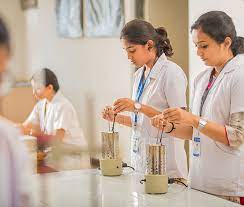
Introduction about B.SC.Biochemistry
A Bachelor of Science (B.Sc.) in Biochemistry is an undergraduate academic degree program that focuses on the study of the chemical processes and substances that occur within living organisms. Biochemistry is an interdisciplinary field that combines principles from both biology and chemistry to understand the molecular mechanisms underlying various physiological functions, including metabolism, genetics, and cell signaling.
The B.Sc. Biochemistry program typically encompasses a diverse range of courses, covering fundamental concepts in chemistry, biology, and biochemistry. Students explore the structure and function of biomolecules such as proteins, nucleic acids, lipids, and carbohydrates, and learn how these molecules contribute to the intricate processes of life. The curriculum often includes laboratory work, allowing students to gain hands-on experience in techniques used to analyze biological molecules.
Throughout the course of their studies, B.Sc. Biochemistry students may delve into areas such as enzymology, molecular biology, immunology, and bioinformatics. The program aims to equip students with a solid foundation in both theoretical knowledge and practical skills, fostering an understanding of the molecular basis of health and disease.
Graduates with a B.Sc. in Biochemistry may pursue various career paths, including research and development in academia or industry, pharmaceuticals, biotechnology, healthcare, and environmental science. Additionally, the program provides a strong foundation for those interested in pursuing advanced degrees in biochemistry, molecular biology, or related fields.
How can I apply for admission B.SC. BIOCHEMISTRY Program
Applying for admission to a B.Sc. Biochemistry program typically involves several steps. Here is a general guide to help you navigate the application process:
Research Programs and Universities: Start by researching universities that offer B.Sc. Biochemistry programs. Look for institutions that have a strong reputation in the field of biochemistry and offer the specific courses and facilities that align with your academic goals.
Check Admission Requirements: Review the admission requirements for the B.Sc. Biochemistry program at each university. Requirements may include academic qualifications (such as high school transcripts), standardized test scores (if applicable), letters of recommendation, a personal statement, and possibly an admissions interview.
Prepare Required Documents: Gather all the necessary documents for your application. This may include your high school diploma or equivalent, transcripts, standardized test scores (SAT, ACT, etc.), letters of recommendation, and a well-crafted personal statement.
Complete the Application Form: Most universities have an online application system. Create an account on the university's admissions portal and complete the application form. Make sure to fill in all the required information accurately.
Submit Application Fee: Pay the application fee, if required. Some universities charge a fee to process your application, and this fee is typically non-refundable.
Submit Transcripts and Test Scores: Arrange for your high school transcripts and any required standardized test scores to be sent directly to the university. Some universities may have specific procedures for submitting these documents.
Letters of Recommendation: If letters of recommendation are required, request them well in advance from teachers, professors, or other individuals who can speak to your academic abilities and character.
Write a Personal Statement: Craft a compelling personal statement that outlines your interest in biochemistry, your academic and extracurricular achievements, and your career goals. Tailor your statement to each university's specific requirements if necessary.
Submit Additional Materials: Some universities may require additional materials, such as a resume or a portfolio. Ensure that you provide all the necessary documents to support your application.
Check Application Deadlines: Be aware of the application deadlines for each university. Submit your application well before the deadline to ensure that it is considered.
Monitor Application Status: Keep track of your application status through the university's application portal. Some universities may provide updates or request additional information during the review process.
What is the eligibility for B.SC. BIOCHEMISTRY
The eligibility criteria for a B.Sc. Biochemistry program can vary between universities, so it's important to check the specific requirements of the institutions you are interested in. However, I can provide you with a general overview of the typical eligibility criteria for B.Sc. Biochemistry programs:
Educational Qualifications:
Completion of 10+2 or equivalent from a recognized educational board.
Generally, students are required to have a strong background in science, with a focus on subjects like Chemistry, Biology, and Physics.
Minimum Marks:
Most universities have a minimum percentage requirement for the 10+2 level, and this percentage may vary. It is common for universities to ask for a minimum of 50% to 60% aggregate marks in the qualifying examination.
Subject Requirements:
A background in specific subjects is often required, with a focus on Chemistry and Biology. Some universities may also consider Physics and Mathematics as relevant subjects.
Entrance Exams:
Some universities or colleges may require students to take entrance exams for admission to the B.Sc. Biochemistry program. The entrance exams can vary, and their scores may be considered as part of the admission criteria.
English Language Proficiency:
For international students or in institutions where English is not the primary language of instruction, proof of English language proficiency through exams like IELTS or TOEFL may be required.
Additional Requirements:
Letters of recommendation: Some universities may ask for letters of recommendation from teachers or other individuals who can vouch for your academic abilities.
Personal statement: A written statement explaining your interest in biochemistry and your career goals may be required by some institutions.
How long does it takes to complete a B.SC. BIOCHEMISTRY program
The duration of a B.Sc. Biochemistry program typically spans three to four years, depending on the structure of the program and the educational system of the country or institution offering the degree. In many countries, a standard undergraduate degree program consists of three years of full-time study, with the option of an additional year for an honors program or specializations.
Here is a breakdown of the typical duration:
Three-Year Program:
Many B.Sc. Biochemistry programs are designed to be completed in three years. During this time, students take a combination of core courses, elective courses, and laboratory work to fulfill the requirements for the degree.
Four-Year Program:
Some universities offer a four-year B.Sc. Biochemistry program, which may include an additional year for specialized coursework, research projects, or industrial placements. This extended program often leads to an honors degree.
Honors Program:
In some cases, students may have the option to pursue an honors program within the B.Sc. Biochemistry degree. This typically involves a more in-depth research or thesis project and may extend the program to four years.
It's important to note that the structure of degree programs can vary between universities and countries. Additionally, factors such as part-time study, co-op programs, or transfer credits can influence the total duration of the B.Sc. Biochemistry program for individual students.
Internship opportunities after completing B.SC. BIOCHEMISTRY
After completing a B.Sc. in Biochemistry, there are various internship opportunities available in different sectors that allow graduates to gain practical experience and apply their knowledge in real-world settings. Here are some potential internship opportunities for individuals with a B.Sc. in Biochemistry:
Pharmaceutical Industry:
Many pharmaceutical companies offer internships for biochemistry graduates. Interns may work in research and development, quality control, or production, gaining hands-on experience in drug discovery, formulation, and testing.
Biotechnology Firms:
Biotechnology companies provide opportunities for biochemistry graduates to engage in research and development of biotechnological products, genetic engineering, and other cutting-edge technologies.
Clinical Research Organizations (CROs):
CROs conduct clinical trials and research on behalf of pharmaceutical and biotechnology companies. Biochemistry graduates may find internships in areas such as clinical trial management, data analysis, and regulatory affairs.
Hospitals and Healthcare Institutions:
Internships in hospitals or healthcare institutions may involve working in clinical laboratories, where biochemists analyze patient samples, conduct diagnostic tests, and contribute to patient care.
Academic Research Labs:
Research institutions and universities often have opportunities for biochemistry graduates to work as research assistants or interns in academic laboratories, contributing to ongoing scientific investigations.
Food and Beverage Industry:
Companies in the food and beverage industry may offer internships in areas such as food safety, quality assurance, and product development. Biochemistry graduates can apply their knowledge to ensure the safety and quality of food products.
Environmental Science and Research:
Internships in environmental science involve studying the impact of pollutants, analyzing soil and water samples, and contributing to environmental monitoring programs.
Government Agencies:
Government agencies focused on health, agriculture, and environmental protection may offer internship opportunities for biochemistry graduates. These positions may involve policy analysis, research, and regulatory work.
Forensic Science Labs:
Biochemistry graduates interested in forensic science may find internships in crime labs, where they can apply their skills in analyzing biological samples and contributing to criminal investigations.
Nonprofit Organizations:
Nonprofit organizations working on health-related issues, scientific outreach, or environmental conservation may offer internships for biochemistry graduates interested in contributing to social and environmental causes.
Scholarship and grants for B.SC. BIOCHEMISTRY
There are various scholarships and grants available for students pursuing a B.Sc. in Biochemistry. These financial aid opportunities can help offset the costs of tuition, books, and living expenses. Here are some potential sources of scholarships and grants for B.Sc. Biochemistry students:
University Scholarships:
Many universities offer scholarships based on academic merit, leadership, or specific achievements. Check with the financial aid office or the university's website for information on available scholarships.
Departmental Scholarships:
The biochemistry or science departments within universities may have scholarships specifically designated for students pursuing degrees in biochemistry. Inquire with your department or faculty for details.
Government Scholarships and Grants:
In some countries, government agencies provide scholarships and grants to support students pursuing degrees in science and technology. Research scholarship programs offered by your country's government or relevant government departments.
Private Organizations and Foundations:
Numerous private organizations and foundations offer scholarships for students studying biochemistry. These organizations may have specific eligibility criteria, so it's essential to carefully review their requirements. Examples include the National Institutes of Health (NIH) or the American Chemical Society (ACS).
Industry-Specific Scholarships:
Companies within the pharmaceutical, biotechnology, or healthcare industries may offer scholarships to students interested in pursuing careers related to biochemistry. Check with industry associations and corporate websites for information on available scholarships.
Professional Associations:
Professional associations related to biochemistry, such as the Biochemical Society, may offer scholarships or grants to support students in the field. These organizations often aim to foster academic excellence and research contributions.
Nonprofit Organizations:
Nonprofit organizations focused on science education and research may provide scholarships for biochemistry students. Explore opportunities with organizations dedicated to advancing scientific knowledge and education.
Community Foundations:
Local community foundations may offer scholarships to students from specific geographic regions. Check with community organizations or foundations in your area for potential funding opportunities.
International Scholarships:
If you are an international student, explore scholarship programs offered by international organizations, government agencies, or specific universities to support your studies in biochemistry.
Online Scholarship Databases:
Utilize online scholarship databases and search engines that allow you to filter scholarships based on your field of study. Websites like Scholarship.com, Fastweb, or Chegg are good places to start.
Syllabus of B.SC. BIOCHEMISTRY
|
Course Title |
Topics Covered |
|---|---|
|
Chemistry I |
Inorganic Chemistry: Atomic Structure, Chemical Bonding, Periodic Table |
|
Biology I |
Cell Biology, Genetics, Evolution |
|
Mathematics I |
Calculus, Algebra |
|
English I |
Communication Skills, Writing, Reading |
|
Course Title |
Topics Covered |
|---|---|
|
Chemistry II |
Organic Chemistry: Structure and Reactivity of Organic Compounds |
|
Biology II |
Physiology, Bioenergetics, Enzymes |
|
Physics I |
Mechanics, Heat, Thermodynamics |
|
English II |
Advanced Writing, Critical Thinking |
|
Course Title |
Topics Covered |
|---|---|
|
Biochemistry I |
Biomolecules, Proteins, Nucleic Acids |
|
Microbiology |
Microbial Diversity, Microbial Physiology |
|
Physical Chemistry |
Thermodynamics, Kinetics |
|
Statistics |
Descriptive Statistics, Probability |
|
Course Title |
Topics Covered |
|---|---|
|
Biochemistry II |
Enzyme Kinetics, Metabolism |
|
Molecular Biology |
DNA Replication, Transcription, Translation |
|
Immunology |
Immune System, Vaccines |
|
Analytical Chemistry |
Spectroscopy, Chromatography |
|
Course Title |
Topics Covered |
|---|---|
|
Cell Biology |
Cell Structure, Signal Transduction |
|
Genetics |
Mendelian Genetics, Molecular Genetics |
|
Biophysical Chemistry |
Spectroscopy, X-ray Crystallography |
|
Research Methodology |
Experimental Design, Data Analysis |
|
Course Title |
Topics Covered |
|---|---|
|
Enzymology |
Enzyme Mechanisms, Inhibition |
|
Metabolic Biochemistry |
Carbohydrate, Lipid, Amino Acid Metabolism |
|
Structural Biology |
Protein Structure Determination |
|
Biotechnology |
Genetic Engineering, Recombinant DNA Technology |
|
Course Title |
Topics Covered |
|---|---|
|
Clinical Biochemistry |
Diagnostic Techniques, Disease Markers |
|
Pharmacology |
Drug Action, Pharmacokinetics |
|
Industrial Biochemistry |
Fermentation, Bioprocessing |
|
Elective Course I |
Specialized Topic |
|
Course Title |
Topics Covered |
|---|---|
|
Project Work |
Research Project in Biochemistry |
|
Bioinformatics |
Computational Biology |
|
Environmental Biochemistry |
Ecological Impact, Pollution |
|
Elective Course II |
Specialized Topic |
Conclusion:
In conclusion, pursuing a B.Sc. in Biochemistry offers students a comprehensive and interdisciplinary education in the molecular intricacies of living organisms. The program encompasses a diverse range of subjects, including chemistry, biology, and biochemistry, providing students with a strong foundation in the principles that govern life at the molecular level. With a focus on both theoretical knowledge and practical skills, graduates are equipped to explore various career paths in research, industry, healthcare, and environmental science.
As biochemistry continues to be a dynamic and evolving field, B.Sc. Biochemistry programs aim to prepare students for the challenges and opportunities presented by advancements in scientific research and technology. Whether delving into the realms of pharmaceuticals, biotechnology, clinical research, or environmental science, B.Sc. Biochemistry graduates are poised to contribute to advancements in human health, sustainable practices, and the understanding of life processes.
FAQs
1. What is Biochemistry?
Biochemistry is the scientific study of the chemical processes and substances that occur within living organisms. It explores the structure, function, and interactions of biomolecules such as proteins, nucleic acids, lipids, and carbohydrates.
2. What are the Career Opportunities for B.Sc. Biochemistry Graduates?
B.Sc. Biochemistry graduates can pursue careers in research and development, pharmaceuticals, biotechnology, healthcare, clinical laboratories, environmental science, and more. Opportunities also exist in academia, teaching, and scientific communication.
3. How Long Does It Take to Complete a B.Sc. Biochemistry Program?
The duration of a B.Sc. Biochemistry program is typically three to four years, depending on the structure of the program and whether there are additional options such as honors programs or specializations.
4. Are There Internship Opportunities for B.Sc. Biochemistry Students?
Yes, there are various internship opportunities for B.Sc. Biochemistry students. Internships can be found in pharmaceutical companies, biotechnology firms, clinical research organizations, hospitals, and other sectors where biochemistry skills are applicable.
5. What Financial Aid is Available for B.Sc. Biochemistry Students?
B.Sc. Biochemistry students can explore various sources of financial aid, including university scholarships, government scholarships, industry-specific scholarships, and grants from private organizations and foundations.
6. What Topics are Covered in a B.Sc. Biochemistry Program?
B.Sc. Biochemistry programs cover a range of topics, including biomolecules, enzymology, molecular biology, genetics, metabolism, immunology, and specialized courses in areas such as clinical biochemistry and biotechnology.
7. What Can B.Sc. Biochemistry Graduates Expect in Terms of Career Growth?
B.Sc. Biochemistry graduates can anticipate diverse career growth opportunities, including roles in research, project management, quality control, and leadership positions in industries contributing to advancements in healthcare, biotechnology, and environmental sustainability. Continuous learning and staying abreast of emerging trends are key for career progression.
How Shiksha Hub helps you in
-
 Student Counsellors
 -
 Career Counseling
 -
 Research
 -
 24/7 Support
 -
 Scholarships
 -
 Community