Posted by Admin on 08-07-2023 in Shiksha hub
Dental Assistant Admission, Registration, Eligibility, Duration, Fees, Syllabus 2024
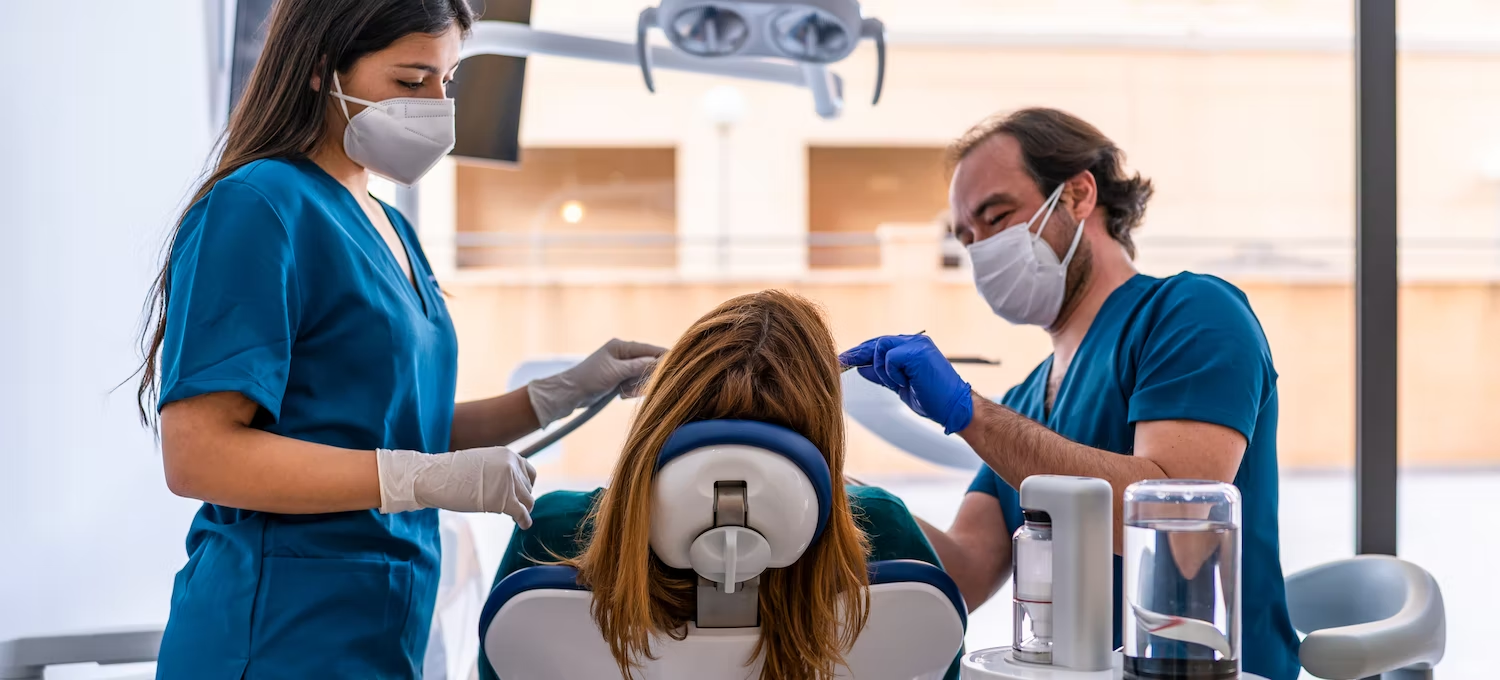
Introduction about Dental Assistant
Dental assistants play a crucial role in the field of dentistry, contributing significantly to the smooth functioning of dental practices. This article aims to provide a comprehensive understanding of the role, responsibilities, and requirements for those considering a career as a dental assistant.
Role and Responsibilities
Chairside Assistance
One of the primary responsibilities of a dental assistant is to provide chairside assistance to dentists during various dental procedures. This involves preparing the treatment room, ensuring all necessary instruments are available, and assisting the dentist during procedures.
Sterilization Procedures
Dental assistants are also responsible for maintaining a sterile environment. This includes sterilizing instruments, disinfecting treatment areas, and adhering to strict infection control protocols.
Educational Requirements
Becoming a dental assistant typically requires completion of a dental assisting program, which can vary in length. These programs cover essential topics such as dental anatomy, radiography, and chairside procedures.
Certification Process
After completing an accredited dental assisting program, individuals can pursue certification through organizations like the Dental Assisting National Board (DANB). Certification enhances job prospects and demonstrates a commitment to professionalism.
Skills and Qualities of a Dental Assistant
Communication Skills
Effective communication is vital in dental assisting. Dental assistants must communicate clearly with both patients and other members of the dental team to ensure the delivery of quality care.
Attention to Detail
Precision is key in dental procedures. Dental assistants need keen attention to detail to follow instructions accurately and anticipate the needs of the dentist.
Career Opportunities
Private Practices
Many dental assistants find employment in private dental practices, where they work closely with dentists in general or specialized dentistry.
Dental Clinics and Hospitals
Dental assistants also play essential roles in dental clinics and hospital settings, contributing to various aspects of patient care.
Challenges Faced by Dental Assistants
While a rewarding career, dental assisting comes with its challenges, including the fast-paced nature of the job and the need to handle diverse patient needs.
Technology in Dental Assisting
Digital Imaging
Advancements in technology, such as digital imaging, have transformed dental practices, allowing for more accurate diagnostics and efficient record-keeping.
Electronic Health Records (EHR)
The integration of electronic health records streamlines administrative tasks, enabling dental assistants to focus more on patient care.
Importance of Continuing Education
To stay current with evolving dental practices and technologies, dental assistants should pursue continuing education opportunities. This ensures they remain competent and enhance their career prospects.
Professional Organizations for Dental Assistants
Membership in organizations like the American Dental Assistants Association (ADAA) provides networking opportunities, access to resources, and a platform for staying informed about industry trends.
Job Outlook and Growth
With the increasing demand for dental services, the job outlook for dental assistants is promising. This growth is attributed to an aging population and a greater emphasis on oral health.
Tips for Aspiring Dental Assistants
Networking
Building professional connections within the dental community can open doors to job opportunities and provide valuable insights into the field.
Gaining Hands-on Experience
Seeking internships or volunteer opportunities allows aspiring dental assistants to gain practical experience and enhance their skill set.
Dental Assistant vs. Dental Hygienist: Understanding the Difference
While both dental assistants and dental hygienists contribute to oral health, they differ in their roles and responsibilities. Understanding these distinctions is crucial for individuals considering a career in dentistry.
Personal Experiences of Dental Assistants
Highlighting real-life experiences of dental assistants adds a personal touch to the article, offering insights into the challenges and rewards of the profession.
How can I apply for admission to Dental Assistant Program
Embarking on a career as a dental assistant requires a solid educational foundation. Follow these steps to successfully apply for admission to a dental assistant program:
Research Accredited Programs
Before applying, research and identify accredited dental assistant programs. Accreditation ensures that the program meets established standards, providing you with a quality education. Check with reputable organizations such as the Commission on Dental Accreditation (CODA) for a list of accredited programs.
Educational Prerequisites
Most dental assistant programs have specific educational prerequisites. Typically, these include a high school diploma or equivalent, with courses in biology and chemistry being advantageous. Review the admission requirements for each program you're interested in to ensure you meet the criteria.
Prepare Application Materials
Compile all necessary application materials, including transcripts, letters of recommendation, and a well-crafted personal statement. Highlight relevant experiences, such as volunteer work or coursework, that demonstrate your commitment to the field.
Complete the Application Form
Follow the instructions provided by the program and complete the application form accurately. Pay attention to deadlines, and submit your application ahead of time to avoid any last-minute complications.
Consider Financial Aid Options
Explore financial aid options available to you. Dental assistant programs may offer scholarships, grants, or other forms of financial assistance. Additionally, check if you qualify for federal student aid programs.
Prepare for Entrance Exams
Some programs may require applicants to take entrance exams, such as the Dental Admission Test (DAT) or the Health Occupations Basic Entrance Test (HOBET). Prepare thoroughly for these exams to ensure a competitive application.
Attend Interviews, if Required
Certain programs may conduct interviews as part of the admission process. Be prepared to discuss your motivation for becoming a dental assistant, your career goals, and any relevant experiences. Dress professionally and express your enthusiasm for the profession.
Stay Informed About Application Status
After submitting your application, stay informed about its status. Check for any additional documents or information requested by the program. Promptly respond to any inquiries to demonstrate your commitment.
Acceptance and Enrollment
Once accepted into a dental assistant program, carefully review the acceptance letter and any accompanying materials. Follow the instructions for enrollment, including the submission of any required fees or documentation.
Prepare for the Program
Before the program begins, familiarize yourself with the curriculum, required textbooks, and any other materials provided by the program. Consider reaching out to current or former students to gain insights into what to expect.
What is the eligibility for Dental Assistant
If you're considering a career as a dental assistant, understanding the eligibility requirements is crucial. Here's a breakdown of the typical criteria for becoming a dental assistant:
Educational Background
High School Diploma or Equivalent: The most basic requirement is a high school diploma or its equivalent, such as a GED. This ensures a foundational level of education.
Completion of an Accredited Dental Assistant Program
Dental Assistant Training Program: To become a dental assistant, you must complete a dental assistant training program from an accredited institution. These programs are offered by community colleges, technical schools, and vocational schools.
Program Content: The program covers essential topics, including dental anatomy, radiography, chairside procedures, and infection control. Ensure that the program you choose is accredited by recognized accreditation bodies like the Commission on Dental Accreditation (CODA).
Hands-On Training and Clinical Experience
Internship or Clinical Placement: Many dental assistant programs include hands-on training through internships or clinical placements. This practical experience is vital for applying theoretical knowledge in real-world dental settings.
Certification Requirements
Dental Assisting National Board (DANB) Certification: While not mandatory, obtaining certification from organizations like the Dental Assisting National Board (DANB) is highly beneficial. Certification demonstrates a commitment to professionalism and can enhance job prospects.
Passing the Certified Dental Assistant (CDA) Exam: The CDA exam, administered by DANB, assesses the candidate's knowledge in various areas, including infection control, radiation health and safety, and chairside procedures.
State-Specific Requirements
Check State Regulations: Be aware of any state-specific requirements for dental assistants. Some states may have additional criteria or licensing requirements.
Continuing Education
Commitment to Lifelong Learning: Stay current with advancements in dental practices by participating in continuing education opportunities. This commitment to ongoing learning ensures that dental assistants remain competent in their roles.
Key Skills and Qualities
Communication Skills: Dental assistants should have effective communication skills to interact with both patients and other members of the dental team.
Attention to Detail: Precision is crucial in dental procedures, and dental assistants must possess keen attention to detail.
Empathy and Professionalism: Demonstrating empathy towards patients and maintaining professionalism in all interactions contribute to a successful career as a dental assistant.
How long does it takes to complete a Dental Assistant program
If you're considering a career as a dental assistant, one of the crucial factors to contemplate is the duration of the educational program. The time it takes to complete a dental assistant program can vary based on several factors. Here's a breakdown of what you can typically expect:
Varied Program Lengths
Certificate Programs: Some dental assistant programs offer certificates and can be completed in a relatively short time, typically ranging from 9 to 12 months. These programs focus on the essential skills and knowledge needed for entry-level positions.
Diploma Programs: Diploma programs may extend the educational period to 18 months. They often include a more in-depth curriculum and may provide additional hands-on training and clinical experience.
Associate Degree Programs: For those seeking a more comprehensive education, associate degree programs are available. These typically take about 2 years to complete and may include a broader range of coursework beyond the core dental assisting subjects.
Part-Time vs. Full-Time Options
Full-Time Programs: If you opt for a full-time schedule, you can complete the program more quickly, especially in certificate and diploma programs. Full-time students may attend classes and clinical sessions throughout the week.
Part-Time Programs: Some institutions offer part-time options to accommodate individuals with other commitments, such as work or family responsibilities. Part-time programs generally take longer to complete but provide flexibility.
Internship or Clinical Components
Duration of Clinical Experience: Many dental assistant programs include internships or clinical components as part of the curriculum. The duration of these practical experiences can vary, impacting the overall length of the program.
Accelerated Programs
Accelerated Options: In some cases, institutions may offer accelerated dental assistant programs. These intensive programs compress the curriculum into a shorter timeframe, allowing students to graduate more rapidly.
Online vs. On-Campus Programs
Online Programs: The rise of online education has extended to dental assistant programs. Online options provide flexibility but may have different structures, potentially affecting the time required for completion.
On-Campus Programs: Traditional on-campus programs offer face-to-face instruction and hands-on training. The duration of on-campus programs can align with the standard timelines mentioned earlier.
State-Specific Regulations
State Requirements: Be mindful of state-specific regulations that may impact program length. Some states may have specific educational hour requirements for dental assistant training.
Certification Process
DANB Certification: While not directly related to program length, obtaining certification from the Dental Assisting National Board (DANB) can add extra time to your journey. The preparation and examination process may extend beyond the program duration.
What are potential career opportunities after Dental Assistant
Exploring Career Opportunities After Becoming a Dental Assistant
Embarking on a career as a dental assistant opens doors to a range of exciting opportunities within the field of dentistry. Here's a glimpse into potential career paths and opportunities that await you after completing your dental assistant education:
Private Dental Practices
Dental Assistant in General Dentistry: Many dental assistants find employment in private dental practices, working alongside general dentists. In this role, you'll be involved in a variety of procedures, ensuring the smooth flow of daily operations.
Specialized Dental Practices
Specialized Dentistry Assistants: Dental assistants can specialize in various areas of dentistry, such as orthodontics, oral surgery, or pediatric dentistry. Specialization enhances your skills in specific procedures and provides a niche for career growth.
Dental Clinics and Hospitals
Hospital Dental Assistant: Some dental assistants choose to work in hospital settings or dental clinics associated with medical facilities. This environment may involve collaboration with other healthcare professionals and exposure to diverse patient cases.
Teaching and Education
Dental Assisting Instructor: With experience and additional education, you may explore a career in teaching. Becoming a dental assisting instructor allows you to share your knowledge and contribute to the education of future dental assistants.
Dental Industry Sales and Marketing
Dental Product Sales Representative: A deep understanding of dental procedures and products can lead to a career in sales. Dental assistants may transition into roles as sales representatives for dental equipment, supplies, or pharmaceutical companies.
Dental Office Management
Office Manager: As you gain experience, you may consider transitioning into dental office management. In this role, you'll be responsible for overseeing administrative tasks, managing staff, and ensuring the efficient operation of the dental practice.
Public Health Organizations
Public Health Dental Assistant: Some dental assistants choose to work in public health, contributing to community dental programs or working in health departments. This avenue allows you to make a positive impact on oral health at a broader level.
Research and Development
Dental Research Assistant: For those with a passion for research, opportunities exist in dental research institutions. Working as a research assistant allows you to contribute to advancements in dental technology, materials, and treatment methods.
Continuing Education and Specialized Training
Continuing Education Coordinator: Dental assistants with a commitment to lifelong learning may explore roles as continuing education coordinators. This involves organizing and facilitating educational programs for dental professionals.
Entrepreneurship
Dental Assisting Entrepreneur: With experience, entrepreneurial dental assistants may establish their own dental assisting businesses, offering services such as training programs, consulting, or temporary staffing solutions.
Global Health Initiatives
International Dental Volunteer: For those with a sense of adventure and a desire to give back, participating in international dental volunteer programs provides an opportunity to contribute to oral health on a global scale.
Syllabus of Dental Assistant
Exploring the Syllabus of a Dental Assistant Program
If you're considering a career as a dental assistant, understanding the comprehensive syllabus of a dental assistant program is essential. The curriculum is designed to equip students with the necessary knowledge and skills for success in the field. Here's an overview of the typical syllabus:
Introduction to Dental Assisting
Understanding the history and evolution of dental assisting
Overview of the role and responsibilities of a dental assistant in a dental team
Dental Anatomy and Physiology
Study of the structure and function of the teeth, gums, and oral cavity
Introduction to the anatomy of the head and neck relevant to dentistry
Radiography and Imaging Techniques
Principles of dental radiography
Techniques for capturing intraoral and extraoral dental X-rays
Radiation safety and protection measures
Infection Control and Sterilization
Understanding infection control protocols in dental settings
Proper techniques for instrument sterilization and disinfection
Personal protective equipment (PPE) usage
Chairside Assisting Techniques
Preparation of treatment rooms for various dental procedures
Assisting the dentist during examinations, restorative procedures, and surgeries
Patient communication and management
Dental Materials and Instruments
Identification and proper handling of dental instruments
Knowledge of dental materials used in restorative and prosthetic dentistry
Maintenance of dental equipment
Dental Emergencies
Recognition and management of common dental emergencies
Emergency protocols and first aid procedures in a dental setting
Preventive Dentistry
Importance of oral hygiene and preventive measures
Application of dental sealants and fluoride treatments
Patient education on maintaining oral health
Dental Office Administration
Front office procedures, appointment scheduling, and record-keeping
Health insurance processing and billing
Interpersonal and communication skills for effective patient interaction
Ethics and Professionalism
Understanding ethical considerations in dental assisting
Maintaining patient confidentiality and privacy
Professional conduct and adherence to industry standards
Legal Regulations in Dentistry
Overview of laws and regulations governing dental practice
HIPAA compliance and patient rights
Documentation and record-keeping requirements
Clinical Experience and Internship
Hands-on clinical experience in a dental setting
Application of theoretical knowledge in real-world scenarios
Supervised internship to enhance practical skills
Certification Preparation
Overview of certification requirements
Review of topics covered in certification exams, such as the Certified Dental Assistant (CDA) exam
Continuing Education Opportunities
Guidance on the importance of lifelong learning in dental assisting
Information on available continuing education programs and resources
Professional Development and Networking
Strategies for career advancement in dental assisting
Participation in professional organizations and networking opportunities
Keeping abreast of industry trends and advancements
Scholarship and grants for Dental Assistant
Navigating Scholarships and Grants for Aspiring Dental Assistants
Pursuing a career as a dental assistant can be a rewarding journey, and financial assistance through scholarships and grants can significantly alleviate the burden of educational costs. Here's a guide to exploring available scholarship and grant opportunities for individuals aspiring to become dental assistants:
American Dental Assistants Association (ADAA) Scholarships
The ADAA offers scholarships to dental assistant students who are members of the association.
Criteria may include academic achievement, commitment to the field, and involvement in community service.
Visit the ADAA website for application details and deadlines.
Dental Assisting National Board (DANB) Scholarship Program
DANB provides scholarships to eligible dental assistant students pursuing DANB certification.
Criteria often include academic performance, dedication to the profession, and financial need.
Check the DANB website for specific scholarship opportunities and application requirements.
Federal Pell Grant
The Federal Pell Grant program provides need-based financial aid to eligible students pursuing postsecondary education.
Dental assistant students can apply by completing the Free Application for Federal Student Aid (FAFSA).
Pell Grants do not require repayment, making them a valuable resource for financial support.
State-Specific Grants and Scholarships
Many states offer grants and scholarships for students pursuing careers in healthcare, including dental assisting.
Research state-specific education grants and scholarship programs to identify opportunities available in your location.
Local Dental Associations and Foundations
Check with local dental associations and foundations for potential scholarship opportunities.
Some organizations may offer financial assistance to students residing in specific regions or pursuing education at local institutions.
Community College and Vocational School Scholarships
Explore scholarship programs offered by community colleges and vocational schools that provide dental assistant training.
These institutions may have scholarships based on academic merit, financial need, or other criteria.
Corporate and Industry-Sponsored Scholarships
Dental product manufacturers, suppliers, and industry-related corporations may offer scholarships to support future professionals.
Keep an eye on announcements and opportunities provided by corporate sponsors in the dental field.
Professional Organizations and Foundations
Beyond the ADAA and DANB, other dental-related professional organizations and foundations may offer scholarships.
Explore opportunities provided by organizations dedicated to advancing dental healthcare.
Employer-Based Tuition Assistance
Some dental offices and healthcare facilities offer tuition assistance or reimbursement programs for employees pursuing further education.
Inquire with potential employers about any educational support they may provide.
Online Scholarship Search Platforms
Utilize online scholarship search platforms to discover a wide range of opportunities.
Websites like Fastweb, Scholarship.com, and College Board's Scholarship Search can help you find relevant scholarships.
Specific Program Scholarships
Some dental assistant training programs may have their own scholarship initiatives.
Inquire with the program coordinator or admissions office about scholarships available to enrolled students.
Minority and Diversity Scholarships
Explore scholarships specifically designed to support minority and underrepresented groups in dental assisting.
Organizations committed to diversity in healthcare may offer targeted financial assistance.
Military and Veterans Benefits
Veterans and individuals affiliated with the military may qualify for educational benefits, including the GI Bill.
Investigate available military and veterans' educational assistance programs.
Financial Aid Office Assistance
Contact the financial aid offices of institutions offering dental assistant programs.
These offices can provide information on available scholarships, grants, and financial aid options.
Application Tips and Deadlines
Start the scholarship search early to ensure you don't miss application deadlines.
Tailor your applications to each scholarship's specific criteria and requirements.
Highlight your academic achievements, passion for dental assisting, and any relevant experiences.
Conclusion
Becoming a dental assistant is a fulfilling journey for those passionate about oral health and patient care. The combination of educational preparation, certification, and ongoing professional development positions individuals for success in this dynamic field.
FAQ's
How long does it take to become a certified dental assistant?
The timeframe varies but typically ranges from 9 months to 2 years, depending on the program.
What are the common challenges faced by dental assistants?
Fast-paced work environments and diverse patient needs are common challenges.
Is certification necessary to become a dental assistant?
While not mandatory, certification enhances job prospects and demonstrates professionalism.
What is the job growth outlook for dental assistants?
The demand for dental assistants is expected to grow, with job opportunities in various settings.
How can I stay updated on advancements in dental assisting?
Joining professional organizations and attending conferences are excellent ways to stay informed.
How Shiksha Hub helps you in
-
 Student Counsellors
 -
 Career Counseling
 -
 Research
 -
 24/7 Support
 -
 Scholarships
 -
 Community