Posted by Admin on 12-07-2023 in Shiksha hub
Diploma in agricultural Engineering Introduction, Admission, Registration, Eligibility, Duration, Fees, Syllabus 2024
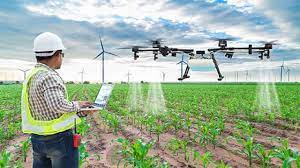
Introduction about Diploma in agricultural Engineering
A Diploma in Agricultural Engineering is a specialized program that focuses on the application of engineering principles and techniques to the field of agriculture. This diploma is designed to equip students with the knowledge and skills necessary to address the unique challenges and requirements of the agricultural sector. The program typically covers a range of topics, including machinery design, irrigation systems, soil management, crop processing, and farm structure design.
Students enrolled in a Diploma in Agricultural Engineering gain a comprehensive understanding of the intersection between engineering and agriculture. They learn to apply engineering principles to enhance agricultural productivity, efficiency, and sustainability. The curriculum often includes both theoretical coursework and practical hands-on experiences, allowing students to develop a solid foundation in the scientific and technical aspects of agricultural engineering.
Key areas of study in a Diploma in Agricultural Engineering may include:
Farm Machinery and Equipment: Understanding the design, operation, and maintenance of agricultural machinery and equipment is crucial for efficient farm operations.
Irrigation and Drainage Systems: Learning about the design and management of irrigation and drainage systems is essential for optimizing water use in agriculture.
Soil and Water Conservation: Studying methods to conserve soil and water resources is vital for sustainable agriculture and environmental stewardship.
Crop Processing and Post-Harvest Technology: Exploring techniques for processing and preserving agricultural products after harvest, ensuring quality and market readiness.
Structural Design for Agriculture: Understanding the principles of designing structures such as barns, greenhouses, and storage facilities to meet the specific needs of agriculture.
Graduates with a Diploma in Agricultural Engineering are well-prepared for careers in various sectors of the agriculture industry, including farm management, agricultural machinery manufacturing, agribusiness, and agricultural consultancy. The practical knowledge and skills gained during the program enable them to contribute to the development of innovative solutions to challenges in modern agriculture, playing a crucial role in ensuring food security and sustainable agricultural practices.
How can I apply for admission to Diploma in agricultural Engineering
To apply for admission to a Diploma in Agricultural Engineering program, you generally need to follow a set of procedures established by the educational institution offering the program. Here's a step-by-step guide on how you can apply:
Research Programs and Institutions:
Identify educational institutions that offer a Diploma in Agricultural Engineering. You can explore universities, colleges, or technical institutes that have reputable agricultural engineering departments.
Review Admission Requirements:
Check the admission requirements for the specific program and institution you are interested in. Requirements may include educational qualifications, such as a high school diploma or its equivalent, and specific courses or subjects at the high school level.
Prepare Necessary Documents:
Gather all the required documents, which typically include:
High school transcripts or equivalent academic records.
Completed application form.
Letters of recommendation (if required).
Personal statement or essay (if required).
Any other documents specified by the institution.
Entrance Exams (if applicable):
Some institutions may require you to take entrance exams. Check whether the program you're interested in has any specific testing requirements, and prepare accordingly.
Submit Application:
Complete and submit the application form along with all the required documents by the specified deadline. This can often be done online through the institution's admissions portal.
Pay Application Fee:
Pay any application fees that may be required. Ensure that you are aware of the payment methods accepted by the institution.
Wait for Admission Decision:
After submitting your application, you will need to wait for the institution to review your materials. This process may take some time, so be patient.
Financial Aid and Scholarships:
Explore financial aid options and scholarships that may be available for agricultural engineering students. Some institutions offer assistance based on merit, financial need, or specific criteria.
Acceptance and Enrollment:
If you receive an offer of admission, carefully review the acceptance letter and follow the instructions for enrollment. This may involve submitting additional documents, paying enrollment fees, and registering for classes.
Orientation and Registration:
Attend any orientation sessions offered by the institution and complete the registration process. This may include selecting courses for your first semester.
What is the eligibility for Diploma in agricultural Engineering
Eligibility criteria for a Diploma in Agricultural Engineering may vary depending on the institution and country. However, I can provide you with a general overview of common eligibility requirements:
Educational Qualifications:
Typically, candidates should have completed their secondary education or its equivalent, such as a high school diploma.
The candidate's academic background should include a strong foundation in science and mathematics, as these subjects are often integral to the agricultural engineering curriculum.
Minimum Grades:
Institutions may specify minimum academic performance requirements, such as a minimum grade point average (GPA) or specific grades in relevant subjects.
Subject Requirements:
Some programs may have specific subject requirements at the high school level, such as coursework in physics, chemistry, biology, and mathematics.
Entrance Exams (if applicable):
In some cases, institutions may require candidates to take entrance exams as part of the admission process. These exams may assess proficiency in subjects like mathematics and science.
Language Proficiency:
If the medium of instruction is in a language other than the candidate's native language, institutions may require proof of proficiency in that language. This is often demonstrated through standardized language proficiency tests such as the TOEFL or IELTS.
Age Limit:
Some institutions may have age restrictions for admission to diploma programs. Ensure that you meet any age-related criteria specified by the institution.
Other Requirements:
Check for any additional requirements, such as letters of recommendation, personal statements, or interviews, which may be part of the application process.
It's crucial to carefully review the specific eligibility criteria outlined by the institution offering the Diploma in Agricultural Engineering. This information is typically available on the institution's official website or through their admissions office. If you have any questions or need clarification regarding eligibility, it is advisable to contact the admissions office for guidance.
How long does it takes to complete a Diploma in agricultural Engineering
The duration of a Diploma in Agricultural Engineering can vary depending on the educational institution and the specific program. In general, these diploma programs are designed to be completed within two to three years of full-time study. However, part-time and online programs may have different timelines.
Here are some key points to consider regarding the duration of a Diploma in Agricultural Engineering:
Full-Time Programs:
Full-time diploma programs typically last for two to three years. This duration includes both academic coursework and practical training or internships.
Part-Time Programs:
Part-time programs may extend the duration, allowing students to pursue their studies while balancing other commitments such as work or family responsibilities. Part-time programs may take longer to complete compared to full-time options.
Online Programs:
Some institutions offer online or distance learning options for agricultural engineering diplomas. The duration of online programs can vary, and students may have the flexibility to pace their studies according to their individual schedules.
Internship or Practical Training:
Many agricultural engineering programs include a practical training component, such as internships or work placements. The duration of these practical experiences may be integrated into the overall program timeline.
Accelerated Programs:
In some cases, institutions may offer accelerated diploma programs that allow students to complete their studies in a shorter timeframe, often by intensifying the coursework or offering more condensed schedules.
What are potential career opportunities after Diploma in agricultural Engineering
Graduates with a Diploma in Agricultural Engineering have a range of career opportunities in various sectors related to agriculture and engineering. Here are some potential career paths:
Agricultural Engineering Technician:
Assist in the design, development, and testing of agricultural machinery and equipment.
Work on maintenance and repair of farm machinery, ensuring proper functionality.
Farm Manager/Supervisor:
Oversee day-to-day operations on farms, managing resources, and implementing efficient agricultural practices.
Make decisions related to crop selection, irrigation, and equipment use.
Agricultural Consultant:
Provide expertise and advice to farmers on improving productivity, crop management, and implementing sustainable practices.
Consult on the selection and use of agricultural machinery and equipment.
Precision Agriculture Specialist:
Use technology to optimize farming practices, such as GPS-guided tractors, remote sensing, and data analysis, to enhance efficiency and reduce environmental impact.
Irrigation Engineer:
Design, implement, and manage irrigation systems to ensure proper water distribution for crops.
Optimize water use efficiency and promote sustainable water management practices.
Seed Technologist:
Work on the development and improvement of crop varieties, focusing on qualities such as yield, resistance to diseases, and adaptability to different climates.
Food Processing Engineer:
Be involved in the design and improvement of equipment and processes for food processing, ensuring the efficient and safe transformation of agricultural products into marketable goods.
Agricultural Machinery Sales Representative:
Work for companies that manufacture or distribute agricultural machinery, selling equipment to farmers and providing technical support.
Environmental Consultant:
Assess and address environmental issues related to agriculture, such as soil and water conservation, sustainable land use, and environmental impact assessments.
Research and Development Specialist:
Contribute to research projects focused on improving agricultural techniques, developing new technologies, and addressing challenges in the agricultural sector.
Government Agricultural Officer:
Work for government agencies involved in agriculture, providing support, guidance, and implementing policies to promote sustainable farming practices and rural development.
Entrepreneur:
Start your own agricultural business, such as a farm, agribusiness, or agricultural service provider.
These career paths demonstrate the diverse opportunities available to individuals with a Diploma in Agricultural Engineering. The specific roles may vary depending on the individual's interests, specialization, and the needs of the agricultural industry in a particular region. Continuous learning and staying updated on advancements in agricultural technology can further enhance career prospects in this dynamic field.
Syllabus of Diploma in agricultural Engineering
Semester 1:
Introduction to Agricultural Engineering:
Overview of agricultural engineering principles, history, and its role in modern agriculture.
Mathematics-I:
Fundamental mathematical concepts and applications relevant to agricultural engineering.
Physics-I:
Basic principles of physics with a focus on mechanics and thermodynamics.
Chemistry-I:
Introduction to basic chemistry principles and their applications in agriculture.
Basic Electrical Engineering:
Understanding electrical systems and their applications in agricultural machinery.
Communication Skills:
Developing effective communication skills, including technical writing and presentation.
Semester 2:
Mathematics-II:
Advanced mathematical concepts relevant to agricultural engineering.
Physics-II:
Continued exploration of physics concepts, including electricity and magnetism.
Chemistry-II:
Further study of chemistry principles, with a focus on applications in agriculture.
Computer Applications:
Introduction to computer technology and applications in agricultural engineering.
Engineering Drawing:
Basic principles of engineering drawing and design.
Semester 3:
Fluid Mechanics:
Principles of fluid flow and their application in agricultural systems.
Strength of Materials:
Study of material properties and their behavior under stress and strain.
Agricultural Machinery-I:
Introduction to farm machinery design, operation, and maintenance.
Soil Science:
Understanding soil properties, fertility, and management for agriculture.
Irrigation Engineering:
Principles of irrigation, water management, and design of irrigation systems.
Semester 4:
Thermodynamics:
Principles of thermodynamics and their application in agricultural machinery.
Agricultural Machinery-II:
Advanced study of farm machinery, including design and optimization.
Farm Power and Energy Sources:
Study of sources of energy for agricultural machinery and farm power.
Agricultural Structures:
Design and construction of structures relevant to agriculture.
Surveying and Leveling:
Techniques for land surveying and leveling.
Semester 5:
Crop Processing Engineering:
Principles of crop processing, post-harvest technology, and storage.
Environmental Engineering:
Addressing environmental issues related to agriculture.
Instrumentation and Control Engineering:
Introduction to control systems and instrumentation in agriculture.
Agricultural Economics:
Basic principles of economics applied to agriculture.
Semester 6:
Biotechnology in Agriculture:
Introduction to biotechnological applications in agriculture.
Project Work:
Undertaking a practical project related to agricultural engineering.
Industrial Training:
Hands-on training and exposure to the industry through internships.
Internship opportunities after completing Diploma in agricultural Engineering
Upon completing a Diploma in Agricultural Engineering, individuals have various internship opportunities to gain practical experience and further enhance their skills. Internships provide a valuable bridge between academic learning and real-world application, allowing students to work in professional settings and develop a deeper understanding of their field. Here are some potential internship opportunities for graduates with a Diploma in Agricultural Engineering:
Agricultural Machinery Companies:
Internships with companies that manufacture, distribute, or service agricultural machinery provide hands-on experience with the latest equipment and technologies.
Farms and Agricultural Enterprises:
Working on farms or with agricultural enterprises allows interns to apply their knowledge in real-world settings, gaining experience in farm management, crop production, and livestock care.
Irrigation Companies:
Interning with companies specializing in irrigation systems provides practical exposure to the design, installation, and maintenance of irrigation infrastructure.
Food Processing Industries:
Internships in food processing companies offer experience in the processing and preservation of agricultural products, including the use of machinery and quality control measures.
Environmental Consultancies:
Interns can work with environmental consulting firms to address issues related to soil and water conservation, sustainable land use, and environmental impact assessments in agriculture.
Research Institutions:
Interning at agricultural research institutions allows individuals to contribute to ongoing projects, conduct experiments, and gain exposure to the latest advancements in agricultural science and technology.
Government Agricultural Departments:
Internships with government agricultural departments provide insights into policy implementation, farm extension services, and the regulatory aspects of agriculture.
Precision Agriculture and Technology Companies:
Interning with companies focused on precision agriculture and agricultural technology allows individuals to work with cutting-edge technologies like GPS-guided systems and data analytics.
Seed Companies:
Internships with seed companies provide exposure to plant breeding, seed production, and testing, contributing to the development of improved crop varieties.
Agricultural Consultancies:
Working with agricultural consulting firms allows interns to assist in providing advice and solutions to farmers, addressing challenges related to crop management, machinery use, and overall farm efficiency.
Agribusiness Companies:
Internships with agribusinesses involved in various aspects of the agricultural supply chain, such as marketing, distribution, and sales, provide a broader understanding of the industry.
Educational and Extension Programs:
Internships with agricultural education programs or extension services involve working with communities to disseminate knowledge, promote best practices, and address agricultural challenges.
When seeking internship opportunities, students can explore career services offered by their educational institution, connect with industry professionals, attend job fairs, and leverage online platforms dedicated to agricultural job placements. Securing internships is not only a valuable learning experience but also a way to build professional networks and enhance employability in the agricultural engineering sector.
Scholarships and grants for Diploma in agricultural Engineering
There are various scholarships and grants available for students pursuing a Diploma in Agricultural Engineering. These financial aid opportunities can help offset the cost of tuition, fees, and other educational expenses. Here are some potential sources of scholarships and grants:
Institutional Scholarships:
Many educational institutions offer scholarships to students based on academic achievement, leadership, or specific criteria related to the field of study. Check with the financial aid office or scholarship department of the institution offering the diploma program for available opportunities.
Government Scholarships:
Government agencies at the national, state, or regional level may provide scholarships for students pursuing agricultural education. Check with relevant government departments or education ministries for information on available scholarships.
Private Foundations and Organizations:
Numerous private foundations and organizations are dedicated to supporting students in agricultural fields. Examples include the National FFA Organization, the American Society of Agricultural and Biological Engineers (ASABE), and other agricultural associations. Explore their websites for scholarship opportunities.
Corporate Scholarships:
Some corporations, especially those in the agricultural and agribusiness sectors, offer scholarships to students pursuing degrees in agricultural engineering. Check with companies that are prominent in the agricultural industry for scholarship programs.
Professional Associations:
Professional associations related to agricultural engineering may offer scholarships to support students in the field. Membership in these associations may also provide access to additional scholarship opportunities. Examples include the American Society of Agricultural and Biological Engineers (ASABE) and the International Commission of Agricultural and Biosystems Engineering (CIGR).
Nonprofit Organizations:
Nonprofit organizations focused on agriculture, sustainable development, and rural communities may offer scholarships to students pursuing studies in agricultural engineering. Explore organizations with a mission aligned with agricultural education.
Regional and Community Scholarships:
Local and regional organizations, community foundations, and agricultural societies may provide scholarships to support students from specific geographic areas.
Ethnic or Minority Scholarships:
Some scholarships are specifically targeted at students from underrepresented ethnic or minority groups in the field of agricultural engineering. Explore scholarship opportunities provided by organizations that focus on diversity and inclusion.
Merit-Based Scholarships:
Scholarships based on academic achievement, leadership, or other merit-based criteria are often available. Check with scholarship databases and search engines that aggregate opportunities based on various criteria.
Online Scholarship Databases:
Utilize online scholarship databases and search engines to find opportunities that match your profile. Websites like Fastweb, Chegg, and Scholarship.com allow you to search for scholarships based on your field of study.
When applying for scholarships, pay attention to eligibility criteria, application deadlines, and submission requirements. Additionally, consider submitting compelling personal statements or essays that highlight your passion for agricultural engineering and your academic and career goals.
Conclusion:
In conclusion, pursuing a Diploma in Agricultural Engineering offers a pathway to a dynamic and rewarding career in the agricultural sector. This specialized program equips students with the knowledge and practical skills needed to address the complex challenges of modern agriculture. Graduates are prepared for a variety of roles, ranging from designing and maintaining agricultural machinery to implementing sustainable farming practices. The internship opportunities, coupled with potential scholarships, enhance the overall educational experience and contribute to the development of well-rounded professionals in the field of agricultural engineering.
FAQs
Q: What is the duration of a Diploma in Agricultural Engineering?
A: The duration of the diploma program is typically two to three years, depending on the institution and whether it is pursued on a full-time or part-time basis.
Q: What are the key areas of study in a Diploma in Agricultural Engineering?
A: The curriculum often includes courses in farm machinery, irrigation systems, soil management, crop processing, structural design, and related subjects.
Q: What career opportunities are available after completing a Diploma in Agricultural Engineering?
A: Graduates can pursue careers as agricultural engineering technicians, farm managers, consultants, precision agriculture specialists, and more. There are opportunities in machinery design, irrigation, and environmental consulting.
Q: Are there internships available for students with a Diploma in Agricultural Engineering?
A: Yes, there are various internship opportunities with agricultural machinery companies, farms, environmental consultancies, and other industry-related organizations.
Q: Are there scholarships available for students pursuing a Diploma in Agricultural Engineering?
A: Yes, students can explore scholarships offered by educational institutions, government agencies, private foundations, corporations, and professional associations in the agricultural sector.
Q: What skills will I develop during the diploma program?
A: Skills acquired include technical proficiency in agricultural machinery, irrigation systems, soil management, and the ability to apply engineering principles to address agricultural challenges. Communication and problem-solving skills are also emphasized.
Q: Can I continue my education after completing a Diploma in Agricultural Engineering?
A: Yes, graduates can pursue further education such as a bachelor's degree in agricultural engineering or related fields to deepen their knowledge and enhance career prospects.
How Shiksha Hub helps you in
-
 Student Counsellors
 -
 Career Counseling
 -
 Research
 -
 24/7 Support
 -
 Scholarships
 -
 Community