Posted by Admin on 02-08-2023 in Shiksha hub
Diploma in Automobile Engineering Technology Introduction, Admission, Registration, Eligibility, Duration, Fees, Syllabus 2024
Introduction about Diploma in Automobile Engineering Technology
A Diploma in Automobile Engineering Technology is a comprehensive program that equips students with the knowledge and skills necessary to pursue a career in the automotive industry. This specialized diploma focuses on the application of engineering principles to the design, manufacturing, maintenance, and repair of automobiles.
Throughout the course, students gain a solid understanding of various aspects of automobile engineering, including automotive mechanics, electronics, and technology. The curriculum typically covers subjects such as automotive design, engine technology, vehicle dynamics, materials and manufacturing processes, automotive electrical systems, and computer-aided design (CAD).
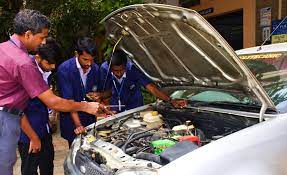
Hands-on training is a key component of the program, allowing students to apply theoretical knowledge to practical situations. This may include working on real automobiles, conducting experiments in laboratories, and using computer simulations to analyze and solve engineering problems related to automobiles.
Students also learn about emerging technologies in the automotive industry, such as hybrid and electric vehicles, autonomous driving systems, and sustainable automotive practices. The goal is to prepare graduates for the evolving demands of the automotive sector, where innovation and technology play a crucial role.
Upon completion of the Diploma in Automobile Engineering Technology, graduates can pursue careers as automotive technicians, service engineers, quality control inspectors, and other roles within the automotive industry. Additionally, this diploma can serve as a foundation for further education and specialization in automotive engineering or related fields.
How can I apply for admission to Diploma in Automobile Engineering Technology Program
Research Programs: Start by researching institutions or technical schools that offer the Diploma in Automobile Engineering Technology. Look for reputable institutions that provide a comprehensive curriculum and practical training.
Check Admission Requirements: Review the admission requirements of the specific program and institution you are interested in. Requirements may include educational qualifications, such as completion of high school or an equivalent qualification.
Application Form: Obtain the application form from the institution's official website or the admissions office. Some institutions may offer online application options. Fill out the application form completely and accurately.
Prepare Supporting Documents: Gather all required supporting documents, which may include:
High school transcripts or equivalent
Proof of identity (such as a copy of your passport or national ID)
Passport-sized photographs
Letters of recommendation (if required)
Any other documents specified by the institution
Entrance Exams or Interviews: Some institutions may require applicants to take entrance exams or participate in interviews. Prepare for these assessments by reviewing relevant subjects and practicing common interview questions.
Submit Application: Submit your completed application form along with all supporting documents to the admissions office by the specified deadline. Pay any application fees that may be required.
Wait for Admission Decision: After submitting your application, wait for the institution to review your materials and make an admission decision. This process may take some time, so be patient.
Acceptance and Enrollment: If you receive an acceptance letter, follow the instructions provided to confirm your acceptance and proceed with the enrollment process. This may involve paying tuition fees, attending orientation sessions, and completing any additional paperwork.
Financial Aid and Scholarships: Explore financial aid options or scholarships that may be available to help support your education. Check with the institution's financial aid office for information on available resources.
Prepare for Classes: Once enrolled, prepare for your classes by obtaining any required textbooks or materials. Familiarize yourself with the program's schedule and be ready to start your studies.
What is the eligibility for Diploma in Automobile Engineering Technology
Educational Qualifications:
Completion of secondary education (high school) or its equivalent is typically a basic requirement.
Some institutions may specify a minimum percentage or grade achieved in relevant subjects, especially in mathematics and science.
Age Limit:
There may be a minimum and maximum age limit for admission. Some programs may have age restrictions to ensure that students are within a suitable academic and professional development stage.
Subject Requirements:
Proficiency in subjects like mathematics and physics is often preferred, as these subjects are foundational to automobile engineering principles.
Entrance Exams:
Certain institutions may require applicants to take and pass specific entrance exams that assess their knowledge in relevant subjects. Performance in these exams may be a factor in the admission decision.
Interviews or Counseling:
Some institutions may conduct interviews or counseling sessions to understand the applicant's motivation, aptitude, and suitability for the program.
Language Proficiency:
Depending on the language of instruction, applicants may need to demonstrate proficiency in the language (such as English) through standardized language tests like the TOEFL or IELTS, especially if it's not their first language.
Work Experience (if applicable):
Some diploma programs may consider relevant work experience in the automotive or engineering field as a favorable factor during the admission process.
How long does it takes to complete a Diploma in Automobile Engineering Technology program
The duration of a Diploma in Automobile Engineering Technology program can vary depending on the institution and the specific curriculum they offer. Typically, the duration ranges from 2 to 3 years. The program is often structured into semesters or quarters, and students may need to complete a certain number of credit hours to graduate.
Here are some factors that can influence the duration of the program:
Credit Hours: The total number of credit hours required for the diploma will impact the program's length. Programs with more credit hours may take longer to complete.
Semester Structure: Some institutions operate on a semester system, while others may have a trimester or quarter system. The number and length of academic terms in a year can affect the overall program duration.
Cooperative Education or Internship: Programs that include a mandatory cooperative education or internship component may have a longer duration to accommodate the practical work experience.
Part-Time or Full-Time Study: The duration may vary based on whether a student is enrolled on a full-time or part-time basis. Full-time students typically complete the program more quickly than part-time students.
Prerequisites or Remedial Courses: If students need to complete prerequisite courses or remedial coursework, it may extend the overall duration of the program.
What are potential career opportunities after Diploma in Automobile Engineering Technology
Automotive Technician:
Work as a hands-on technician responsible for diagnosing and repairing issues in automobiles. Technicians may specialize in areas such as engine repair, transmission systems, or electrical systems.
Automotive Engineer:
Assist in the design, development, and testing of automotive systems and components. This role involves applying engineering principles to improve vehicle performance, safety, and efficiency.
Service Advisor:
Serve as a liaison between customers and automotive service departments. Service advisors communicate with clients, assess vehicle issues, and recommend repair and maintenance services.
Quality Control Inspector:
Inspect and ensure the quality of automotive components and systems. Quality control inspectors play a vital role in maintaining the standards of production and identifying defects.
Vehicle Testing Engineer:
Conduct tests on vehicles to evaluate their performance, safety, and compliance with regulations. This may involve both physical testing and the use of computer simulations.
Auto Parts Sales Representative:
Work in sales for automotive parts manufacturers or retailers. Sales representatives help customers find the right parts and accessories for their vehicles.
Fleet Manager:
Manage a fleet of vehicles for organizations or companies. This role involves overseeing maintenance, scheduling repairs, and ensuring the efficient operation of the fleet.
CAD Technician:
Use computer-aided design (CAD) software to create technical drawings and plans for automotive components. CAD technicians play a crucial role in the design and manufacturing processes.
Diagnosis Technician:
Specialize in diagnosing complex automotive issues using advanced diagnostic tools and techniques. This role is crucial for identifying and resolving challenging problems in vehicles.
Entrepreneurship:
Start a business, such as an automotive repair shop or an auto parts dealership, leveraging the skills and knowledge gained from the diploma program.
Specialized Technician (e.g., Brake Technician, Transmission Technician):
Focus on a specific area of automotive repair or maintenance, becoming a specialist in areas like brakes, transmissions, or electronics.
Technical Writer:
Create technical documentation, manuals, and guides related to automotive systems and technologies. Technical writers help communicate complex information in a clear and understandable manner.
Syllabus of Diploma in Automobile Engineering Technology
Semester | Subjects |
|----------|----------------------------------------|
| 1 | - Mathematics I |
| | - Physics I |
| | - English Communication Skills I |
| | - Basics of Mechanical Engineering |
| | - Introduction to Automobile Technology|
| | - Workshop Practice I |
| | - Computer Applications |
|----------|----------------------------------------|
| 2 | - Mathematics II |
| | - Physics II |
| | - English Communication Skills II |
| | - Automobile Chassis and Suspension |
| | - Automotive Electrical Systems I |
| | - Workshop Practice II |
| | - Environmental Science |
|----------|----------------------------------------|
| 3 | - Automobile Transmission Systems |
| | - Automotive Engine Technology I |
| | - Vehicle Dynamics |
| | - Materials and Manufacturing Processes|
| | - Fluid Mechanics and Hydraulic Machines|
| | - Workshop Practice III |
| | - Industrial Training (Internship) |
|----------|----------------------------------------|
| 4 | - Automotive Engine Technology II |
| | - Automotive Electronics |
| | - Computer-Aided Design (CAD) |
| | - Thermodynamics and Heat Transfer |
| | - Workshop Practice IV |
| | - Project Work |
|----------|----------------------------------------|
| 5 | - Automotive Control Systems |
| | - Alternative Propulsion Systems |
| | - Automotive Pollution Control |
| | - Vehicle Maintenance and Management |
| | - Entrepreneurship and Project Management|
| | - Workshop Practice V |
|----------|----------------------------------------|
| 6 | - Advanced Vehicle Technologies |
| | - Industrial Automation |
| | - Professional Ethics and Communication|
| | - Seminar and Presentation |
| | - Comprehensive Project |
| | - Industrial Training II (Internship) |
This is a general template, and the actual syllabus may vary. It's recommended to check with the specific institution offering the program for the most accurate and up-to-date information regarding the curriculum and subjects covered in each semester.
Internship opportunities after completing Diploma in Automobile Engineering Technology
After completing a Diploma in Automobile Engineering Technology, individuals have various internship opportunities within the automotive industry. Internships provide valuable hands-on experience, exposure to real-world challenges, and an opportunity to apply the knowledge gained during the diploma program. Here are potential internship opportunities:
Automotive Repair Shops:
Intern as an automotive technician or mechanic in a repair shop. Gain practical experience in diagnosing and fixing vehicle issues under the guidance of experienced professionals.
Automobile Dealerships:
Intern in the service department of automobile dealerships. Learn about routine maintenance, repairs, and customer service related to various vehicle models.
Automotive Manufacturing Companies:
Intern in the production or quality control departments of automotive manufacturing companies. Gain insight into the manufacturing processes and quality assurance procedures.
Automotive Research and Development (R&D) Centers:
Intern in R&D centers focused on developing new automotive technologies. Contribute to research projects and gain exposure to innovation in the field.
Fleet Management Companies:
Intern with companies that manage vehicle fleets. Learn about fleet maintenance, scheduling, and management of a variety of vehicles.
Auto Parts Suppliers:
Intern with companies that supply automotive parts. Gain experience in the production, quality control, and distribution of parts used in vehicles.
Automotive Design Studios:
Intern in design studios that focus on automotive design. Contribute to design projects and gain exposure to the creative aspects of automobile engineering.
Automotive Testing Facilities:
Intern at testing facilities where vehicles undergo various tests for safety, performance, and compliance. Learn about testing procedures and data analysis.
Environmental Agencies:
Intern with agencies focused on automotive emissions and environmental impact. Gain knowledge about emission control technologies and sustainability practices in the automotive industry.
Electric and Hybrid Vehicle Companies:
Intern with companies specializing in electric and hybrid vehicles. Learn about the technology, maintenance, and challenges associated with alternative propulsion systems.
Government Transport Departments:
Intern with government transport departments to understand regulations, inspections, and maintenance practices related to public and commercial vehicles.
Automotive Software Development Companies:
Intern in companies that develop software for automotive applications. Gain experience in programming and software testing specific to the automotive sector.
Scholorship and grants for Diploma in Automobile Engineering Technology
Institutional Scholarships:
Many educational institutions offer scholarships to students based on academic merit, financial need, or a combination of both. Check with the admissions or financial aid office of the institution offering the diploma program for information on available scholarships.
Government Scholarships and Grants:
Government agencies at the local, regional, or national level may provide scholarships or grants to support students pursuing technical education. Explore government websites, scholarship databases, or contact the relevant education department for information on available programs.
Industry-Specific Scholarships:
Some automotive industry associations or companies may offer scholarships to students pursuing studies in automobile engineering or related fields. Check with industry organizations, companies, or foundations that are active in the automotive sector.
Private Foundations and Organizations:
Private foundations and organizations dedicated to supporting education may offer scholarships to students in engineering and technology programs. Research and apply for scholarships from entities that align with your academic and career goals.
Professional Associations:
Professional associations related to automobile engineering or the broader field of engineering may provide scholarships to students. Membership in these associations may also offer networking opportunities and other benefits.
Community and Nonprofit Organizations:
Local community organizations or nonprofits may have scholarship programs to support students in technical fields. Check with community foundations, rotary clubs, or similar organizations in your area.
Corporate Sponsorships:
Some companies in the automotive industry may have sponsorship or scholarship programs for students pursuing education in automobile engineering. Research companies that align with your career goals and check if they offer financial support for education.
Online Scholarship Databases:
Explore online scholarship databases that aggregate information about various scholarships available to students. Websites like Fastweb, Chegg, and Scholarship.com can be useful in finding scholarship opportunities.
Conclusion
In conclusion, a Diploma in Automobile Engineering Technology opens doors to a world of opportunities in the ever-evolving automotive industry. From hands-on experience in workshops to cutting-edge technology in vehicle design, this program equips you with the skills needed for a successful career. Whether you're interested in becoming an automotive technician, engineer, or pursuing further studies, the diploma sets the stage for a journey into automotive innovation. Embrace the dynamic world of automobiles and drive your career forward with confidence.
FAQs
Q1: What is the duration of the Diploma in Automobile Engineering Technology program?
A: Typically, the program takes 2 to 3 years to complete, depending on the institution and curriculum.
Q2: What are the potential career opportunities after completing the diploma?
A: Graduates can pursue careers as automotive technicians, engineers, service advisors, quality control inspectors, and more.
Q3: Are there scholarship opportunities available for students in this program?
A: Yes, various scholarships and grants are available from educational institutions, government programs, industry associations, and private organizations.
Q4: Can I specialize in a specific area within automobile engineering during the program?
A: Yes, some programs offer specialization options, allowing students to focus on areas such as automotive electronics, design, or alternative propulsion systems.
Q5: How can I apply for admission to a Diploma in Automobile Engineering Technology program?
A: Follow the outlined steps, including researching programs, checking admission requirements, filling out the application form, and submitting supporting documents. For detailed information, contact the admissions office of the respective institution.
How Shiksha Hub helps you in
-
 Student Counsellors
 -
 Career Counseling
 -
 Research
 -
 24/7 Support
 -
 Scholarships
 -
 Community