Posted by Admin on 27-07-2023 in Shiksha hub
Diploma in Radiological Technology Introduction, Admission, Registration, Eligibility, Duration, Fees, Syllabus 2024
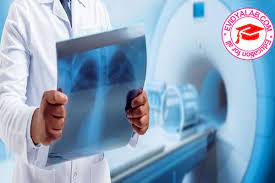
Introduction about Diploma in Radiological Technology
Radiological technology, a pivotal aspect of modern healthcare, involves the use of medical imaging to diagnose and treat various medical conditions. Among the educational avenues available, a Diploma in Radiological Technology stands out as a comprehensive and specialized program that equips individuals with the skills needed to excel in this field.
Definition of Radiological Technology
Radiological technology encompasses a range of medical imaging techniques, including X-rays, CT scans, and MRIs, to provide insights into the human body's internal structures. It plays a crucial role in aiding physicians in diagnosing illnesses, monitoring treatment progress, and guiding surgical procedures.
Importance of Diploma in Radiological Technology
Evolution of Radiological Techniques Radiological technology has evolved significantly over the years, from the discovery of X-rays by Wilhelm Roentgen to the development of advanced imaging modalities. A diploma program delves into the historical progression, offering students a comprehensive understanding of the field.
Milestones in Radiological Technology The curriculum often covers key milestones, such as the invention of the CT scan and MRI. Understanding these milestones provides students with a historical context, fostering an appreciation for the advancements that have shaped the field.
Curriculum Overview
Core Subjects The curriculum typically includes core subjects like anatomy, physiology, radiation physics, and imaging techniques. These foundational courses lay the groundwork for students to grasp the scientific principles behind radiological technology.
Practical Training Hands-on experience is a vital component of the diploma program. Practical training in real-world settings, such as hospitals or clinics, allows students to apply theoretical knowledge, honing their skills under the guidance of experienced professionals.
Specializations Some diploma programs offer specializations, enabling students to focus on areas like diagnostic radiography, nuclear medicine, or radiation therapy. This diversification caters to individual interests and career goals.
Career Opportunities
Job Market Demand The demand for qualified radiological technologists is on the rise, given the increasing reliance on medical imaging for diagnosis and treatment planning. Graduates of diploma programs find themselves in a favorable job market with diverse employment opportunities.
Varied Work Settings Radiological technologists can work in hospitals, diagnostic imaging centers, or specialized clinics. The versatility of the diploma program prepares graduates to adapt to different work environments.
Salary Prospects With a diploma in hand, professionals can enjoy competitive salaries. The article will delve into average salary ranges and factors influencing remuneration in the field.
Advancements in Radiological Technology
Technological Innovations Ongoing advancements in radiological technology, such as 3D imaging and artificial intelligence integration, are transforming diagnostic capabilities. The article will explore how staying abreast of these innovations is a crucial aspect of a radiological technologist's role.
Impact on Medical Diagnostics The integration of advanced technologies enhances the accuracy and efficiency of medical diagnostics. Understanding these impacts is essential for professionals navigating the evolving landscape of radiological technology.
Skills Acquired
Technical Competence The diploma program not only imparts theoretical knowledge but also hones technical skills. Proficiency in operating imaging equipment and mastering imaging techniques is vital for success in the field.
Communication Skills Radiological technologists collaborate with multidisciplinary healthcare teams. Effective communication skills are essential for conveying complex information to patients and working seamlessly with other medical professionals.
Critical Thinking The ability to analyze imaging results critically and make informed decisions is a skill developed during the diploma program. This aspect explores how critical thinking contributes to accurate diagnoses.
Accreditation and Certification
Importance of Accredited Programs Choosing an accredited diploma program ensures that students receive quality education and meet industry standards. Accreditation is a mark of approval that enhances the program's credibility.
Certification Process After completing the diploma, graduates often pursue certification from relevant professional bodies. This section will outline the certification process and its significance in the job market.
Challenges in Radiological Technology Education
Technological Rapid Changes The fast-paced evolution of technology poses challenges in curriculum development. The article will discuss how educational institutions address the need for constant updates to keep pace with industry advancements.
Balancing Theory and Practice Achieving a balance between theoretical knowledge and practical skills is a common challenge. The diploma program's structure, with its emphasis on hands-on training, addresses this concern.
Testimonials and Success Stories
Real-Life Experiences Sharing real-life experiences of individuals who completed the diploma program adds a personal touch. Testimonials highlight the impact of the program on their careers and provide insights for prospective students.
Achievements of Diploma Graduates Highlighting notable achievements of diploma graduates showcases the program's effectiveness and its contribution to the success of professionals in the field.
Future Trends in Radiological Technology
Emerging Technologies Exploring emerging technologies in radiological technology, such as virtual reality applications and advanced imaging modalities, sheds light on the future landscape of the profession.
Potential Developments Anticipating future developments, such as the integration of AI in radiological workflows, allows readers to grasp the
How can I apply for admission to Diploma in Radiological Technology
Application Process
Eligibility Criteria To apply for admission to a Diploma in Radiological Technology program, you must first meet the eligibility criteria set by the respective educational institution. Common requirements include a high school diploma or its equivalent with a strong background in science subjects. Some programs may also consider relevant work experience or additional certifications.
Admission Requirements
Application Form: Start by obtaining and filling out the official application form from the institution's admissions office or website.
Transcripts: Submit your high school transcripts, showcasing your academic performance and proficiency in science subjects.
Letters of Recommendation: Some programs may require letters of recommendation from teachers, employers, or professionals in the healthcare field who can vouch for your suitability for the program.
Personal Statement: Write a compelling personal statement outlining your motivation to pursue a career in radiological technology, your relevant experiences, and your career goals.
Entrance Exam: Prepare for and take any required entrance exams, which may assess your knowledge in science and mathematics.
Scholarships and Financial Aid
Available Scholarships
Merit-Based Scholarships: Many institutions offer scholarships based on academic achievements. Ensure your application reflects your academic prowess to be considered for these scholarships.
Need-Based Scholarships: If you require financial assistance, explore need-based scholarships that take into account your financial situation.
Program-Specific Scholarships: Some diploma programs in radiological technology may have specific scholarships for outstanding students in the field.
Financial Support Options
Student Loans: Investigate student loan options available in your region. Many financial institutions offer student loans with favorable terms for education.
Work-Study Programs: Some institutions provide work-study programs that allow you to gain practical experience in the field while supporting your education financially.
Understanding the application process and exploring financial aid options are crucial steps in embarking on a Diploma in Radiological Technology. Ensure you check the specific requirements of the institution you're interested in, as they may vary. Good luck with your application
What is the eligibility for Diploma in Radiological Technology
Application Process
Eligibility Criteria
To pursue a Diploma in Radiological Technology, individuals must meet specific eligibility criteria outlined by the educational institutions offering the program. The eligibility requirements generally include:
Educational Background:
A high school diploma or its equivalent is a fundamental prerequisite.
Strong academic performance, especially in science subjects such as biology, chemistry, and physics, is often preferred.
Age Criteria:
Some institutions may have age restrictions or preferences. Ensure you are within the specified age range for admission.
Relevant Coursework:
Completion of prerequisite coursework in sciences or healthcare-related subjects may be required. Check the program's specifics for any subject prerequisites.
Entrance Exams:
Certain institutions may mandate entrance exams to assess your knowledge in relevant subjects, such as biology and mathematics.
Work Experience (Optional):
While not universally required, some programs may consider work experience in healthcare or a related field as a valuable asset during the admission process.
How long does it takes to complete a Diploma in Radiological Technology
Duration of Diploma in Radiological Technology
Completing a Diploma in Radiological Technology typically involves a specific duration of academic and practical training. The length of the program may vary based on factors such as the educational institution, program structure, and country-specific regulations. Here's a general overview:
Standard Duration:
In many institutions, a Diploma in Radiological Technology is designed to be completed in approximately 2 to 3 years.
The program combines classroom instruction with hands-on clinical experience to provide a comprehensive understanding of radiological technology.
Credit Hours and Curriculum:
The duration may also be measured in credit hours. A typical diploma program may require completion of a specific number of credit hours, with each credit hour representing a certain amount of instructional time.
The curriculum includes core courses, practical training, and, in some cases, elective courses or specializations.
Part-Time and Full-Time Options:
Some institutions offer flexible scheduling, allowing students to pursue the diploma on a part-time basis. This option may extend the overall duration of the program.
Full-time students can usually complete the diploma in the standard duration outlined by the institution.
Clinical Training Period:
A significant portion of the program is dedicated to clinical training, where students apply their theoretical knowledge in real-world healthcare settings. The duration of this training may vary but is essential for practical skill development.
What are potential career opportunities after Diploma in Radiological Technology
IV. Career Opportunities
After successfully completing a Diploma in Radiological Technology, graduates open doors to diverse and rewarding career opportunities within the field. The program equips individuals with the necessary skills and knowledge to excel in various healthcare settings. Here are some potential career paths:
Radiologic Technologist:
As a radiologic technologist, you will perform diagnostic imaging examinations, including X-rays and CT scans. This role is crucial for aiding physicians in diagnosing and treating medical conditions.
MRI Technologist:
Specializing in magnetic resonance imaging (MRI), technologists in this role operate advanced equipment to create detailed images of internal body structures, assisting in more precise diagnoses.
CT Technologist:
Computed tomography (CT) technologists focus on conducting CT scans, which provide cross-sectional images of the body. This specialization is integral in diagnosing conditions with higher detail than traditional X-rays.
Nuclear Medicine Technologist:
Nuclear medicine technologists administer radioactive drugs and use specialized cameras to create images that help diagnose and treat diseases, particularly in areas such as oncology and cardiology.
Radiation Therapist:
Graduates may pursue a career as a radiation therapist, working with oncologists to administer radiation treatments to patients with cancer.
Mammography Technologist:
Specializing in mammography, these technologists focus on imaging the breast to detect and diagnose breast cancer, playing a crucial role in women's health.
Quality Control Technologist:
Ensuring the proper functioning and calibration of imaging equipment, quality control technologists contribute to maintaining the accuracy of diagnostic procedures.
Radiology Department Administrator:
With experience, graduates may move into administrative roles, overseeing the operations of radiology departments within healthcare institutions.
Educator or Trainer:
Sharing expertise by becoming an educator or trainer in radiological technology programs, preparing the next generation of professionals.
Researcher in Medical Imaging:
Contributing to advancements in the field by engaging in research related to medical imaging technologies and techniques.
These career opportunities showcase the versatility of a Diploma in Radiological Technology, providing graduates with a range of options to align with their interests and career goals. The evolving landscape of healthcare continually offers new prospects for skilled professionals in this dynamic field.
Syllabus of Diploma in Radiological Technology
III. Curriculum Overview
A Diploma in Radiological Technology typically follows a structured curriculum that combines theoretical knowledge with practical training. The program is divided into semesters, each covering specific subjects and skill development. Here is a semester-wise breakdown of the syllabus:
Semester 1
Introduction to Radiological Technology
Overview of the field, historical development, and ethical considerations.
Anatomy and Physiology
In-depth study of human anatomy and physiology, emphasizing structures relevant to radiological technology.
Radiation Physics
Fundamentals of radiation, its properties, and interaction with matter.
Basic Imaging Techniques
Introduction to basic imaging modalities, including X-rays and their applications.
Communication Skills
Developing effective communication skills for interacting with patients and healthcare professionals.
Semester 2
Radiographic Procedures I
Detailed study of radiographic positioning and techniques.
Radiation Protection and Safety
Understanding safety protocols for both patients and technologists.
Medical Ethics and Legal Issues
Exploration of ethical considerations and legal aspects in the practice of radiological technology.
Clinical Practicum I
Hands-on experience in a clinical setting to apply theoretical knowledge.
Semester 3
Advanced Imaging Techniques
Exploration of advanced imaging modalities, including CT scans and MRIs.
Radiographic Procedures II
Advanced study of radiographic procedures with a focus on specialized areas.
Pathology for Radiographers
Understanding pathological conditions relevant to radiological diagnostics.
Patient Care in Radiology
Emphasis on patient care, including communication, empathy, and ensuring patient comfort.
Semester 4
Clinical Practicum II
Continued hands-on experience in a clinical environment, building proficiency.
Radiation Biology
Study of the biological effects of radiation on living tissues.
Quality Control in Imaging
Techniques for ensuring the quality and accuracy of imaging equipment.
Professional Development
Career preparation, resume building, and interview skills.
Semester 5
Specialization Electives
Introduction to specializations such as nuclear medicine or radiation therapy.
Research Methods in Radiology
Basic research methods for radiological studies.
Clinical Practicum III
Advanced clinical experience with a focus on specialization.
Healthcare Administration
Overview of healthcare administration and management in radiological departments.
Internship opportunities after completing Diploma in Radiological Technology
Choosing the Right Diploma Program
Accreditation Status
Research the Program's Accreditation: Before applying for a Diploma in Radiological Technology, ensure that the program is accredited by relevant accrediting bodies. Accreditation ensures that the program meets industry standards and provides quality education.
Importance of Accreditation: Graduating from an accredited program enhances your credibility in the job market and increases the likelihood of recognition by employers.
Faculty and Facilities
Qualified Faculty: Evaluate the qualifications and expertise of the faculty members. Experienced and knowledgeable instructors contribute significantly to the quality of education.
State-of-the-Art Facilities: Check the facilities available for practical training. Access to modern imaging equipment and simulation labs enhances the learning experience.
Alumni Success
Review Alumni Achievements: Investigate the achievements of alumni from the program. Successful professionals who have excelled in their careers are indicative of a program's effectiveness.
Networking Opportunities: Programs with strong alumni networks may offer valuable networking opportunities for future career growth.
XI. Application Process
Eligibility Criteria
Review Eligibility Requirements: Thoroughly understand the eligibility criteria for the Diploma in Radiological Technology. Ensure you meet the educational and any additional requirements specified by the program.
Prepare Necessary Documents: Gather all required documents, including transcripts, letters of recommendation, and a well-crafted personal statement.
Admission Requirements
Complete the Application Form: Obtain and fill out the official application form. Pay attention to details and provide accurate information.
Transcripts and Letters of Recommendation: Submit high school transcripts and any requested letters of recommendation. Ensure these documents reflect your academic achievements and capabilities.
XII. Scholarships and Financial Aid
Available Scholarships
Explore Merit-Based Scholarships: Look into scholarships based on academic merit. Highlight your academic achievements in your application to be considered for these opportunities.
Consider Need-Based Scholarships: If you require financial assistance, explore need-based scholarships. Provide information about your financial situation to be eligible for these scholarships.
Financial Support Options
Research Student Loan Options: Investigate student loan options available in your region. Understand the terms and conditions associated with each loan.
Look into Work-Study Programs: Some institutions offer work-study programs that allow you to gain practical experience while supporting your education financially.
Understanding the application process and exploring financial aid options are crucial steps in pursuing a Diploma in Radiological Technology. By carefully following these guidelines, you enhance your chances of a successful application and a fulfilling educational experience.
Scholarships and grants for Diploma in Radiological Technology
Available Scholarships
Merit-Based Scholarships:
Many institutions offering a Diploma in Radiological Technology provide merit-based scholarships to recognize and reward academic excellence. High-achieving students with outstanding academic records may be eligible for these scholarships.
Need-Based Scholarships:
Need-based scholarships are designed to support students who demonstrate financial need. Applicants often need to provide details about their financial situation to be considered for these scholarships.
Program-Specific Scholarships:
Some diploma programs in radiological technology offer scholarships specific to the program. These scholarships may be awarded based on achievements, contributions to the field, or other program-related criteria.
Financial Support Options
Student Loans:
Investigate student loan options available in your region. Financial institutions and government programs may offer student loans with favorable terms to support your education.
Work-Study Programs:
Some institutions provide work-study programs, allowing students to work part-time while pursuing their diploma. This not only offers financial support but also provides valuable hands-on experience in the field.
External Scholarships and Grants:
Explore external scholarship opportunities from organizations, foundations, or government agencies. Various entities offer scholarships and grants to students pursuing careers in healthcare, including radiological technology.
Institutional Grants:
Check if the institution offering the diploma program provides grants to students. Institutional grants may be based on various criteria, such as academic performance, extracurricular activities, or specific achievements.
Professional Associations:
Some professional associations related to radiological technology may offer scholarships to support aspiring professionals. Look into associations relevant to the field and their scholarship opportunities.
Military or Government Assistance:
If you have a military background or are affiliated with certain government programs, explore potential financial assistance options available to you.
Applying for scholarships and financial aid requires careful research and attention to deadlines. Start the application process early, and consider reaching out to the institution's financial aid office for guidance on available options. Remember to provide accurate and complete information in your applications to maximize your chances of securing financial support for your Diploma in Radiological Technology.
Conclusion
In conclusion, pursuing a Diploma in Radiological Technology opens a gateway to a dynamic and vital field within healthcare. The journey through this program not only equips individuals with the technical skills needed for medical imaging but also fosters a deep understanding of the broader healthcare landscape.
Throughout the curriculum, students delve into the intricacies of radiographic procedures, radiation physics, and advanced imaging techniques. The combination of classroom learning and hands-on clinical experience ensures a well-rounded education that prepares graduates for the challenges and opportunities in the field of radiological technology.
The program not only focuses on technical proficiency but also emphasizes the significance of effective communication, ethical considerations, and patient care. Graduates emerge with a skill set that extends beyond operating imaging equipment—they become integral members of healthcare teams, contributing to accurate diagnoses and improved patient outcomes.
Moreover, the evolving nature of radiological technology is addressed through the exploration of emerging technologies, research methods, and a forward-looking perspective on future trends. This ensures that graduates are not only proficient in current practices but are also well-prepared to adapt to the continuous advancements in medical imaging.
FAQ,s
Q: What is Radiological Technology, and what does it involve?
A: Radiological Technology involves the use of medical imaging techniques like X-rays, CT scans, and MRIs to diagnose and treat medical conditions. It plays a crucial role in providing insights into the human body's internal structures.
Q: What are the eligibility criteria for enrolling in a Diploma in Radiological Technology program?
A: Eligibility criteria typically include a high school diploma or equivalent with a strong background in science subjects. Some programs may have additional requirements, such as entrance exams or work experience.
Q: How long does it take to complete a Diploma in Radiological Technology?
A: The duration of the program is generally 2 to 3 years, depending on the institution. Full-time and part-time options may be available.
Q: What career opportunities are available after completing a Diploma in Radiological Technology?
A: Graduates can pursue careers as radiologic technologists, MRI technologists, CT technologists, radiation therapists, and more. The diploma opens doors to various roles in healthcare settings.
Q: Are there internship opportunities as part of the program?
A: Yes, many programs include clinical practicum components where students gain hands-on experience in real-world healthcare settings, applying theoretical knowledge.
Q: Are there scholarships or financial aid options for the Diploma in Radiological Technology?
A: Yes, various scholarships, grants, and financial aid options are available. These include merit-based scholarships, need-based scholarships, and program-specific scholarships.
Q: Can I specialize in a particular area within radiological technology during the program?
A: Some programs offer specializations, allowing students to focus on areas like diagnostic radiography, nuclear medicine, or radiation therapy.
Q: How does the program prepare students for advancements in radiological technology?
A: The curriculum often includes topics on emerging technologies, research methods, and a forward-looking perspective to ensure graduates stay abreast of advancements in the field.
Q: What are the qualities of a successful radiological technologist?
A: Successful technologists possess technical competence, effective communication skills, critical thinking abilities, and a commitment to patient care.
Q: How can I apply for admission to a Diploma in Radiological Technology program?
A: The application process typically involves filling out an application form, submitting transcripts, letters of recommendation, and possibly taking entrance exams. Specific requirements vary by institution.
How Shiksha Hub helps you in
-
 Student Counsellors
 -
 Career Counseling
 -
 Research
 -
 24/7 Support
 -
 Scholarships
 -
 Community