Posted by Admin on 21-07-2023 in Shiksha hub
ITI Tool & Die Maker - Press Tools, Jigs & Fixtures introduction, Admission, Registration, Eligibility, Duration, Fees, Syllabus 2024
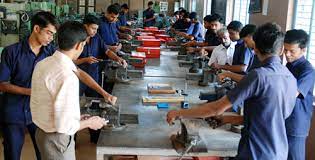
Introduction about ITI Tool & Die Maker - Press Tools, Jigs & Fixtures
The ITI (Industrial Training Institute) program for Tool & Die Maker with a specialization in Press Tools, Jigs & Fixtures is a comprehensive training initiative designed to equip individuals with the skills and knowledge required in the field of precision engineering and manufacturing. This specialized program focuses on the development of expertise in the creation of tools and dies, as well as the design and implementation of jigs and fixtures.
Tool & Die Maker: A Tool & Die Maker is a skilled professional responsible for the creation and maintenance of tools, dies, and molds used in manufacturing processes. These components are crucial in shaping, forming, and cutting materials to create a wide range of products. The precision and accuracy of these tools significantly impact the quality and efficiency of the manufacturing process.
Press Tools: Press tools play a vital role in metal forming processes, such as stamping and punching. ITI students specializing in Press Tools learn to design, fabricate, and maintain these tools. They gain insights into the various types of presses, materials, and techniques involved in creating precise components used in industries like automotive, aerospace, and electronics.
Jigs & Fixtures: Jigs and fixtures are essential devices in manufacturing that aid in the positioning and holding of workpieces during machining or assembly. ITI students specializing in Jigs & Fixtures learn the principles of design, fabrication, and application of these devices. This specialization is crucial for achieving consistency, repeatability, and efficiency in production processes.
Curriculum Highlights: The ITI Tool & Die Maker program covers a diverse range of subjects, including blueprint reading, machine tool operations, computer-aided design (CAD), metallurgy, and quality control. Practical hands-on training is a key component, allowing students to apply theoretical knowledge to real-world scenarios.
Career Opportunities: Graduates of the ITI Tool & Die Maker program with a specialization in Press Tools, Jigs & Fixtures are well-prepared for careers in industries such as automotive manufacturing, aerospace, tool and die shops, and metal fabrication. They may find employment as toolmakers, die makers, CNC machinists, or quality control inspectors.
How can I apply for admission ITI TOOL & DIE MAKER PRESS TOOLS, JIGS & FIXTURES Program
To apply for admission to the ITI Tool & Die Maker - Press Tools, Jigs & Fixtures program, you typically need to follow a set of steps. Here's a general guide on how you can go about it:
Research ITI Institutes: Identify Industrial Training Institutes (ITIs) that offer the Tool & Die Maker program with a specialization in Press Tools, Jigs & Fixtures. You can check online or visit the official websites of ITI institutes to gather information about the courses they offer.
Check Eligibility Criteria: Review the eligibility criteria for admission. ITI programs often have specific educational qualifications or age requirements. Ensure that you meet the criteria before proceeding with the application.
Obtain Application Form: Obtain the application form from the selected ITI institute. Application forms are usually available online on the institute's website or can be obtained in person from the institute's admission office.
Fill Out the Application Form: Complete the application form with accurate and relevant information. Be sure to provide all required details, including personal information, educational background, and any other information requested by the institute.
Attach Necessary Documents: Prepare a set of supporting documents, such as educational certificates, proof of age, and any other documents specified by the institute. Make photocopies of these documents and attach them to your application form.
Submit the Application: Submit the filled-out application form along with the required documents to the admission office of the ITI institute. Some institutes may allow online submission, so check the preferred submission method.
Pay Application Fee: Pay the application fee, if applicable. Some ITI institutes may charge a nominal fee for processing applications. Ensure that you follow the specified payment instructions.
Appear for Entrance Exam (if applicable): Some ITI programs may require candidates to take an entrance exam. If applicable, prepare for the exam and appear on the scheduled date.
Attend Counseling (if required): If the institute conducts counseling sessions for admissions, attend the session as per the given schedule. This is an opportunity to discuss any queries and finalize your admission.
Wait for Admission Confirmation: After completing the application process, wait for the institute to review your application. Once the selection process is complete, the institute will notify you of your admission status.
What is the eligibility for ITI TOOL & DIE MAKER PRESS TOOLS, JIGS & FIXTURES
Eligibility criteria for the ITI Tool & Die Maker - Press Tools, Jigs & Fixtures program may vary slightly between different institutes, but here are some general guidelines commonly observed in many ITI programs:
Educational Qualification: Typically, candidates should have completed at least the 10th standard (secondary school) education from a recognized board. Some institutes may have specific requirements regarding the subjects studied in the 10th standard.
Age Limit: There is usually an age limit for admission to ITI courses. The minimum and maximum age limits may vary between institutes. Commonly, candidates should be within the age range of 14 to 40 years. However, this can vary, so it's important to check the specific age criteria set by the institute.
Medical Fitness: Candidates are often required to meet certain medical fitness standards. This ensures that they can actively participate in the practical aspects of the program, which may involve using machinery and tools.
Entrance Exam (if applicable): Some ITI institutes may conduct entrance exams to assess the aptitude and basic knowledge of candidates. The performance in the entrance exam may be a factor in the selection process.
Reservation Criteria (if applicable): Institutes may follow reservation policies based on government regulations. Candidates belonging to certain categories (such as SC/ST/OBC) may have specific reservation benefits. It's essential to check the institute's policy regarding reservations.
How long does it takes to complete a ITI TOOL & DIE MAKER PRESS TOOLS, JIGS & FIXTURES program
The duration of an ITI (Industrial Training Institute) Tool & Die Maker program with a specialization in Press Tools, Jigs & Fixtures typically varies and is influenced by factors such as the curriculum structure and the specific regulations of the educational institution offering the program. However, on average, the program generally spans a period of two years.
The ITI programs are designed to provide a combination of theoretical knowledge and practical skills, and the curriculum includes classroom instruction as well as hands-on training in workshops. The duration may also include an apprenticeship or industrial training component, allowing students to gain real-world experience in the field.
It's important to note that program durations can vary, and there might be part-time or extended study options available at certain institutions. Therefore, for accurate and specific information about the duration of the ITI Tool & Die Maker - Press Tools, Jigs & Fixtures program, it is recommended to check the official website of the particular ITI institute offering the course or directly contact the institute's admission or academic office.
Internship opportunities after completing ITI TOOL & DIE MAKER PRESS TOOLS, JIGS & FIXTURES
After completing an ITI (Industrial Training Institute) Tool & Die Maker program with a specialization in Press Tools, Jigs & Fixtures, individuals may have various internship and employment opportunities. Here are some potential avenues for internships:
Manufacturing Industries: Many manufacturing industries, especially those involved in automotive, aerospace, and electronics, offer internship opportunities for Tool & Die Makers. Interns may work on the shop floor, gaining hands-on experience in the production, maintenance, and repair of press tools, jigs, and fixtures.
Tool and Die Shops: Specialized tool and die shops provide an excellent environment for internships. These establishments focus on the design, fabrication, and repair of precision tools and dies. Interns may be involved in projects related to creating or modifying tools and fixtures.
Engineering Companies: Engineering companies engaged in product development and manufacturing often require the expertise of Tool & Die Makers. Interns may contribute to projects involving the design and production of tools and fixtures used in various engineering applications.
Automotive Workshops: Internship opportunities can be found in automotive repair and maintenance workshops. Tool & Die Makers may work on designing and fabricating specialized tools and fixtures used in the repair and maintenance of automotive components.
Aerospace Industry: The aerospace sector relies heavily on precision engineering. Internships in aerospace companies may involve working on press tools and fixtures used in the manufacturing and assembly of aircraft components.
Electronics Manufacturing: Companies involved in electronics manufacturing often require specialized tools and fixtures. Interns may have the chance to work on projects related to the development and maintenance of tools used in electronic component manufacturing.
Quality Control Laboratories: Interns may find opportunities in quality control laboratories, where they can contribute to inspecting and ensuring the precision and accuracy of tools, dies, jigs, and fixtures.
Apprenticeships: Some individuals may choose to continue their learning through apprenticeship programs. This allows them to work under the guidance of experienced professionals, gaining practical skills and knowledge while contributing to real-world projects.
Scholarship and grants for ITI TOOL & DIE MAKER PRESS TOOLS, JIGS & FIXTURES
Scholarships and grants for ITI (Industrial Training Institute) programs, including Tool & Die Maker with a specialization in Press Tools, Jigs & Fixtures, may be available through various sources. Here are some potential avenues to explore:
Government Schemes: Many governments offer scholarships or financial assistance programs for vocational education, including ITI courses. Check with the relevant government education department or vocational training authority to inquire about available schemes.
Private Foundations and Organizations: Some private foundations and non-profit organizations provide scholarships or grants for students pursuing vocational and technical education. Research and identify organizations that support skill development and inquire about their scholarship programs.
Industry-Specific Scholarships: Industries related to manufacturing, engineering, and precision machining may have scholarship programs for students pursuing careers in these fields. Check with industry associations, companies, and trade organizations for potential scholarship opportunities.
ITI Institutes and Training Centers: ITI institutes themselves may offer scholarships or financial aid to deserving students. Inquire directly with the admission or financial aid offices of the specific ITI institute where you plan to enroll.
Employer Sponsorship: Some companies may offer sponsorship or financial assistance to individuals pursuing relevant technical education, especially if there is a shortage of skilled workers in the industry. Explore opportunities for employer-sponsored education.
Community and Civic Organizations: Local community organizations, civic groups, and Rotary Clubs may provide scholarships or grants to support vocational education initiatives. Check with such organizations in your community.
Online Scholarship Platforms: Utilize online scholarship platforms and databases that aggregate information on various scholarship opportunities. Websites like Scholarship.com, Fastweb, and others may have listings for vocational and technical education scholarships.
State and Regional Initiatives: Some states or regions may have specific initiatives to promote vocational education and skill development. Explore regional scholarship programs or grants that support individuals pursuing ITI courses.
Syllabus of ITI TOOL & DIE MAKER PRESS TOOLS, JIGS & FIXTURES
|
Subject |
Topics Covered |
|---|---|
|
Engineering Drawing |
Basic drawing principles, orthographic projection |
|
Workshop Calculation & Science |
Mathematics, physics, and chemistry relevant to the trade |
|
Workshop Safety |
Safety measures in a workshop environment |
|
Trade Practical - Fitting |
Basic fitting operations, use of hand tools |
|
Trade Practical - Welding |
Introduction to welding processes and techniques |
|
Trade Practical - Sheet Metal Work |
Basic sheet metal operations, cutting, bending, and forming |
|
Subject |
Topics Covered |
|---|---|
|
Engineering Drawing |
Advanced drawing techniques, sectioning, and auxiliary views |
|
Workshop Calculation & Science |
Further mathematics and science applications in the trade |
|
Workshop Technology |
Introduction to workshop machinery and equipment |
|
Trade Practical - Fitting |
Advanced fitting operations, use of precision measuring tools |
|
Trade Practical - Welding |
Advanced welding techniques, practical applications |
|
Trade Practical - Sheet Metal Work |
Advanced sheet metal operations, fabrication techniques |
|
Subject |
Topics Covered |
|---|---|
|
Engineering Drawing |
Machine drawing, assembly drawings |
|
Workshop Calculation & Science |
Practical applications of mathematics and science |
|
Workshop Technology |
Machining processes, CNC operations |
|
Trade Practical - Machining |
Operation of machine tools, turning, milling, and drilling |
|
Trade Practical - Grinding |
Surface grinding, cylindrical grinding |
|
Subject |
Topics Covered |
|---|---|
|
Engineering Drawing |
Introduction to CAD (Computer-Aided Design) |
|
Workshop Calculation & Science |
Advanced mathematical concepts, statistical analysis |
|
Tool Design |
Principles of tool design, jigs, and fixtures |
|
Die Design |
Basics of die design, progressive and compound dies |
|
Trade Practical - Machining |
CNC machining, precision machining techniques |
|
Trade Practical - Tool & Die Making |
Practical application of tool and die design and fabrication |
How Shiksha Hub helps you in
-
 Student Counsellors
 -
 Career Counseling
 -
 Research
 -
 24/7 Support
 -
 Scholarships
 -
 Community