Posted by Admin on 21-07-2023 in Shiksha hub
ITI Tool & Die Maker (Dies & Moulds) introduction, Admission, Registration, Eligibility, Duration, Fees, Syllabus 2024
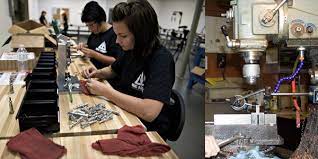
Introduction to ITI Tool & Die Maker (Dies & Moulds)
ITI Tool & Die Maker (Dies & Moulds) is a vocational training program designed to equip individuals with the skills and knowledge required to manufacture precision tools, dies, and molds used in various industrial processes. The term "Tool & Die" refers to the specialized tools and molds used in the production of metal and plastic components, playing a crucial role in industries such as automotive, aerospace, electronics, and consumer goods.
The program is typically offered by Industrial Training Institutes (ITIs) and focuses on imparting practical skills along with theoretical knowledge. Students enrolled in this course undergo comprehensive training in the design, fabrication, and maintenance of tools and dies. The curriculum covers a wide range of topics, including blueprint reading, material selection, machining processes, and quality control.
Key aspects of the ITI Tool & Die Maker (Dies & Moulds) program include:
Tool Design: Students learn the principles of tool design, including understanding the specifications provided in engineering drawings. This involves conceptualizing and creating designs that meet industry standards and client requirements.
Material Selection: Understanding the properties of different materials is essential in tool and die making. Students learn to choose the appropriate materials based on factors such as strength, durability, and heat resistance.
Machining Techniques: The program covers various machining processes, including milling, turning, grinding, and electrical discharge machining (EDM). Mastery of these techniques is vital for precision manufacturing of tools and dies.
Die Casting and Mould Making: Students are trained in the production of molds used for die casting and plastic molding processes. This includes creating cavity molds and ensuring dimensional accuracy.
Quality Control: Emphasis is placed on maintaining high standards of quality throughout the manufacturing process. Students learn inspection techniques and how to use measuring instruments to ensure the final products meet specifications.
Maintenance and Repair: Tool and die maintenance is a critical aspect of this profession. Students are taught how to identify issues, perform repairs, and conduct preventive maintenance to prolong the life of tools and dies.
Safety Procedures: Given the use of heavy machinery and precision tools, the program includes training on safety measures to ensure a secure working environment.
Upon completion of the ITI Tool & Die Maker (Dies & Moulds) program, graduates are equipped to contribute to the manufacturing industry by producing high-quality tools and dies essential for the production of a wide range of goods. The skills acquired during the training make them valuable assets in industries that rely on precision engineering and efficient production processes.
How can I apply for admission ITI TOOL & DIE MAKER (DIES & MOULDS) Program
To apply for admission to the ITI Tool & Die Maker (Dies & Moulds) program, follow these general steps:
Research Institutes: Identify Industrial Training Institutes (ITIs) or vocational training centers that offer the ITI Tool & Die Maker (Dies & Moulds) program. You can find this information on the official websites of educational institutions, government vocational training bodies, or through local educational boards.
Check Eligibility Criteria: Review the eligibility criteria for the program. Typically, ITI courses are open to individuals who have completed their secondary education (10th standard or equivalent). Ensure that you meet the specific requirements set by the institute offering the program.
Application Form: Obtain the application form from the selected ITI or vocational training center. Application forms are usually available online on the institute's website or in person at the institute's administrative office.
Fill Out the Application Form: Complete the application form with accurate and relevant information. Provide details such as personal information, educational qualifications, and any other information required by the institute.
Attach Required Documents: Along with the application form, you may need to submit certain documents such as:
Educational certificates (10th standard or equivalent)
Passport-sized photographs
Proof of age
Resident or domicile certificate (if required)
Any other documents specified by the institute
Submit the Application: Submit the completed application form along with the necessary documents to the institute's admission office. Ensure that you adhere to the specified deadlines for application submission.
Entrance Exam (if applicable): Some ITIs may conduct entrance exams for certain trades. If an entrance exam is part of the admission process, prepare for it according to the provided syllabus.
Merit List and Counseling: After the submission of applications, institutes may release a merit list based on academic performance or performance in the entrance exam. If you are shortlisted, follow the institute's instructions for counseling and admission procedures.
Admission Confirmation: If selected, follow the institute's instructions to confirm your admission. This may involve paying the required fees and completing any additional formalities.
Commencement of Classes: Once the admission process is complete, attend the orientation program and start your classes as per the institute's schedule.
What is the eligibility for ITI TOOL & DIE MAKER (DIES & MOULDS)
The eligibility criteria for the ITI Tool & Die Maker (Dies & Moulds) program may vary slightly between different Industrial Training Institutes (ITIs) or vocational training centers. However, the general eligibility requirements typically include the following:
Educational Qualification:
Candidates should have completed their secondary education or 10th standard from a recognized educational board.
Some institutes may have specific subject requirements or minimum percentage criteria in the 10th standard exams.
Age Limit:
The age of the candidates should usually be within a specified range. Commonly, candidates should be between 14 and 40 years of age at the time of admission. However, the age criteria may vary by institute and region.
Medical Fitness:
Some institutes may require candidates to meet certain medical fitness standards. This is to ensure that individuals can safely participate in the practical aspects of the training, which may involve the use of machinery and tools.
Entrance Exam (if applicable):
Certain ITIs may conduct entrance exams for specific trades, including Tool & Die Maker (Dies & Moulds). Candidates may need to qualify in the entrance exam to be eligible for admission.
Residential or Domicile Requirement (if applicable):
In some cases, institutes may have specific requirements regarding the residency or domicile of candidates. This is often determined by regional or state-level policies.
How long does it takes to complete a ITI TOOL & DIE MAKER (DIES & MOULDS) program
The duration of the ITI Tool & Die Maker (Dies & Moulds) program typically ranges from 1 to 2 years. The exact duration can vary based on factors such as the curriculum structure of the specific Industrial Training Institute (ITI) or vocational training center offering the program, regional regulations, and the specific trade requirements.
In many cases, the program is designed to provide a combination of theoretical knowledge and practical skills. Students undergo classroom instruction to understand the principles of tool and die making, blueprint reading, materials science, and related topics. Additionally, they receive hands-on training in workshops or laboratories where they learn machining techniques, tool design, and other practical aspects of the trade.
The program's duration may also include an apprenticeship or on-the-job training component, allowing students to gain real-world experience in a manufacturing or tool and die making environment.
To obtain accurate information about the duration of the ITI Tool & Die Maker (Dies & Moulds) program, it is recommended to check the specific details provided by the ITI or vocational training center where you plan to enroll. The program duration will likely be outlined in the official curriculum or educational materials provided by the institute.
Internship opportunities after completing ITI TOOL & DIE MAKER (DIES & MOULDS)
After completing the ITI Tool & Die Maker (Dies & Moulds) program, individuals can explore various internship opportunities to gain practical experience and further enhance their skills in the field. Internships provide a valuable opportunity to apply the knowledge acquired during the training program in a real-world working environment. Here are some potential internship opportunities for graduates of the ITI Tool & Die Maker (Dies & Moulds) program:
Manufacturing Companies:
Many manufacturing companies, especially those in industries such as automotive, aerospace, electronics, and consumer goods, offer internships for tool and die makers. Interns may be involved in the design, fabrication, and maintenance of tools and dies.
Tool and Die Shops:
Specialized tool and die shops often provide internship opportunities for individuals with skills in tool and die making. Interns may work on a variety of projects, contributing to the production of precision tools and molds.
Engineering Firms:
Engineering firms that focus on product design and development may offer internships to tool and die makers. This provides exposure to the design aspects of tooling and the integration of tools and dies into the overall product development process.
Die Casting and Molding Companies:
Companies specializing in die casting and plastic molding processes may have internship positions for individuals with expertise in dies and molds. Interns may gain experience in creating and maintaining molds for different manufacturing processes.
Automotive Workshops:
Internships in automotive repair and maintenance workshops can provide hands-on experience in tool and die making related to automotive components.
Research and Development Centers:
Research and development centers associated with universities or industry research institutions may offer internships for individuals interested in advancing tool and die making technologies.
Precision Machining Facilities:
Facilities that focus on precision machining may provide internship opportunities for graduates to further develop their machining skills and work on intricate projects.
Tool and Die Maintenance Services:
Companies specializing in the maintenance and repair of tools and dies may offer internships for individuals to gain expertise in troubleshooting and maintaining precision tools.
Scholarship and grants for ITI TOOL & DIE MAKER (DIES & MOULDS)
Scholarships and grants for the ITI Tool & Die Maker (Dies & Moulds) program can provide financial assistance to students pursuing their education in this field. While specific scholarship opportunities may vary by region, institution, and government policies, here are some general sources where individuals may find support:
Government Scholarships:
Many governments offer scholarships or financial aid programs for vocational and technical education, including ITI programs. Check with the relevant education or labor department in your region for information on available scholarships.
ITI Scholarships:
Some Industrial Training Institutes (ITIs) or vocational training centers may have their own scholarship programs to support deserving students. Inquire with the admissions or financial aid office of the specific ITI where you plan to enroll.
Corporate Scholarships:
Companies in the manufacturing, engineering, or related industries may offer scholarships to students pursuing ITI Tool & Die Maker programs. Explore opportunities with local industries, manufacturing associations, or corporate foundations.
Nonprofit Organizations:
Nonprofit organizations focused on skill development and education may provide scholarships for vocational training programs. Look for organizations in your community or region that support technical education.
Trade Associations:
Industry-specific trade associations related to tool and die making may offer scholarships to students pursuing relevant programs. These associations aim to support the growth of skilled professionals in the field.
Community Foundations:
Local community foundations may have scholarship programs that support students pursuing technical education. Check with community organizations, foundations, or philanthropic groups in your area.
Merit-Based Scholarships:
Some scholarships are awarded based on academic performance, skills, or achievements. Students who excel in their studies or demonstrate exceptional skills in tool and die making may be eligible for merit-based scholarships.
Online Scholarship Databases:
Explore online scholarship databases and platforms that aggregate scholarship opportunities. Websites like scholarship.com, Fastweb, or local scholarship search engines can help you identify relevant opportunities.
Financial Aid Programs:
In addition to scholarships, inquire about financial aid programs offered by educational institutions or government agencies that can provide grants, loans, or work-study opportunities to support your education.
To apply for scholarships, carefully review the eligibility criteria and application requirements for each opportunity. Prepare a strong application that highlights your achievements, passion for the field, and financial need. Keep in mind that application deadlines vary, so plan ahead and submit applications on time.
Conclusion:
In conclusion, the ITI Tool & Die Maker (Dies & Moulds) program is a comprehensive vocational training that equips individuals with the skills and knowledge required to excel in the field of precision tool and die making. The curriculum combines theoretical understanding with practical hands-on experience, covering a range of subjects from basic fitting and machining operations to advanced topics like tool design, CNC machining, and mold manufacturing.
Graduates of this program are well-prepared to contribute to industries such as automotive, aerospace, electronics, and manufacturing, where precision tools and molds play a vital role in the production process. The program not only focuses on technical proficiency but also emphasizes employability skills, information technology, and the application of CAD/CAM tools.
FAQs
Q: What is the duration of the ITI Tool & Die Maker (Dies & Moulds) program?
A: The duration typically ranges from 1 to 2 years, depending on the specific curriculum of the Industrial Training Institute (ITI) or vocational training center.
Q: What are the career prospects after completing the program?
A: Graduates can pursue careers as tool and die makers, machinists, mold designers, or find employment in industries requiring precision machining skills.
Q: Are there scholarship opportunities for ITI Tool & Die Maker students?
A: Yes, various scholarships and grants are available, including government scholarships, corporate sponsorships, and those offered by nonprofit organizations.
Q: Can I pursue further education after completing ITI Tool & Die Maker (Dies & Moulds)?
A: Yes, graduates can explore advanced diploma programs, degree courses, or specialized certifications to further enhance their skills and career prospects.
Q: Is there an age limit for admission to the program?
A: While age limits may vary, the typical range is between 14 and 40 years. It is advisable to check the specific requirements of the ITI or vocational training center.
Q: What practical skills will I acquire during the program?
A: Practical skills include basic fitting, machining operations, CNC machining, tool and die design, and hands-on experience in a tool room environment.
Q: How can I find internship opportunities after completing the program?
A: Graduates can explore internships in manufacturing companies, tool and die shops, engineering firms, and industries related to die casting and molding.
How Shiksha Hub helps you in
-
 Student Counsellors
 -
 Career Counseling
 -
 Research
 -
 24/7 Support
 -
 Scholarships
 -
 Community