Posted by Admin on 21-07-2023 in Shiksha hub
ITI Welding and Inspection introduction, Admission, Registration, Eligibility, Duration, Fees, Syllabus 2024
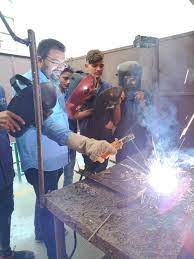
Introduction about ITI Welding and Inspection
An ITI (Industrial Training Institute) Welder specializing in Welding and Inspection is a skilled professional who has undergone specialized training in the field of welding and quality control. This individual possesses a comprehensive understanding of various welding techniques, materials, and inspection processes, making them an integral part of industries that rely on precision welding for structural integrity and safety.
Welding Expertise: ITI Welder Welding & Inspection professionals are proficient in a range of welding methods such as arc welding, gas welding, and TIG (Tungsten Inert Gas) welding. They have practical experience in joining metals with precision, ensuring the strength and durability of welded components. Their expertise extends to interpreting welding symbols, understanding metallurgy, and selecting appropriate welding processes based on material specifications.
Inspection Skills: In addition to their welding skills, these professionals are trained in inspection techniques to assess the quality of welds and ensure compliance with industry standards and specifications. They are knowledgeable about non-destructive testing methods like visual inspection, radiographic testing, ultrasonic testing, and magnetic particle testing. This expertise is crucial for identifying and rectifying any defects in welded structures, contributing to the overall safety and reliability of the finished products.
Quality Control: ITI Welder Welding & Inspection specialists play a vital role in quality control processes. They are responsible for examining welds for conformity with project requirements, identifying potential issues, and implementing corrective measures. Their attention to detail helps maintain high standards in welding, reducing the likelihood of structural failures and ensuring the longevity of welded components.
Safety Compliance: These professionals are well-versed in safety protocols and guidelines associated with welding processes. They prioritize safety measures to protect themselves and others in the work environment. This includes understanding and implementing proper ventilation, handling of welding equipment, and using personal protective equipment to minimize the risks associated with welding activities.
Adaptability and Continuous Learning: Given the dynamic nature of the welding and inspection field, ITI Welder Welding & Inspection experts are adaptable and committed to continuous learning. They stay updated on emerging technologies, welding materials, and industry best practices to enhance their skills and contribute effectively to the evolving demands of the field.
How can I apply for admission ITI WELDER WELDING & INSPECTION Program
Identify Industrial Training Institutes (ITIs) or vocational training centers that offer the Welder Welding & Inspection program. You can search online, visit the official websites of technical education boards, or inquire at local vocational training centers.
Check Eligibility Criteria:
Review the eligibility criteria for the ITI Welder Welding & Inspection program. Ensure that you meet the minimum educational qualifications and any other requirements specified by the institute.
Obtain Application Form:
Obtain the application form from the selected ITI. This can often be done online through the institute's official website or in person by visiting the institute's admission office.
Fill Out the Application Form:
Complete the application form accurately and legibly. Provide all the required information, including personal details, educational background, and any other information requested.
Attach Required Documents:
Gather and attach the necessary documents, such as:
Educational certificates (usually a minimum qualification of 10th grade or its equivalent may be required).
Passport-sized photographs.
Proof of age.
Any other documents specified by the institute.
Submit the Application:
Submit the filled-out application form along with the required documents to the institute's admission office. Pay attention to the application submission deadline.
Entrance Exam (if applicable):
Some ITIs may conduct entrance exams as part of the admission process. Prepare for and take any required entrance exams as scheduled.
Merit List and Admission:
After the application process is complete, institutes typically release a merit list based on academic performance or entrance exam scores. If your name appears on the merit list, you will be invited to complete the admission process.
Admission Process:
Attend the counseling session or interview if required. Pay the admission fees and complete any additional formalities specified by the institute.
Commencement of Classes:
Once the admission process is complete, you will be informed about the commencement of classes. Attend the orientation session and start your ITI Welder Welding & Inspection program.
What is the eligibility for ITI WELDER WELDING & INSPECTION
The eligibility criteria for admission to an ITI Welder Welding & Inspection program may vary slightly depending on the specific institute or region. However, the following are general eligibility requirements commonly observed:
Educational Qualification:
Candidates are typically required to have completed at least the 10th grade (secondary education) from a recognized education board or its equivalent.
Age Limit:
There is usually an age limit for admission to ITI courses. The minimum and maximum age limits can vary, but candidates are generally required to be within a specific age range at the time of admission.
Medical Fitness:
Some institutes may require candidates to meet specific medical fitness standards. A medical certificate from a registered medical practitioner may be necessary to confirm the candidate's physical fitness for the course.
Entrance Exam (if applicable):
Certain ITIs may conduct entrance exams to assess the candidates' aptitude and suitability for the Welder Welding & Inspection program. Candidates are required to qualify in the entrance exam to be eligible for admission.
Reservation Criteria (if applicable):
Institutes may follow reservation criteria for certain categories such as SC (Scheduled Caste), ST (Scheduled Tribe), OBC (Other Backward Classes), and economically weaker sections. Candidates belonging to these categories may have specific relaxations in eligibility criteria.
How long does it takes to complete a ITI WELDER WELDING & INSPECTION program
The duration of an ITI (Industrial Training Institute) Welder Welding & Inspection program typically varies, but it is commonly a short-term course designed to provide students with the necessary skills for entry-level positions in welding and inspection. The duration is often around 1 to 2 years, and it is divided into semesters or modules.
Here are the key points regarding the duration:
Duration Range:
The duration of an ITI Welder Welding & Inspection program can range from approximately 1 year to 2 years. The exact duration may depend on factors such as the curriculum structure, the number of instructional hours, and the specific requirements of the institute offering the program.
Semester or Module System:
The program is typically organized into semesters or modules, each covering specific aspects of welding, inspection techniques, safety protocols, and related subjects. These semesters may include both theoretical classroom instruction and practical hands-on training.
Practical Training:
Practical training is a crucial component of ITI programs. Students often spend a significant amount of time in workshops or laboratories, where they can apply the theoretical knowledge gained in the classroom to real-world welding and inspection scenarios.
Internship or Apprenticeship (if applicable):
Some ITI programs may include an internship or apprenticeship component, allowing students to gain on-the-job experience in industrial settings. This practical exposure enhances their skills and prepares them for the demands of the workforce.
Certification:
Upon successful completion of the program, students are usually awarded a certification or diploma in ITI Welder Welding & Inspection. This certification serves as recognition of their proficiency in welding techniques and inspection processes.
Internship opportunities after completing ITI WELDER WELDING & INSPECTION
After completing an ITI Welder Welding & Inspection program, individuals have various internship opportunities to gain practical, hands-on experience in the field. Internships provide a valuable bridge between academic training and professional work, allowing individuals to apply their skills in real-world settings. Here are some potential internship opportunities for graduates of the ITI Welder Welding & Inspection program:
Manufacturing Industries:
Internships with manufacturing industries that require welding and inspection services offer practical experience in a production environment. This could include industries such as automotive manufacturing, shipbuilding, or fabrication shops.
Construction Companies:
Construction companies often seek skilled welders for various projects, including the construction of buildings, bridges, and infrastructure. Interning with a construction company provides exposure to diverse welding applications and on-site inspection requirements.
Oil and Gas Sector:
The oil and gas industry frequently requires welders for pipeline construction, maintenance, and repairs. Internships in this sector can involve welding on-site and may include inspection activities to ensure compliance with safety and quality standards.
Power Plants:
Power generation facilities, such as thermal or nuclear power plants, employ welders for maintenance and repairs. Internships in power plants offer experience with specialized welding techniques and inspection procedures relevant to the energy sector.
Aerospace Industry:
Internships in the aerospace industry provide exposure to high-precision welding and inspection requirements. This sector demands attention to detail and adherence to stringent quality standards.
Shipbuilding Yards:
Shipyards are another potential avenue for internships, especially for those interested in marine welding and inspection. Interns may be involved in the construction and repair of ships, submarines, or offshore structures.
Automotive Workshops:
Automotive repair workshops often require welders for vehicle frame repairs and modifications. Interning in an automotive setting allows individuals to apply their welding skills to specific automotive applications.
Quality Control and Inspection Companies:
Interning with companies specializing in quality control and inspection services provides a focused experience on the inspection side of the ITI Welder Welding & Inspection program. This may involve working with various non-destructive testing methods.
Infrastructure Projects:
Large-scale infrastructure projects, such as the construction of bridges or tunnels, may offer internship opportunities. These projects often require skilled welders for structural components.
Welding Equipment Manufacturers:
Interning with companies that manufacture welding equipment and supplies provides insight into the development and maintenance of welding tools and technology.
When seeking internships, it's advisable for graduates to explore opportunities that align with their interests and career goals. Networking, attending job fairs, and reaching out to industry professionals can also enhance internship prospects. Internships not only provide practical skills but also serve as a pathway to potential full-time employment in the chosen field.
Scholarship and grants for ITI WELDER WELDING & INSPECTION
Scholarships and grants for ITI (Industrial Training Institute) welders, welding, and inspection programs can vary based on your location, the specific ITI or vocational school you are attending, and the organizations that offer financial assistance. Here are some general tips on finding scholarships and grants for ITI welding and inspection programs:
Check with the ITI or Vocational School:
Start by contacting the ITI or vocational school where you plan to pursue your welding and inspection program. They may have information about scholarships or grants available to students in your specific program.
Government Programs:
In some countries, governments offer financial aid or scholarships for vocational and technical education. Check with your local education department or relevant government agencies to inquire about available programs.
Industry Associations:
Explore scholarships provided by welding and inspection industry associations. These organizations often support education and training initiatives within their field. Examples include the American Welding Society (AWS) in the United States or similar organizations in other countries.
Corporate Sponsorships:
Some companies in the welding and inspection industry offer scholarships or sponsorships to students pursuing relevant programs. Research welding and inspection companies, especially those located in your region, to see if they have any scholarship programs.
Nonprofit Organizations:
Look for nonprofit organizations that focus on promoting education and skills development in the trades. These organizations may provide scholarships to individuals pursuing careers in welding and inspection.
Online Scholarship Databases:
Explore online scholarship databases, such as Fastweb, Scholarship.com, or local scholarship databases in your country. These platforms allow you to search for scholarships based on your field of study.
Local Community Foundations:
Community foundations and local organizations may offer scholarships to support individuals pursuing vocational and technical education. Check with foundations in your area to see if they have relevant opportunities.
Employer Sponsorship:
If you are already employed or plan to work in the welding and inspection field, inquire with your employer about potential sponsorship or tuition reimbursement programs.
Syllabus of ITI WELDER WELDING & INSPECTION
|
Subject |
Topics Covered |
|---|---|
|
Welding Safety |
Introduction to safety measures in welding |
|
Welding Fundamentals |
Types of welding processes, welding terminology |
|
Welding Equipment |
Identification and usage of welding equipment |
|
Blueprint Reading |
Interpretation of welding symbols and drawings |
|
Basic Mathematics |
Mathematics relevant to welding calculations |
|
Communication Skills |
Basic communication skills for the workplace |
|
Subject |
Topics Covered |
|---|---|
|
Welding Processes I |
Arc welding, gas welding, and other basic processes |
|
Welding Metallurgy |
Properties and behavior of metals during welding |
|
Welding Electrodes |
Types, selection, and usage of welding electrodes |
|
Welding Techniques |
Various welding techniques and positions |
|
Welding Inspection I |
Basic inspection methods and procedures |
|
Subject |
Topics Covered |
|---|---|
|
Advanced Welding |
Advanced techniques in welding processes |
|
Welding Symbols |
In-depth study of welding symbols and specifications |
|
Welding Automation |
Introduction to automated welding systems |
|
Welding Inspection II |
Inspection standards, quality control in welding |
|
Non-Destructive Testing |
Introduction to methods like ultrasonic testing, radiography |
|
Subject |
Topics Covered |
|---|---|
|
Welding Codes and Standards |
Understanding industry standards and codes |
|
Welding Procedure Qualification |
Process of qualifying welding procedures |
|
Welding Project |
Application of learned skills in a practical project |
|
Industrial Training |
On-the-job training and exposure to real-world scenarios |
Conclusion:
In conclusion, pursuing an ITI Welder, Welding & Inspection program offers a comprehensive and hands-on education in the field of welding. This program equips students with essential skills, knowledge of safety procedures, and proficiency in various welding techniques. Graduates of the program are prepared to enter the workforce with a solid foundation in welding processes, metallurgy, inspection methods, and compliance with industry standards.
The combination of theoretical learning and practical training throughout the program ensures that students are well-prepared for the challenges and demands of the welding industry. With a focus on safety, precision, and quality, ITI welders are positioned to contribute to diverse sectors such as manufacturing, construction, and infrastructure development.
Frequently Asked Questions (FAQ)
1. What is the duration of an ITI Welder, Welding & Inspection program?
The duration of the program can vary, but it typically spans two years, divided into four semesters.
2. What are the career prospects after completing this ITI program?
Graduates can pursue careers as welders, fabricators, welding inspectors, quality control technicians, or work in related fields within the manufacturing and construction industries.
3. Are there any prerequisites for enrolling in an ITI Welder, Welding & Inspection program?
Generally, candidates need to have completed their secondary education (10th grade or equivalent) to be eligible for admission.
4. How is the program structured, and what teaching methods are used?
The program typically includes a mix of classroom lectures, practical hands-on training in welding workshops, and industrial training to provide a holistic learning experience.
5. What certifications can I obtain after completing the program?
Graduates may obtain certifications in welding processes, welding inspection, and may also be eligible to pursue industry-recognized certifications offered by organizations such as the American Welding Society (AWS).
6. Can I specialize in a particular welding process during the program?
Yes, the program often covers a range of welding processes, allowing students to gain proficiency in various techniques such as arc welding, gas welding, and automated welding.
7. Are there opportunities for internships or apprenticeships during the program?
Many ITI programs include industrial training components, providing students with opportunities for internships or apprenticeships to gain practical experience in real-world settings.
8. How can I stay updated with industry standards and advancements after completing the program?
Welding professionals are encouraged to continue their education and stay updated with industry trends by participating in workshops, attending conferences, and pursuing additional certifications as needed.
How Shiksha Hub helps you in
-
 Student Counsellors
 -
 Career Counseling
 -
 Research
 -
 24/7 Support
 -
 Scholarships
 -
 Community