Posted by Admin on 13-07-2023 in Shiksha hub
M.Sc. Agricultural Husbandry, Introduction, Admission, Registration, Eligibility, Duration, Fees, Syllabus 2024
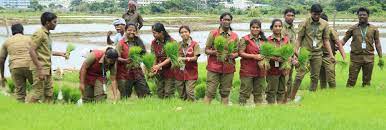
Introduction about M.Sc. Agricultural Husbandry
A Master of Science (M.Sc.) in Agricultural Husbandry is a postgraduate academic program that focuses on advanced studies in the field of agricultural sciences, specifically emphasizing the management and care of livestock and crops. This program is designed to provide students with a comprehensive understanding of agricultural husbandry practices, incorporating both theoretical knowledge and practical skills.
The curriculum typically covers a range of subjects related to animal and crop husbandry, including animal nutrition, breeding and genetics, disease prevention and control, sustainable farming practices, and agricultural economics. Students may also delve into areas such as soil management, pest control, and the integration of modern technologies in agriculture.
The program aims to equip graduates with the expertise needed to address the challenges and opportunities in contemporary agriculture. This includes promoting sustainable and ethical practices, enhancing productivity, and contributing to the overall development of the agricultural sector. Practical training and research components are often integral to the program, allowing students to apply their knowledge in real-world scenarios and contribute to advancements in agricultural husbandry.
Upon completion of the M.Sc. in Agricultural Husbandry, graduates may pursue various career paths in agriculture, including roles in farm management, research and development, agricultural extension services, consultancy, and academia. The program plays a crucial role in producing professionals who are well-versed in the latest advancements in agricultural sciences and capable of addressing the evolving needs of the global agricultural industry.
How can I apply for admission to M.Sc. Agricultural Husbandry Program
To apply for admission to an M.Sc. Agricultural Husbandry program, you typically need to follow these general steps. However, it's important to note that application processes may vary between universities, so it's advisable to check the specific requirements of the institution you're interested in:
Research Programs and Universities:
Identify universities or institutions that offer an M.Sc. in Agricultural Husbandry. Look for programs that align with your academic and career goals.
Check Admission Requirements:
Review the admission requirements of each university. This usually includes a bachelor's degree in a relevant field, such as agricultural sciences or a related discipline. Some programs may also have specific GPA requirements.
Prepare Application Materials:
Gather the necessary documents, which may include:
Completed application form
Transcripts from your previous academic institutions
Letters of recommendation
Statement of purpose (explaining your interest in the program and your career goals)
Curriculum vitae (CV) or resume
Proof of English language proficiency (if applicable, for non-native English speakers)
Entrance Exams:
Some universities may require you to take standardized tests such as the GRE (Graduate Record Examination) or other relevant exams. Check the specific requirements of the programs you are interested in.
Application Submission:
Submit your application through the university's online application portal or by mail, following the instructions provided by the institution. Ensure that you meet the application deadlines.
Pay Application Fee:
Pay any required application fees. The fee amount and payment methods will be specified by the university.
Interview (if required):
Some programs may require an interview as part of the admission process. Be prepared to discuss your academic background, research interests, and career goals.
Wait for Admission Decision:
After submitting your application, wait for the university to review your materials. Admission decisions are usually communicated through email or the online application portal.
Acceptance and Enrollment:
If you receive an offer of admission, carefully read and follow the instructions for accepting the offer. This may include paying a deposit and completing additional enrollment steps.
Visa and Pre-Arrival:
If applicable, obtain the necessary student visa and make any necessary preparations for your arrival on campus.
What is the eligibility for M.Sc. Agricultural Husbandry
The eligibility criteria for an M.Sc. in Agricultural Husbandry can vary between universities, so it's important to check the specific requirements of the institution where you plan to apply. However, here are general eligibility criteria that are commonly seen for such programs:
Educational Qualifications:
A bachelor's degree in a related field is typically required. This could include a B.Sc. in Agriculture, Animal Science, Agronomy, Veterinary Science, or a similar discipline.
The degree should be from a recognized university or institution.
Minimum GPA:
Many programs have a minimum GPA (Grade Point Average) requirement for undergraduate studies. This minimum GPA can vary, so check the specific requirement of the program you are interested in.
Entrance Exams:
Some universities may require you to take a standardized test, such as the GRE (Graduate Record Examination) or a test specific to the field of agricultural sciences. Check whether the program you're interested in has any specific entrance exam requirements.
Letters of Recommendation:
Programs often require letters of recommendation from academic or professional references who can speak to your qualifications and potential for success in a graduate program.
Statement of Purpose:
A statement of purpose outlining your academic and career goals, as well as why you are interested in pursuing an M.Sc. in Agricultural Husbandry, is commonly required.
Work Experience (if applicable):
Some programs may prefer or require applicants to have relevant work experience in the field of agriculture or a related area.
English Language Proficiency:
For international students or non-native English speakers, proof of English language proficiency through tests like the TOEFL (Test of English as a Foreign Language) or IELTS (International English Language Testing System) may be required.
Interview (if required):
Certain programs may conduct interviews as part of the admission process to assess an applicant's suitability for the program.
How long does it takes to complete a M.Sc. Agricultural Husbandry program
The duration to complete an M.Sc. in Agricultural Husbandry program typically ranges from 1 to 2 years, depending on the country and the specific structure of the program. Here are some general considerations:
One-Year Programs:
Some universities offer M.Sc. programs with a more intensive schedule that can be completed in one academic year. These programs may involve a higher course load and a shorter duration between the start and completion of the degree.
Two-Year Programs:
Many M.Sc. in Agricultural Husbandry programs have a standard duration of two academic years. These programs often include a combination of coursework, research, and sometimes an internship or thesis component.
Part-Time or Flexible Options:
Some universities may offer part-time or flexible study options, allowing students to extend the duration of the program if they choose to study at a more relaxed pace. This is particularly beneficial for individuals who may be working or have other commitments.
Thesis or Non-Thesis Options:
The program duration can also be influenced by whether it includes a research thesis. Programs with a thesis component may require additional time for research and completion of the thesis.
Internship or Practical Training:
Programs that include internships or practical training as part of the curriculum may have a longer duration to accommodate these hands-on experiences.
What are potential career opportunities after M.Sc. Agricultural Husbandry
Earning an M.Sc. in Agricultural Husbandry opens up a range of potential career opportunities in various sectors of the agricultural industry. Graduates are equipped with a deep understanding of agricultural practices, animal and crop husbandry, sustainable farming, and related areas. Here are some potential career paths after completing an M.Sc. in Agricultural Husbandry:
Farm Manager:
Manage day-to-day operations on farms, including overseeing crop cultivation, livestock management, and ensuring the overall efficiency and productivity of the farm.
Livestock Production Manager:
Specialize in the management of livestock operations, focusing on breeding, nutrition, health, and overall well-being of animals.
Agricultural Consultant:
Provide expert advice to farmers, agricultural businesses, or government agencies on best practices, technology adoption, and sustainable agricultural methods.
Research Scientist:
Conduct research in agricultural sciences, contributing to advancements in areas such as animal genetics, crop breeding, pest management, or sustainable farming practices.
Agricultural Extension Officer:
Work with farmers and communities to disseminate information on modern agricultural techniques, technologies, and best practices.
Syllabus of M.Sc. Agricultural Husbandry
Semester 1:
|
Course Code |
Course Title |
Credits |
|
AGH 501 |
Advanced Crop Husbandry |
3 |
|
AGH 502 |
Principles of Animal Husbandry |
3 |
|
AGH 503 |
Soil Science and Management |
3 |
|
AGH 504 |
Agricultural Economics and Policy |
3 |
|
AGH 505 |
Research Methodology in Agriculture |
3 |
|
AGH 506 |
Seminar |
2 |
|
Total Credits |
17 |
Semester 2:
|
Course Code |
Course Title |
Credits |
|
AGH 507 |
Advanced Animal Nutrition |
3 |
|
AGH 508 |
Plant Breeding and Genetics |
3 |
|
AGH 509 |
Agricultural Extension and Education |
3 |
|
AGH 510 |
Sustainable Agriculture Practices |
3 |
|
AGH 511 |
Agribusiness Management |
3 |
|
AGH 512 |
Research Project Proposal Development |
2 |
|
Total Credits |
17 |
Semester 3:
|
Course Code |
Course Title |
Credits |
|
AGH 601 |
Livestock Management and Production |
3 |
|
AGH 602 |
Advanced Crop Protection |
3 |
|
AGH 603 |
Agroecology and Environmental Issues |
3 |
|
AGH 604 |
Data Analysis in Agricultural Sciences |
3 |
|
AGH 605 |
Elective Course I |
3 |
|
AGH 606 |
Thesis Research Proposal |
2 |
|
Total Credits |
17 |
Semester 4:
|
Course Code |
Course Title |
Credits |
|
AGH 607 |
Thesis Research Work |
12 |
|
AGH 608 |
Elective Course II |
3 |
|
Total Credits |
15 |
Internship opportunities after completing M.Sc. Agricultural Husbandry
After completing an M.Sc. in Agricultural Husbandry, there are various internship opportunities available to graduates, providing hands-on experience and further exposure to the agricultural industry. Here are some potential internship avenues:
Agricultural Research Institutes:
Collaborate with research institutions that focus on agricultural sciences. Interns may engage in research projects related to crop improvement, animal breeding, or sustainable farming practices.
Government Agricultural Agencies:
Work with government agencies responsible for agriculture and rural development. Interns may be involved in policy analysis, extension services, or agricultural project implementation.
Agribusiness Companies:
Intern with agribusiness firms involved in seed production, fertilizer manufacturing, pesticide development, or other aspects of the agricultural supply chain.
Farm Management and Consulting:
Gain practical experience by working on farms or with agricultural consulting firms. This could involve farm management, advising farmers on best practices, and implementing sustainable farming techniques.
Livestock Farms:
Intern at livestock farms to gain hands-on experience in animal husbandry, nutrition, and health management.
Food Processing Industry:
Explore internships with food processing companies involved in the production of agricultural products. This could include activities related to quality control, processing technologies, and supply chain management.
Environmental Organizations:
Work with organizations focusing on the environmental aspects of agriculture. Interns may be involved in projects related to sustainable agriculture, conservation practices, and environmental impact assessments.
International Agricultural Development Organizations:
Collaborate with organizations such as the Food and Agriculture Organization (FAO) or non-governmental organizations (NGOs) working on global agricultural development projects.
Agri-Tech Startups:
Explore opportunities with startups in the agricultural technology sector, contributing to the development and implementation of innovative technologies in farming.
Seed Companies:
Intern with seed companies involved in plant breeding and genetics, gaining experience in developing and testing new crop varieties.
Agricultural Education Institutions:
Intern in academic institutions involved in agricultural education and extension services, assisting with practical training programs and research projects.
Winery or Brewery Internships:
For those interested in agronomy or horticulture, internships with wineries or breweries can provide valuable insights into crop management for beverage production.
Scholorship and grants for M.Sc. Agricultural Husbandry
Finding scholarships and grants for an M.Sc. in Agricultural Husbandry can significantly alleviate the financial burden of pursuing higher education. Here are some potential sources to explore:
University Scholarships:
Many universities offer merit-based or need-based scholarships for graduate students. Check with the specific university where you plan to pursue your M.Sc. in Agricultural Husbandry for information on available scholarships.
Government Scholarships:
Investigate scholarship opportunities provided by government agencies in your home country or the country where you plan to study. These may include national or regional scholarships for agricultural studies.
International Scholarships:
Explore scholarships offered by international organizations, such as the Fulbright Program, the Commonwealth Scholarship, or the Aga Khan Foundation International Scholarship Program.
Private Foundations and Organizations:
Numerous private foundations and organizations provide scholarships for students pursuing agricultural studies. Examples include the Borlaug Global Rust Initiative and the Nuffield International Farming Scholars program.
Industry Associations:
Agricultural industry associations and organizations may offer scholarships to support students entering the field. Check with organizations such as the American Farm Bureau Federation or the National FFA Organization.
Research Grants:
Investigate research grants offered by government agencies, private foundations, or industry partners. Research grants can support your thesis or research projects during your M.Sc. program.
Fellowship Programs:
Look for fellowship programs that support graduate students in agricultural sciences. The World Food Prize Foundation, for example, offers the Norman Borlaug Fellowship Program.
Non-Governmental Organizations (NGOs):
NGOs working in the agricultural sector may provide scholarships or grants for students pursuing advanced degrees. Check organizations like the Gates Foundation or Oxfam.
Corporate Sponsorships:
Some corporations in the agricultural industry offer sponsorships or scholarships to students. Explore opportunities with companies involved in agribusiness, seed production, or agricultural technology.
Online Scholarship Platforms:
Utilize online scholarship platforms such as Scholarship.com, Fastweb, or Chevening Scholarships to search for opportunities related to agricultural studies.
Professional Associations:
Professional associations related to agricultural sciences may offer scholarships to support the education and development of future professionals. Check associations like the Crop Science Society of America or the American Society of Agronomy.
Regional Funding Opportunities:
Investigate funding opportunities specific to the region where you plan to study. Some regions or countries offer scholarships to attract international students in specific fields, including agriculture.
Conclusion
Embark on a journey of knowledge and innovation with an M.Sc. in Agricultural Husbandry. This blog has provided insights into the program, potential career paths, internship opportunities, and avenues for securing financial support. Whether you're passionate about sustainable farming, crop breeding, or agribusiness management, pursuing an M.Sc. in Agricultural Husbandry opens doors to a rewarding and impactful career in the ever-evolving field of agriculture.
FAQ M.Sc. Agricultural Husbandry
Q1: What is M.Sc. Agricultural Husbandry?
A1: M.Sc. Agricultural Husbandry is a postgraduate program focusing on advanced studies in agricultural sciences, encompassing crop and livestock management, sustainable farming, and agribusiness.
Q2: What are the career opportunities after completing M.Sc. Agricultural Husbandry?
A2: Graduates can pursue roles such as farm manager, agricultural consultant, research scientist, agribusiness manager, and more in various sectors of the agricultural industry.
Q3: How long does it take to complete an M.Sc. in Agricultural Husbandry?
A3: The duration typically ranges from 1 to 2 years, depending on the program structure and whether it includes a thesis or practical training component.
Q4: Are there internship opportunities after completing the program?
A4: Yes, graduates can explore internships with research institutions, government agencies, agribusiness companies, farms, and environmental organizations to gain practical experience.
Q5: Are there scholarships available for M.Sc. Agricultural Husbandry?
A5: Yes, various scholarships and grants are available from universities, government agencies, private foundations, and industry associations to support students pursuing agricultural studies.
How Shiksha Hub helps you in
-
 Student Counsellors
 -
 Career Counseling
 -
 Research
 -
 24/7 Support
 -
 Scholarships
 -
 Community