Posted by Admin on 13-07-2023 in Shiksha hub
M.Sc. Agricultural Physics, Introduction, Admission, Registration, Eligibility, Duration, Fees, Syllabus 2024
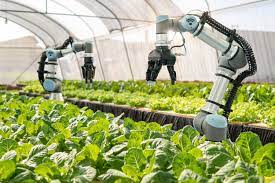
Introduction about M.Sc. Agricultural Physics
A Master of Science (M.Sc.) in Agricultural Physics is a specialized postgraduate program that focuses on the application of physics principles and techniques to agricultural processes and systems. This field is at the intersection of physics and agriculture, aiming to enhance agricultural productivity, sustainability, and resource management through the use of advanced technologies and scientific methods.
Students pursuing an M.Sc. in Agricultural Physics typically engage in a curriculum that covers a range of subjects, including soil physics, crop modeling, remote sensing, precision agriculture, climate modeling, and environmental physics. The program emphasizes the development of analytical and research skills, equipping students with the knowledge to address complex challenges in agriculture using physics-based approaches.
Key areas of study within the program may include:
Soil Physics: Understanding the physical properties of soils and their impact on water movement, nutrient availability, and plant growth.
Crop Modeling: Using mathematical models to simulate and predict the growth and development of crops under different environmental conditions.
Remote Sensing: Utilizing satellite and airborne sensors to gather information about crops, soils, and environmental conditions for better decision-making in agriculture.
Precision Agriculture: Applying technology such as GPS, sensors, and automation to optimize farming practices, improve resource efficiency, and minimize environmental impact.
Climate Modeling: Studying the interactions between agriculture and climate to assess potential impacts and develop strategies for adaptation.
Environmental Physics: Investigating the physical processes influencing environmental factors in agriculture, including air and water quality, and their implications for sustainable farming practices.
How can I apply for admission to M.Sc. Agricultural Physics Program
To apply for admission to an M.Sc. Agricultural Physics program, follow these general steps. Keep in mind that the specific requirements may vary between universities, so it's crucial to carefully check the admission guidelines of the institution where you plan to apply:
Research Programs: Start by researching universities that offer M.Sc. programs in Agricultural Physics. Look for institutions known for their expertise in agricultural sciences, physics, or related fields. Review the program details, curriculum, faculty profiles, and admission requirements.
Meet Eligibility Criteria: Ensure that you meet the eligibility criteria for the M.Sc. Agricultural Physics program. Typically, this includes having a relevant bachelor's degree (e.g., in agricultural sciences, physics, environmental science) with a specified minimum GPA. Some programs may also require specific undergraduate coursework.
Prepare Application Materials: Collect all necessary documents for your application. This typically includes:
Completed application form (online or paper, depending on the university).
Official transcripts of your undergraduate studies.
Letters of recommendation (usually from academic or professional references).
Statement of purpose or personal statement outlining your academic and career goals.
Curriculum vitae (CV) or resume.
Standardized test scores (if required).
Proof of English proficiency (for international students).
Take Standardized Tests (if required): Some universities may require standardized test scores such as the GRE (Graduate Record Examination) or other relevant tests. Check the specific requirements of the programs you are interested in and schedule the exams accordingly.
Write a Strong Statement of Purpose: Craft a compelling statement of purpose that highlights your academic background, research interests, and why you are interested in pursuing an M.Sc. in Agricultural Physics at that particular institution. Be specific about how the program aligns with your career goals.
Submit Application: Complete and submit your application by the specified deadline. Ensure that all required documents are included and that you've paid any application fees.
Letters of Recommendation: Request letters of recommendation well in advance from individuals who can speak to your academic abilities and potential for success in the program. Provide them with sufficient information about your goals and achievements.
Interview (if required): Some programs may require an interview as part of the admission process. Be prepared to discuss your academic background, research interests, and reasons for pursuing the M.Sc. in Agricultural Physics.
Financial Aid and Scholarships: Explore opportunities for financial aid, scholarships, or assistantships offered by the university or external organizations.
Monitor Application Status: Keep track of your application status and promptly respond to any requests for additional information.
What is the eligibility for M.Sc. Agricultural Physics
The eligibility criteria for M.Sc. Agricultural Physics may vary between universities, but here are some general requirements that are commonly observed in such programs:
Educational Qualifications:
A bachelor's degree in a relevant field such as Agricultural Sciences, Physics, Environmental Science, or a closely related discipline.
The degree should be from a recognized university or institution.
Minimum GPA or Percentage:
Many universities set a minimum Grade Point Average (GPA) or percentage for the undergraduate degree. This requirement can vary, but a competitive GPA is often expected.
Relevant Coursework:
Some programs may require applicants to have completed specific coursework during their undergraduate studies. This coursework may include physics, mathematics, agriculture, environmental science, or related subjects.
Standardized Test Scores (if required):
Certain universities may require standardized test scores, such as the GRE (Graduate Record Examination) or other relevant exams. Check the specific requirements of the program you are applying to.
Language Proficiency:
For international students, proof of English language proficiency is usually required. This can be demonstrated through standardized tests like the TOEFL (Test of English as a Foreign Language) or IELTS (International English Language Testing System).
Letters of Recommendation:
Most M.Sc. programs require letters of recommendation from academic or professional references. Ensure that your recommenders can speak to your academic abilities and potential for success in the program.
Statement of Purpose:
A statement of purpose or personal statement outlining your academic and career goals, as well as your interest in pursuing M.Sc. Agricultural Physics, is often a required part of the application.
Interview (if required):
Some programs may conduct interviews as part of the admission process. This interview may be used to assess your suitability for the program and to discuss your academic and research interests.
How long does it takes to complete a M.Sc. Agricultural Physics program
The duration to complete an M.Sc. Agricultural Physics program typically spans two academic years, assuming a full-time enrollment. However, the exact duration may vary depending on the university and specific program requirements. Here's a breakdown of the general timeline:
Coursework: The first year is usually dedicated to coursework. During this period, students take classes covering core topics in agricultural physics, soil physics, crop modeling, remote sensing, and related fields. The coursework phase is designed to provide a solid theoretical foundation and practical skills.
Research and Thesis: The second year often involves a research component culminating in a master's thesis. Students undertake independent research or work on a project under the guidance of a faculty advisor. The thesis is a significant part of the program, allowing students to contribute original insights to the field.
Seminar and Defense: Towards the end of the program, students may be required to present their research findings in a seminar or thesis defense. This is an opportunity for them to showcase their work, discuss methodologies, and defend their conclusions.
Internship or Practical Experience (Optional): Some programs may include an optional internship or practical experience component. This allows students to gain hands-on experience in agricultural physics applications in real-world settings.
It's essential to note that the above timeline is a general overview, and the specific structure of the M.Sc. Agricultural Physics program can vary between universities. Part-time options may also be available, extending the overall duration for those who choose to enroll on a less-than-full-time basis.
What are potential career opportunities after M.Sc. Agricultural Physics
Graduates with an M.Sc. in Agricultural Physics possess a unique skill set that combines knowledge of physics with a focus on agricultural applications. This interdisciplinary background opens up various career opportunities in both the public and private sectors. Here are some potential career paths:
Research Scientist:
Engage in research and development in agricultural physics, working to advance knowledge and technology in areas such as soil physics, crop modeling, and environmental monitoring.
Agricultural Consultant:
Provide expertise to farmers, agricultural businesses, and government agencies on optimizing farming practices, resource management, and the implementation of precision agriculture technologies.
Precision Agriculture Specialist:
Work with agricultural technology companies to develop and implement precision agriculture solutions, including the use of sensors, GPS technology, and data analytics to enhance farming efficiency.
Environmental Consultant:
Apply knowledge of agricultural physics to assess and mitigate environmental impacts of agricultural practices. Advise on sustainable and environmentally friendly farming methods.
Government Positions:
Work for government agencies responsible for agriculture, environmental protection, or natural resource management. Roles may include policy development, research, and regulatory compliance.
Academic and Research Institutions:
Pursue a career in academia as a professor or researcher, contributing to the advancement of knowledge in agricultural physics. This may involve teaching, conducting research, and mentoring students.
Agribusiness and Farm Management:
Work with agribusinesses or farm management companies to optimize crop yields, manage resources efficiently, and implement technologies that enhance agricultural productivity.
Remote Sensing Specialist:
Utilize skills in remote sensing and data analysis to monitor and assess agricultural landscapes. This can be applied in industries such as precision agriculture, forestry, or environmental monitoring.
International Development Organizations:
Collaborate with organizations involved in international development to address global agricultural challenges. This may include projects related to food security, sustainable agriculture, and climate resilience.
Data Analyst in Agriculture:
Analyze and interpret data related to agricultural processes, helping organizations make informed decisions. This may involve working with large datasets generated by sensors, satellites, and other technologies.
AgTech Startups:
Join innovative agricultural technology startups that focus on developing new tools, sensors, and software solutions to improve various aspects of farming.
Syllabus of semester wise in table form M.Sc. Agricultural Physics
Semester 1:
|
Course Code |
Course Title |
Credits |
|
AP 501 |
Fundamentals of Agricultural Physics |
4 |
|
AP 502 |
Soil Physics |
3 |
|
AP 503 |
Crop Meteorology |
3 |
|
AP 504 |
Mathematics for Agricultural Physics |
3 |
|
AP 505 |
Practical - I |
2 |
Semester 2:
|
Course Code |
Course Title |
Credits |
|
AP 506 |
Agrometeorology |
3 |
|
AP 507 |
Environmental Physics |
3 |
|
AP 508 |
Remote Sensing and GIS in Agriculture |
4 |
|
AP 509 |
Experimental Design and Data Analysis |
3 |
|
AP 510 |
Practical - II |
2 |
Semester 3:
|
Course Code |
Course Title |
Credits |
|
AP 511 |
Precision Agriculture |
4 |
|
AP 512 |
Plant Biophysics |
3 |
|
AP 513 |
Instrumentation in Agricultural Physics |
3 |
|
AP 514 |
Elective I (e.g., Soil and Water Conservation) |
3 |
|
AP 515 |
Practical - III |
2 |
Semester 4:
|
Course Code |
Course Title |
Credits |
|
AP 516 |
Thesis Research |
12 |
|
AP 517 |
Seminar |
2 |
Internship opportunities after completing M.Sc. Agricultural Physics
After completing an M.Sc. in Agricultural Physics, graduates can explore various internship opportunities that align with their skills and interests. Internships provide valuable hands-on experience, exposure to real-world applications, and the chance to apply the knowledge gained during the master's program. Here are some potential internship opportunities:
Research Institutions:
Internships with agricultural research institutions allow graduates to participate in ongoing research projects, contribute to data collection and analysis, and collaborate with experienced researchers.
Government Agencies:
Agricultural departments, environmental agencies, and other government organizations often offer internships. Interns may be involved in policy analysis, field monitoring, and the implementation of sustainable agricultural practices.
Precision Agriculture Companies:
Internships with companies specializing in precision agriculture provide opportunities to work with cutting-edge technologies, such as GPS, sensors, and data analytics. Tasks may include field testing, data interpretation, and technology implementation.
AgTech Startups:
Interning with agricultural technology startups allows individuals to experience the dynamic environment of innovative companies. Interns may work on projects related to developing new technologies, software, or hardware solutions for agriculture.
Environmental Consulting Firms:
Internships with environmental consulting firms provide exposure to projects that focus on the intersection of agriculture and environmental science. This may involve assessing and mitigating the environmental impact of agricultural practices.
Agribusinesses:
Large agricultural companies often offer internships in areas such as farm management, supply chain management, and sustainable agriculture. Interns may work on projects related to optimizing agricultural operations.
International Development Organizations:
Interning with organizations focused on international development in agriculture provides the opportunity to work on projects addressing global challenges, such as food security, sustainable agriculture, and climate resilience.
Nonprofit Organizations:
Nonprofit organizations dedicated to sustainable agriculture, environmental conservation, and rural development may offer internships. Interns can contribute to community-based projects and gain exposure to grassroots initiatives.
Educational Institutions:
Collaborating with universities or agricultural colleges as a research assistant or intern allows individuals to work on educational projects, assist in teaching, and contribute to ongoing research.
Agroecology Initiatives:
Internships with organizations focusing on agroecology provide opportunities to work on projects promoting ecological farming practices, biodiversity conservation, and sustainable agriculture.
Scholorship and grants for M.Sc. Agricultural Physics
Scholarships and grants for M.Sc. Agricultural Physics can help alleviate the financial burden associated with graduate studies. Here are some potential sources of financial assistance:
University Scholarships:
Many universities offer merit-based scholarships for outstanding students entering M.Sc. programs. These scholarships may be awarded based on academic achievements, research potential, or a combination of factors.
Departmental Scholarships:
Some academic departments within universities provide scholarships specifically for students pursuing M.Sc. in Agricultural Physics. These may be based on academic performance, research proposals, or other criteria.
Research Assistantships:
Research assistantships are positions within the university where students assist faculty members with their research projects. In return, students may receive a stipend, tuition waiver, or a combination of both.
Teaching Assistantships:
Teaching assistantships involve helping professors with teaching responsibilities, such as grading assignments or leading lab sessions. These positions often come with financial support, including stipends and sometimes tuition remission.
Government Scholarships and Grants:
Government agencies related to agriculture, science, and education may offer scholarships or grants for students pursuing M.Sc. Agricultural Physics. Check with relevant government departments or agencies in your country.
International Scholarships:
Some organizations and governments provide scholarships for international students pursuing graduate studies. Examples include Fulbright scholarships, Commonwealth scholarships, and scholarships offered by international organizations.
Private Foundations and NGOs:
Various private foundations and non-governmental organizations (NGOs) may offer scholarships or grants for students focusing on sustainable agriculture, environmental science, or related fields. Research and apply to those aligned with your academic and career goals.
Industry Sponsorships:
Agricultural companies, especially those involved in technology and innovation, may sponsor graduate students through scholarships or grants. Check with companies that align with your interests for potential opportunities.
Professional Associations:
Explore scholarships offered by professional associations related to agricultural physics or related fields. These organizations may support students pursuing advanced degrees in their respective disciplines.
Research Grants:
Some organizations and foundations provide research grants to support specific research projects. Students can explore opportunities to secure funding for their M.Sc. research through these grants.
Nonprofit Organizations:
Nonprofit organizations focusing on agriculture, environmental conservation, and sustainable development may offer financial support for graduate studies. Check for scholarship opportunities from organizations with missions aligned with your interests.
Conclusion
In conclusion, M.Sc. Agricultural Physics is a dynamic and interdisciplinary field that combines physics principles with agricultural sciences. Graduates are well-equipped to address challenges in agriculture, contribute to sustainable practices, and pursue diverse career paths. Explore scholarship opportunities, internships, and the exciting future of Agricultural Physics through this comprehensive guide.
FAQ M.Sc. Agricultural Physics
Q1: What is M.Sc. Agricultural Physics?
A: M.Sc. Agricultural Physics is a specialized master's program that applies principles of physics to agricultural processes, offering insights into soil physics, crop modeling, and precision agriculture.
Q2: What are the career opportunities after completing M.Sc. Agricultural Physics?
A: Graduates can pursue careers as research scientists, agricultural consultants, precision agriculture specialists, work in government agencies, and more. The program opens doors to various roles in academia, research institutions, and the private sector.
Q3: Are there scholarships available for M.Sc. Agricultural Physics?
A: Yes, various scholarships and grants are available, including university scholarships, government-sponsored programs, and those offered by private foundations, NGOs, and industry sponsors.
Q4: What is the typical duration of an M.Sc. Agricultural Physics program?
A: The program usually spans two academic years, with the first year dedicated to coursework and the second year focused on research and thesis work.
How Shiksha Hub helps you in
-
 Student Counsellors
 -
 Career Counseling
 -
 Research
 -
 24/7 Support
 -
 Scholarships
 -
 Community