Posted by Admin on 13-07-2023 in Shiksha hub
M.Sc. Fruits & Orchard Management, Introduction, Admission, Registration, Eligibility, Duration, Fees, Syllabus 2024
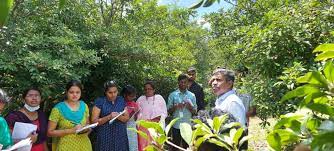
Introduction about M.Sc. Fruits & Orchard Management
The Master of Science (M.Sc.) program in Fruits & Orchard Management is a specialized academic pathway that delves into the intricate world of fruit cultivation, orchard management, and sustainable agricultural practices. This program is designed for individuals passionate about the cultivation and management of fruit-bearing plants, aiming to equip them with advanced knowledge and skills essential for success in the fruit industry.
Program Overview:
The M.Sc. in Fruits & Orchard Management encompasses a multidisciplinary curriculum, covering aspects such as horticulture, plant pathology, pest management, and sustainable orchard practices. Students explore the latest advancements in fruit breeding, cultivation techniques, post-harvest management, and the utilization of technology in orchard operations.
Key Focus Areas:
Horticultural Science: Gain in-depth insights into the science of fruit cultivation, including topics such as plant physiology, pomology, and nursery management.
Orchard Management Techniques: Learn the art of orchard planning, establishment, and maintenance, with a focus on optimizing fruit production while ensuring environmental sustainability.
Post-Harvest Technology: Explore methods to enhance the shelf life and quality of fruits through advanced post-harvest technologies, storage practices, and transportation logistics.
Pest and Disease Management: Understand strategies for effective pest and disease control, including integrated pest management (IPM) approaches, to ensure the health and productivity of orchards.
Research and Innovation: Engage in research projects that contribute to the development of new fruit varieties, improved cultivation practices, and sustainable orchard management solutions.
Career Opportunities:
Graduates of the M.Sc. in Fruits & Orchard Management program are well-equipped to pursue diverse career paths in the agricultural sector. Potential roles include Orchard Manager, Pomologist, Agricultural Consultant, Research Scientist, and positions in agribusinesses, government agricultural agencies, and research institutions.
How can I apply for admission to M.Sc. Fruits & Orchard Management Program
To apply for admission to an M.Sc. in Fruits & Orchard Management program, you typically need to follow a series of steps. The exact process can vary between universities, so it's crucial to check the specific requirements and procedures outlined by the institution offering the program. However, here is a general guide that can help you prepare for the application process:
Research Programs and Universities:
Explore universities that offer M.Sc. programs in Fruits & Orchard Management.
Review program details, curriculum, faculty, and admission requirements for each institution.
Meet Eligibility Criteria:
Ensure that you meet the minimum eligibility criteria set by the university, which may include a relevant bachelor's degree in agriculture or a related field.
Prepare Application Documents:
Gather the necessary application documents, which commonly include:
Completed application form (online or paper-based).
Academic transcripts from previous educational institutions.
Letters of recommendation (usually two or three).
Statement of purpose outlining your academic and career goals.
Resume or curriculum vitae (CV).
Standardized test scores (if required).
English Language Proficiency:
If English is not your first language, you may need to provide proof of English language proficiency through tests such as TOEFL or IELTS.
Entrance Exams (if applicable):
Some universities may require specific entrance exams related to agriculture or your chosen field of study. Check the program requirements for any standardized tests needed.
Application Fee:
Pay the application fee as required by the university. This fee varies between institutions.
Submit Application:
Complete and submit your application online through the university's admission portal or follow the specified application submission process.
Track Application Status:
Keep track of your application status through the university's admission portal or contact the admissions office for updates.
Interview (if required):
Prepare for an admissions interview if the program requires one. This may be conducted in person, by phone, or via video conferencing.
Financial Aid and Scholarships:
Explore available financial aid options, scholarships, or assistantships offered by the university or external organizations.
Acceptance and Enrollment:
Once accepted, follow the instructions provided by the university to confirm your enrollment, pay any required deposits, and register for classes.
What is the eligibility for M.Sc. Fruits & Orchard Management
The eligibility criteria for M.Sc. in Fruits & Orchard Management may vary between universities, but here is a general overview of the common requirements:
Educational Qualifications:
A Bachelor's degree in Agriculture, Horticulture, Botany, or a related field from a recognized university or equivalent educational institution.
Minimum Percentage/Grade:
Universities may specify a minimum percentage or grade in the qualifying examination (usually around 50% or its equivalent).
Relevant Subjects:
Some programs may require a background in specific subjects such as Horticulture, Agriculture, Botany, or a closely related field.
Entrance Exam (if applicable):
Some universities may conduct entrance exams as part of the admission process. Check whether the program you're interested in requires such an exam.
English Language Proficiency:
If English is not your first language, you may need to provide proof of English language proficiency through standardized tests such as TOEFL or IELTS.
Letters of Recommendation:
Some programs may require letters of recommendation from academic or professional references. Check the specific requirements of the university.
Statement of Purpose (SOP):
Many universities require a Statement of Purpose outlining your academic and career goals, and why you are interested in pursuing the M.Sc. in Fruits & Orchard Management.
Work Experience (if applicable):
Some programs may prefer or require applicants to have relevant work experience in the field of agriculture or horticulture.
Interview (if applicable):
A personal interview may be part of the admission process. If required, be prepared to discuss your academic and professional background and your motivation for pursuing the program.
How long does it takes to complete a M.Sc. Fruits & Orchard Management program
The duration to complete an M.Sc. in Fruits & Orchard Management program typically spans two years when pursued on a full-time basis. This is a standard duration for many postgraduate programs globally. However, the specific length can vary between universities, and some institutions may offer part-time or accelerated options, which can impact the overall duration of the program.
The two-year structure commonly includes coursework, practical training, research projects, and a master's thesis. The curriculum is designed to provide students with a comprehensive understanding of fruits, orchard management practices, and the broader agricultural and horticultural context.
If you are considering enrolling in a specific program, it is advisable to check the program details provided by the university of interest. The university's official website, program brochure, or contacting the admissions office directly will provide accurate and detailed information regarding the duration, structure, and any available study options for the M.Sc. in Fruits & Orchard Management program.
What are potential career opportunities after M.Sc. Fruits & Orchard Management
Graduates with an M.Sc. in Fruits & Orchard Management have diverse career opportunities in the agriculture and horticulture sectors. Here are potential career paths:
Orchard Manager:
Oversee and manage orchards, ensuring optimal growth, production, and overall health of fruit-bearing plants.
Pomologist:
Specialize in the study of fruit cultivation, addressing aspects such as fruit development, production, and quality.
Horticulturist:
Work in various horticultural settings, applying knowledge in fruit cultivation, plant health, and sustainable practices.
Research Scientist:
Engage in research and development, contributing to advancements in fruit breeding, disease resistance, and orchard management.
Agricultural Consultant:
Provide expertise to farmers, orchard owners, or agricultural businesses on improving fruit production, disease control, and orchard sustainability.
Quality Control Manager:
Ensure the quality of fruit produce through monitoring and implementing quality control measures in orchards and post-harvest processes.
Post-Harvest Technologist:
Focus on optimizing post-harvest processes to extend the shelf life and maintain the quality of harvested fruits.
Agribusiness Manager:
Manage the business aspects of fruit production, including marketing, sales, and supply chain management.
Extension Officer:
Work with agricultural extension services to educate farmers on the latest orchard management practices, pest control, and sustainable agriculture.
Seed Technologist:
Specialize in seed production, ensuring the quality, viability, and disease resistance of fruit seeds.
Entrepreneur:
Start your own orchard or agribusiness venture, applying the knowledge gained in the M.Sc. program to create a successful fruit cultivation business.
Educator/Professor:
Teach at academic institutions or conduct workshops and training sessions on fruits, orchard management, and sustainable agriculture.
Environmental Consultant:
Apply orchard management practices that promote environmental sustainability and biodiversity conservation.
Government Agricultural Officer:
Work with government agricultural agencies in roles related to fruit cultivation, pest control, and sustainable orchard practices.
International Agriculture Development Specialist:
Contribute to global agriculture initiatives, especially in developing countries, by applying expertise in orchard management and fruit cultivation.
Syllabus of M.Sc. Fruits & Orchard Management
Semester 1:
Principles of Horticulture:
Introduction to horticulture principles, including plant growth, development, and environmental factors influencing fruit crops.
Orchard Planning and Establishment:
Study of orchard design, layout, and establishment, considering factors like soil, climate, and fruit tree selection.
Pomology:
In-depth exploration of fruit science, covering fruit anatomy, physiology, and post-harvest handling.
Soil Science and Fertility Management:
Understanding soil properties, nutrient management, and soil fertility in the context of fruit orchards.
Research Methodology and Statistical Analysis:
Introduction to research methods, experimental design, and statistical analysis relevant to orchard research.
Semester 2:
Fruit Breeding and Genetics:
Exploration of genetic principles in fruit crops, breeding methods, and the development of improved fruit varieties.
Orchard Management Techniques:
Practical aspects of orchard management, including pruning, irrigation, pest control, and disease management.
Post-Harvest Technology:
Study of post-harvest handling, storage, and processing techniques to maintain fruit quality.
Integrated Pest Management (IPM):
Strategies for pest and disease control in orchards, emphasizing environmentally friendly practices.
Agroforestry and Sustainable Practices:
Introduction to sustainable orchard practices, agroforestry concepts, and ecological considerations.
Semester 3:
Horticultural Biotechnology:
Application of biotechnological tools in fruit crop improvement, disease resistance, and genetic modification.
Entrepreneurship in Horticulture:
Fundamentals of starting and managing horticulture-related businesses, with a focus on orchard enterprises.
Global Issues in Agriculture:
Examination of global challenges in agriculture, including issues related to food security, climate change, and sustainable practices.
Elective Course 1:
Specialized elective course related to specific areas of interest within Fruits & Orchard Management.
Master's Thesis Proposal:
Development of a research proposal for the master's thesis, outlining the research question, objectives, and methodology.
Semester 4:
Master's Thesis Research:
Conducting original research under the guidance of a faculty advisor, followed by the completion and defense of the master's thesis.
Seminar Presentation:
Presentation and discussion of ongoing research, allowing students to showcase their findings and receive feedback.
Internship opportunities after completing M.Sc. Fruits & Orchard Management
After completing an M.Sc. in Fruits & Orchard Management, there are various internship opportunities that can provide practical experience and enhance your skills in the field. Here are potential internship avenues:
Orchards and Fruit Farms:
Interning at commercial orchards or fruit farms allows you to gain hands-on experience in orchard management, including planting, pruning, irrigation, and pest control.
Research Institutions:
Research institutions focused on horticulture and agriculture may offer internships for projects related to fruit breeding, disease resistance, and sustainable orchard practices.
Government Agricultural Agencies:
Agencies responsible for agriculture at the local, regional, or national level often have internship programs where you can work on projects related to fruit cultivation, pest management, and orchard sustainability.
Seed Companies:
Internships with seed companies involved in fruit breeding and production provide insights into the development of new fruit varieties, seed quality control, and research.
Agribusinesses:
Companies in the agribusiness sector, including those involved in fruit processing and marketing, may offer internships in areas such as supply chain management, quality control, and market analysis.
Post-Harvest Management Facilities:
Interning at facilities specializing in post-harvest management gives you practical experience in handling, storage, and processing of fruits after harvest.
Non-Profit Organizations:
Non-profit organizations focused on sustainable agriculture and environmental conservation may offer internships related to orchard management practices and community outreach.
Food Processing Companies:
Companies involved in the processing of fruit products, such as juices and jams, may have internships in quality control, production, and product development.
Agtech Startups:
Startups in the agricultural technology sector may offer internships where you can explore the use of technology in optimizing orchard management practices.
International Agricultural Programs:
Explore internships with international agricultural programs or organizations, gaining exposure to global perspectives on fruit cultivation and orchard management.
Educational Institutions:
Collaborate with universities and agricultural colleges for internships that involve assisting in research projects, teaching, or extension services related to fruits and orchard management.
Environmental Consulting Firms:
Internships with consulting firms focused on environmental sustainability may involve projects related to biodiversity conservation and ecological practices in orchards.
Horticulture and Agricultural Extension Services:
Work with extension services that provide education and support to farmers, sharing your knowledge in orchard management practices.
Government Horticultural Programs:
Interning with government programs dedicated to horticulture and orchard management can provide exposure to policy implementation and agricultural development.
Private Farms and Nurseries:
Private farms and nurseries specializing in fruit tree production may offer internships in nursery management, propagation, and cultivation.
Scholorship and grants for M.Sc. Fruits & Orchard Management
Scholarships and grants for M.Sc. in Fruits & Orchard Management programs can be available from various sources, including universities, government agencies, non-profit organizations, and private foundations. Here are some potential avenues to explore for financial support:
University Scholarships:
Many universities offer merit-based scholarships, tuition waivers, or graduate assistantships for students pursuing M.Sc. programs. Check with the university's financial aid or scholarship office for available opportunities.
Government Scholarships:
Government agencies at the national, regional, or local level may offer scholarships or grants for students pursuing higher education in agriculture and horticulture. Explore government scholarship programs in your country.
Private Foundations:
Some private foundations and organizations are dedicated to supporting education and research in agriculture and horticulture. Look for foundations that align with your academic and career goals.
Industry Sponsorships:
Companies in the agriculture and agribusiness sectors, particularly those involved in fruit production, may offer sponsorships, scholarships, or grants for students pursuing M.Sc. programs in Fruits & Orchard Management.
International Scholarships:
If you are considering studying abroad, explore scholarship opportunities provided by international organizations, government bodies, and educational institutions.
Professional Organizations:
Associations related to horticulture, agriculture, and orchard management may offer scholarships or grants for students pursuing advanced degrees in these fields. Check with organizations like the International Society for Horticultural Science (ISHS) or local horticultural societies.
Research Grants:
Some organizations and government agencies provide research grants that can support your studies and research projects in the field of orchard management.
Non-Profit Organizations:
Non-profit organizations dedicated to sustainable agriculture, environmental conservation, or horticultural research may offer scholarships or grants for students studying Fruits & Orchard Management.
Agribusiness Scholarships:
Companies in the agribusiness sector may have scholarship programs for students pursuing degrees in areas relevant to their industry. Check with companies that specialize in fruit production or processing.
Horticultural Societies:
Horticultural societies and associations often provide scholarships to students pursuing studies in horticulture and related fields.
Fellowship Programs:
Fellowship programs, often offered by research institutions, can provide financial support along with opportunities for research and professional development.
Educational Loans and Financial Aid:
Explore options for educational loans and financial aid offered by banks or financial institutions to support your M.Sc. studies.
Conclusion
In the realm of Fruits & Orchard Management, the M.Sc. program is a gateway to a world of sustainable agriculture, innovative practices, and exciting career opportunities. From mastering the art of orchard planning to delving into advanced fruit breeding, this blog has illuminated the path for aspiring horticulturists. Take the plunge into a field where nature's bounty meets cutting-edge science, and cultivate a future rich in possibilities.
FAQ M.Sc. Fruits & Orchard Management
Q1: What is the duration of an M.Sc. in Fruits & Orchard Management program?
A: Typically, an M.Sc. in Fruits & Orchard Management program spans two years, offering a comprehensive curriculum covering orchard planning, sustainable practices, and advanced horticultural techniques.
Q2: What career opportunities are available after completing the program?
A: Graduates can pursue careers as orchard managers, pomologists, agricultural consultants, researchers, and more, contributing to the sustainable cultivation of fruits and the growth of the agriculture sector.
Q3: Are there internships available for M.Sc. Fruits & Orchard Management students?
A: Yes, internships in orchards, research institutions, and agribusinesses provide hands-on experience in orchard management, post-harvest technology, and sustainable agricultural practices.
Q4: Are there scholarships for M.Sc. Fruits & Orchard Management programs?
A: Yes, various scholarships and grants are available from universities, government agencies, private foundations, and agribusiness sponsors, supporting students pursuing advanced degrees in orchard management.
How Shiksha Hub helps you in
-
 Student Counsellors
 -
 Career Counseling
 -
 Research
 -
 24/7 Support
 -
 Scholarships
 -
 Community