Posted by Admin on 13-07-2023 in Shiksha hub
M.Sc. Spices & Plantation Crops, Introduction, Admission, Registration, Eligibility, Duration, Fees, Syllabus 2024
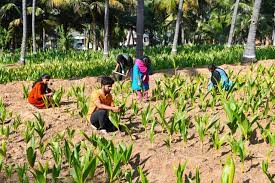
Introduction about M.Sc. Spices & Plantation Crops
A Master of Science (M.Sc.) in Spices and Plantation Crops is a specialized academic program that focuses on the in-depth study of spices and crops commonly associated with plantation agriculture. This field of study encompasses a wide range of spices and crops such as black pepper, cardamom, vanilla, tea, coffee, and other economically important plants.
The M.Sc. program in Spices and Plantation Crops typically combines theoretical knowledge with practical applications, providing students with a comprehensive understanding of the cultivation, processing, and marketing aspects of these crops. Students enrolled in this program gain insights into the agronomic practices, pest and disease management, post-harvest processing techniques, and quality control measures specific to spices and plantation crops.
The curriculum often includes courses on plant breeding, soil fertility management, crop physiology, pest and disease management, agricultural economics, and sustainable agriculture practices. Additionally, students may have the opportunity to engage in hands-on experiences through field visits, internships, and research projects related to spice and plantation crop production.
Graduates with an M.Sc. in Spices and Plantation Crops are equipped to contribute to the agricultural sector by applying advanced knowledge and skills in crop management, ensuring sustainable and efficient production practices. They may pursue careers in agricultural research, extension services, agribusiness, quality control, and consultancy roles related to spices and plantation crops. The program aims to produce professionals who can address the challenges and opportunities in the cultivation and management of these economically significant crops, contributing to the overall development of the agricultural industry.
How can I apply for admission to M.Sc. Spices & Plantation Crops Program
To apply for admission to an M.Sc. program in Spices and Plantation Crops, you typically need to follow a set of steps. Here is a general guide that you can use:
Research Programs and Universities: Start by researching universities or institutions that offer an M.Sc. program in Spices and Plantation Crops. Look for reputable institutions that have a strong focus on agricultural sciences and crop management.
Check Admission Requirements: Review the admission requirements for each program and university. This may include academic qualifications, such as a relevant bachelor's degree in agriculture or a related field, as well as any specific entrance exams or standardized tests.
Prepare Necessary Documents: Gather all the required documents for the application process. This may include academic transcripts, letters of recommendation, a statement of purpose, and any other documents specified by the university.
Entrance Exams: Some institutions may require you to take entrance exams. Prepare for these exams and ensure you meet the minimum score requirements. Common exams for agricultural programs include the Graduate Record Examination (GRE) or other equivalent exams.
Online Application: Complete the online application form provided by the university. Ensure that you provide accurate and up-to-date information. Pay attention to deadlines for submission.
Application Fee: Pay the application fee, if applicable. Some universities charge a fee to process your application, so be sure to check the fee requirements and payment methods.
Letters of Recommendation: Arrange for letters of recommendation from professors or professionals who can speak to your academic and/or work-related qualifications. Make sure to provide them with sufficient time to write and submit their recommendations.
Statement of Purpose: Write a compelling statement of purpose that outlines your academic and career goals, as well as why you are interested in pursuing an M.Sc. in Spices and Plantation Crops.
Submit Application: Submit your completed application along with all required documents through the university's online application portal or as per their specified submission process.
Follow Up: After submitting your application, monitor your application status. Some universities may require additional information or may schedule interviews as part of the selection process.
Financial Aid and Scholarships: Explore opportunities for financial aid or scholarships offered by the university or external organizations. Check the eligibility criteria and deadlines for applying.
What is the eligibility for M.Sc. Spices & Plantation Crops
The eligibility criteria for an M.Sc. in Spices and Plantation Crops may vary depending on the university or institution offering the program. However, here are some general eligibility requirements commonly observed in such programs:
Educational Qualifications:
A bachelor's degree in Agriculture, Horticulture, Botany, or a related field from a recognized university.
The degree should typically be in a relevant discipline that covers the fundamentals of plant sciences and agriculture.
Minimum GPA or Percentage:
Many universities may specify a minimum grade point average (GPA) or a minimum percentage in the qualifying examination. This criterion ensures that candidates have a strong academic foundation.
Entrance Exams:
Some institutions may require candidates to take specific entrance exams as part of the admission process. Common exams include the Graduate Record Examination (GRE) or other equivalent tests in agricultural or biological sciences.
Work Experience (if required):
Certain programs may prefer or require applicants to have relevant work experience in agriculture, especially in areas related to spices and plantation crops.
Letters of Recommendation:
Submission of letters of recommendation from professors or professionals who can vouch for the candidate's academic abilities and potential for success in the program.
Statement of Purpose:
A well-written statement of purpose outlining the candidate's academic and career goals, as well as their specific interest in pursuing an M.Sc. in Spices and Plantation Crops.
Interview (if required):
Some universities may conduct interviews as part of the selection process to assess the candidate's motivation, research interests, and suitability for the program.
How long does it takes to complete a M.Sc. Spices & Plantation Crops program
The duration of an M.Sc. program in Spices and Plantation Crops typically spans two years when pursued as a full-time course. However, program durations can vary based on factors such as the specific curriculum structure of the institution, any additional requirements, or the inclusion of practical training components.
Here's a breakdown of the general timeline for a two-year M.Sc. program:
First Year:
During the first year, students usually engage in coursework that covers fundamental and advanced topics related to spices, plantation crops, and agricultural sciences. This may include subjects like crop management, plant breeding, soil science, pest and disease management, and sustainable agriculture practices.
Summer Internship/Training:
Some programs incorporate a summer internship or practical training component between the first and second years. This hands-on experience allows students to apply their theoretical knowledge in real-world settings and gain practical skills.
Second Year:
In the second year, students often delve into more specialized courses related to spices and plantation crops. They may also have the opportunity to choose elective courses based on their specific interests within the field.
Research Project/Thesis:
Towards the end of the program, students typically undertake a research project or thesis, which is a significant component of the M.Sc. degree. This project allows them to conduct original research in a specific area of spices and plantation crops under the guidance of faculty members.
Completion and Graduation:
Upon successful completion of coursework, internship, and the research project/thesis, students are eligible for graduation with an M.Sc. degree in Spices and Plantation Crops.
What are potential career opportunities after M.Sc. Spices & Plantation Crops
After completing an M.Sc. in Spices and Plantation Crops, graduates can explore various career opportunities in both the public and private sectors. Here are potential career paths:
Agricultural Researcher:
Work in research institutions or universities, conducting studies to improve crop yield, quality, and sustainability in the field of spices and plantation crops.
Crop Consultant:
Provide expert advice to farmers and agricultural businesses on best practices for cultivating, managing, and optimizing yields of spices and plantation crops.
Agribusiness Manager:
Take on managerial roles in agribusiness companies involved in the production, processing, and marketing of spices and plantation crops.
Quality Control Specialist:
Ensure that spices and plantation crops meet industry standards by working in quality control and assurance positions for agricultural producers or processing companies.
Extension Officer:
Work with government agricultural departments or non-profit organizations to extend knowledge and expertise to farmers, helping them adopt modern and sustainable practices for spices and plantation crop cultivation.
Entrepreneur in Spice Processing:
Start a business focused on spice processing, adding value to raw produce by creating spice blends, extracts, or other products for the market.
Plantation Manager:
Oversee the management of plantations, ensuring efficient and sustainable cultivation practices for spices and plantation crops.
Tea/Coffee Estate Manager:
Manage tea or coffee plantations, overseeing cultivation, harvesting, and processing operations.
Seed Technologist:
Engage in research and development of high-quality seeds for spices and plantation crops, contributing to improved crop varieties and productivity.
Environmental Consultant:
Work on projects related to sustainable agriculture and environmental conservation, advising on practices that minimize the ecological impact of spice and plantation crop cultivation.
International Development Specialist:
Contribute to global agricultural development by working with international organizations, NGOs, or government agencies to improve spice and plantation crop cultivation practices in different regions.
Supply Chain Manager:
Manage the supply chain for spices and plantation crops, ensuring a smooth flow of products from farmers to processing units and ultimately to consumers.
Syllabus of M.Sc. Spices & Plantation Crops
Semester 1:
Introduction to Spices and Plantation Crops:
Overview of major spice and plantation crops
Basic cultivation practices
Importance of spices in the global market
Soil Science and Crop Management:
Soil fertility analysis
Crop nutrient requirements
Basics of crop management
Plant Breeding and Genetics:
Principles of plant breeding
Genetic improvement of spice and plantation crops
Breeding techniques
Crop Physiology:
Understanding plant growth and development
Physiological processes in spice and plantation crops
Field Visits:
Visit to spice and plantation crop farms
Observation of cultivation practices
Semester 2:
Pest and Disease Management:
Identification of common pests and diseases
Integrated pest management strategies
Agronomy and Sustainable Agriculture:
Advanced crop management practices
Sustainable agricultural techniques
Post-Harvest Technology:
Harvesting and post-harvest handling of spice and plantation crops
Processing and value addition
Research Methodology:
Introduction to research techniques
Proposal development for future research
Field Visits and Hands-on Training:
Application of integrated pest management
Practical exposure to post-harvest techniques
Summer Internship:
Practical Field Training:
Duration: 8-12 weeks
Placement in agricultural research institutions, spice farms, processing units, or related organizations
Application of theoretical knowledge in a practical setting
Project Work:
Conducting a small research project or case study related to spice and plantation crops
Regular reporting and documentation
Semester 3:
Economics of Spice Production:
Understanding the economic aspects of spice cultivation
Market trends and pricing
Entrepreneurship in Agriculture:
Basics of starting and managing an agricultural business
Business plan development
Internship Report and Presentation:
Compilation and presentation of the internship experience
Analysis of lessons learned and practical insights
Advanced Crop Protection:
Advanced techniques in pest and disease management
Emerging challenges and solutions
Semester 4:
Thesis Preparation:
Identification of a research topic
Proposal development for the master's thesis
Advanced Topics in Spice and Plantation Crops:
In-depth study of emerging trends and technologies
Specialized topics based on current research
Final Thesis Defense:
Presentation and defense of the master's thesis
Evaluation by faculty and external experts
Internship opportunities after completing M.Sc. Spices & Plantation Crops
After completing an M.Sc. in Spices and Plantation Crops, graduates have a wide range of career opportunities in various sectors related to agriculture and agribusiness. Here are some potential career paths:
Agricultural Researcher:
Conduct research to enhance the productivity, quality, and sustainability of spice and plantation crops. Work in research institutions, universities, or private research organizations.
Crop Consultant:
Provide expert advice to farmers on crop management practices, pest and disease control, and overall cultivation strategies for spices and plantation crops.
Agribusiness Manager:
Take on managerial roles in agribusiness companies involved in the production, processing, and marketing of spices and plantation crops.
Quality Control Specialist:
Ensure that spices and plantation crops meet industry standards by working in quality control and assurance positions for agricultural producers or processing companies.
Extension Officer:
Work with government agricultural departments or non-profit organizations to disseminate knowledge and best practices to farmers, promoting sustainable and efficient cultivation methods.
Entrepreneur in Spice Processing:
Start and manage a business involved in spice processing, producing value-added products for the market.
Plantation Manager:
Oversee the management of plantations, ensuring efficient and sustainable cultivation practices for spices and plantation crops.
Tea/Coffee Estate Manager:
Manage tea or coffee plantations, overseeing cultivation, harvesting, and processing operations.
Seed Technologist:
Engage in research and development of high-quality seeds for spices and plantation crops, contributing to improved crop varieties and productivity.
Environmental Consultant:
Work on projects related to sustainable agriculture and environmental conservation, advising on practices that minimize the ecological impact of spice and plantation crop cultivation.
International Development Specialist:
Contribute to global agricultural development by working with international organizations, NGOs, or government agencies to improve spice and plantation crop cultivation practices in different regions.
Supply Chain Manager:
Manage the supply chain for spices and plantation crops, ensuring a smooth flow of products from farmers to processing units and ultimately to consumers.
Educator/Trainer:
Teach agricultural science or related subjects at educational institutions, or provide training programs for farmers and agribusiness professionals.
Government Agricultural Officer:
Work in government agricultural departments, advising on policies, implementing programs, and promoting sustainable agricultural practices.
Research and Development Manager:
Lead R&D initiatives for agricultural companies, focusing on innovation in spice and plantation crop production and processing.
Scholorship and grants for M.Sc. Spices & Plantation Crops
Securing scholarships and grants for an M.Sc. in Spices and Plantation Crops can significantly help alleviate the financial burden of education. Here are some potential avenues for scholarships and grants:
University Scholarships:
Many universities offer merit-based scholarships for exceptional students. These scholarships may cover tuition fees, living expenses, or both. Check with the admissions or financial aid office of the university where you plan to pursue your M.Sc.
Government Scholarships:
Explore scholarship programs offered by government agencies related to agriculture, education, or research. These scholarships may be available at the national or regional level.
Research Grants:
Look for research grants provided by agricultural research organizations, foundations, or industry associations. These grants may support specific research projects related to spices and plantation crops.
International Organizations:
Some international organizations, such as the Food and Agriculture Organization (FAO) or the World Bank, offer scholarships or grants for students pursuing studies in agriculture and related fields.
Non-Profit Organizations:
Non-profit organizations focused on agriculture, sustainable development, or education may provide scholarships for M.Sc. students. Research organizations like the Consultative Group on International Agricultural Research (CGIAR) are examples.
Industry Sponsorships:
Agricultural companies involved in spice and plantation crops may offer sponsorships or scholarships to students pursuing degrees in this field. Check with companies that align with your career goals.
Professional Associations:
Explore scholarships offered by professional associations related to agriculture, horticulture, or crop science. These organizations may support students with a strong academic record and a commitment to the field.
Regional Funding Programs:
Investigate funding programs specific to your region or country. Some local government bodies, foundations, or private organizations may offer financial support for higher education in agriculture.
Online Scholarship Databases:
Utilize online scholarship databases and platforms that aggregate scholarship opportunities. Websites like Scholarship.com, Fastweb, and Chevening are good starting points.
Corporate Scholarships:
Large agricultural corporations or agribusinesses may have scholarship programs for students pursuing degrees in agricultural sciences.
Endowed Scholarships:
Some universities have endowed scholarships funded by alumni or donors. Inquire with the university's financial aid office about any scholarships specifically designated for agriculture or related fields.
Government Aid Programs:
Investigate government aid programs, grants, or low-interest loans that may be available to support your education in agriculture.
Conclusion
In conclusion, pursuing an M.Sc. in Spices & Plantation Crops opens a gateway to a diverse range of opportunities in agriculture and related industries. From mastering sustainable practices to contributing to global food security, the journey is both rewarding and impactful. Whether you aspire to be a researcher, entrepreneur, or agribusiness leader, this academic path equips you with the knowledge and skills needed to thrive in the ever-evolving field of spice and crop management. Embrace the possibilities, and embark on a fulfilling career shaping the future of agriculture.
FAQ M.Sc. Spices & Plantation Crops
Q1: What are the career opportunities after completing an M.Sc. in Spices & Plantation Crops?
A1: Graduates can explore careers as agricultural researchers, crop consultants, agribusiness managers, quality control specialists, and more. The program opens doors to various roles in research, entrepreneurship, and sustainable agriculture.
Q2: How long does it take to complete an M.Sc. in Spices & Plantation Crops?
A2: Typically, the program spans two years, with the first year focusing on foundational coursework and the second year including specialized studies, internships, and a research project or thesis.
Q3: Are there scholarships available for M.Sc. in Spices & Plantation Crops?
A3: Yes, students can apply for university scholarships, government scholarships, research grants, and industry sponsorships. There are various opportunities to secure financial support for your education in this field.
Q4: What is the internship syllabus for M.Sc. Spices & Plantation Crops?
A4: The internship syllabus often includes exposure to crop management, pest and disease control, post-harvest technology, and practical field training. Students gain hands-on experience in spice and plantation crop cultivation.
Q5: What are the eligibility criteria for M.Sc. Spices & Plantation Crops?
A5: Eligibility typically requires a bachelor's degree in agriculture or a related field, along with a minimum GPA. Some programs may also have specific entrance exams or other requirements.
How Shiksha Hub helps you in
-
 Student Counsellors
 -
 Career Counseling
 -
 Research
 -
 24/7 Support
 -
 Scholarships
 -
 Community