Posted by Admin on 07-07-2023 in Shiksha hub
M.SC. Sugar Technology Introduction, Admission, Registration, Eligibility, Duration, Fees, Syllabus 2024
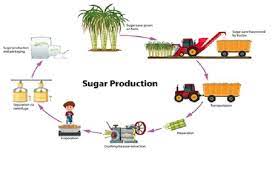
Introduction about M.SC. Sugar Technology
Sugar is an essential and beloved commodity in our daily lives, finding its way into our coffee, tea, and various delectable desserts. However, the journey of sugar from sugarcane to our tables is a complex and fascinating process that relies on the expertise of sugar technologists. In this article, we will delve into the world of M.SC. Sugar Technology, exploring its importance, history, curriculum, career opportunities, and more.
The Importance of Sugar Technology
M.SC. Sugar Technology is a specialized field that plays a crucial role in the sugar industry. Sugar technologists are responsible for ensuring the efficient extraction, processing, and refinement of sugar from sugarcane. Their expertise is essential in maintaining the quality and quantity of sugar production. With the ever-increasing demand for sugar globally, the significance of sugar technology cannot be overstated.
History of Sugar Technology
Sugar technology has a rich history that dates back centuries. It was first developed in ancient India, and the knowledge of sugar production gradually spread to other parts of the world. Over time, technological advancements and innovations have revolutionized the sugar industry, making it a highly efficient and profitable sector.
M.SC. Sugar Technology Curriculum
Students pursuing an M.SC. in Sugar Technology can expect a comprehensive curriculum that covers various aspects of sugar production. This includes courses in sugarcane cultivation, sugar extraction methods, quality control, and sugar by-products. The program equips students with both theoretical knowledge and practical skills.
How can I apply for admission to M.SC. Sugar Technology program?
To apply for admission to an M.SC. Sugar Technology program, you'll need to follow these general steps:
Research Programs: Start by researching universities and institutions that offer M.SC. Sugar Technology programs. Look for institutions that align with your academic and career goals.
Check Admission Requirements: Each university may have specific admission requirements. Typically, you will need a bachelor's degree in a relevant field, such as agriculture, biology, or chemistry. Ensure that you meet the prerequisites for the program.
Entrance Exams: Some universities might require you to take entrance exams or tests to assess your knowledge in relevant subjects. Be prepared for these exams and perform well.
Prepare Necessary Documents: Collect all the necessary documents for your application. These may include your academic transcripts, letters of recommendation, a statement of purpose, and a resume. Make sure your documents are well-prepared and meet the university's guidelines.
Application Form: Fill out the university's application form. Ensure that you provide accurate and complete information. Pay close attention to deadlines, as missing them can affect your chances of admission.
Statement of Purpose: Write a compelling statement of purpose. This is your opportunity to explain your interest in M.SC. Sugar Technology, your career goals, and why you want to study at that specific university.
Letters of Recommendation: Request letters of recommendation from professors or professionals who can vouch for your qualifications and potential.
Financial Planning: Consider the cost of the program and explore scholarship opportunities. Many universities offer financial aid, so check if you qualify for any scholarships or grants.
Interview (if required): Some universities may require an interview as part of the admission process. Be prepared to discuss your background, goals, and passion for sugar technology.
Submit Application: Once you've gathered all the necessary documents and completed the application form, submit your application along with the required application fee.
Wait for Admission Decision: After submitting your application, you'll need to wait for the university to review your materials and make an admission decision. This process may take some time, so be patient.
Acceptance and Enrollment: If you're accepted, congratulations! You'll receive an acceptance letter. Follow the instructions provided in the letter for enrollment and registration.
Visa and Travel Arrangements: If you're an international student, you'll need to apply for a student visa and make travel arrangements to the university.
What is the eligibility for M.SC. Sugar Technology?
Eligibility criteria for M.SC. Sugar Technology programs may vary depending on the university or institution offering the program. However, I can provide you with a general idea of the typical eligibility requirements for such programs in many educational institutions:
Educational Qualifications: Applicants should have a bachelor's degree in a related field, such as agriculture, biology, chemistry, or a similar discipline. The degree should be from a recognized institution.
Minimum GPA: Many universities require a minimum GPA (Grade Point Average) for undergraduate studies. This GPA threshold may vary from one institution to another but is usually in the range of 2.5 to 3.0 on a 4.0 scale.
Relevant Courses: Some programs may require applicants to have completed specific prerequisite courses related to science, agriculture, or chemistry. These prerequisites ensure that students have the foundational knowledge required for the M.SC. Sugar Technology curriculum.
Entrance Examinations: In some cases, universities may require applicants to take entrance exams or tests to evaluate their knowledge and aptitude in relevant subjects. These exams may include subjects like chemistry, biology, or agriculture.
Letters of Recommendation: Applicants are often asked to submit letters of recommendation from professors or professionals who can vouch for their academic abilities and potential in the field of sugar technology.
Statement of Purpose: A well-crafted statement of purpose (SOP) is typically required. In the SOP, applicants should explain their motivations for pursuing an M.SC. in Sugar Technology, their career goals, and why they are interested in the specific program and institution.
English Proficiency: For international students or in programs where English is not the primary language of instruction, proof of English language proficiency is usually required. This can be demonstrated through tests like TOEFL or IELTS.
Work Experience (optional): While not always mandatory, some programs may prefer or require applicants to have prior relevant work experience in fields related to sugar technology.
Interview (if required): In some cases, universities may conduct interviews as part of the admission process to assess the candidate's suitability for the program.
It's important to note that eligibility requirements can vary from one university to another and may change over time. Therefore, it is advisable to carefully review the specific admission guidelines provided by the university or institution to which you plan to apply. Additionally, reaching out to the university's admissions office for clarification and guidance on eligibility criteria can be beneficial
How long does it takes to complete a M.SC. Sugar Technology?
The duration of an M.SC. (Master of Science) in Sugar Technology program typically ranges from 2 to 2.5 years. This duration includes both the coursework and any research or practical components that may be part of the program.
The specific length of the program can vary depending on the university or institution offering it and the country where you choose to pursue your M.SC. Sugar Technology degree. Some programs may be more coursework-oriented, while others may have a stronger research focus, which can influence the duration of the program.
In general, a standard M.SC. Sugar Technology program will consist of a set of core courses covering various aspects of sugar technology, including sugarcane cultivation, sugar extraction methods, quality control, and related subjects. There may also be elective courses to allow students to specialize in specific areas of interest.
Additionally, many M.SC. programs include a research project or thesis component, which may extend the program's duration. This research component allows students to apply their knowledge and skills to real-world problems in the field of sugar technology and can be a significant part of the learning experience.
To get the most accurate information on the duration of a specific M.SC. Sugar Technology program, it's recommended to consult the program's official website or contact the admissions department of the university or institution where you are interested in applying. They can provide you with detailed information about the program's structure, duration, and any specific requirements.
What are potential career opportunities after M.SC. Sugar Technology?
An M.SC. (Master of Science) in Sugar Technology opens the door to a range of exciting and rewarding career opportunities in the sugar industry and related fields. Here are some potential career paths and opportunities for graduates with an M.SC. in Sugar Technology:
Sugar Technologist: This is the most direct career path. Sugar technologists are responsible for overseeing the entire sugar production process, from sugarcane cultivation and harvesting to sugar extraction and refining. They ensure the quality and efficiency of sugar production.
Quality Control Manager: Quality control managers are in charge of maintaining and improving the quality standards of sugar products. They oversee testing and quality assurance processes in sugar mills and refineries.
Research and Development Scientist: Graduates can work in research and development roles to innovate and improve sugar production processes. This may involve developing new extraction methods, sustainable practices, or exploring alternative uses for sugar by-products.
Biotechnologist: The sugar industry increasingly intersects with biotechnology. Biotechnologists work on projects related to biofuel production, bioplastics, and the development of pharmaceuticals and other products derived from sugar.
Environmental Specialist: With a growing emphasis on sustainability, environmental specialists in the sugar industry focus on reducing the environmental impact of sugar production. They may work on waste management, water conservation, and eco-friendly practices.
Sales and Marketing: Graduates can work in sales and marketing roles for sugar-producing companies. They may be involved in promoting sugar products, negotiating contracts, and managing client relationships.
Consultant: Sugar technologists can become consultants, offering their expertise to sugar mills, refineries, and agribusinesses. They provide guidance on process improvement, quality control, and sustainable practices.
Entrepreneur: Some graduates choose to start their businesses, such as sugar mills, sugarcane farms, or sugar-related product manufacturing. Entrepreneurship in the sugar industry can be a rewarding and challenging path.
Academia and Education: Those interested in teaching and research can pursue careers in academia by becoming professors, lecturers, or researchers in institutions or universities.
Government and Regulatory Bodies: Graduates can work with government agencies and regulatory bodies that oversee and monitor the sugar industry, ensuring compliance with safety and quality standards.
Food and Beverage Industry: Sugar technologists can find opportunities in the food and beverage industry, working on product development, quality control, and enhancing the use of sugar in food products.
Export-Import Management: They can manage the export and import of sugar and related products, working with international trade and logistics.
Supply Chain Management: Graduates may find roles in supply chain management, optimizing the logistics of sugarcane procurement, sugar distribution, and inventory management.
Sustainability Analyst: With a growing emphasis on sustainable practices, some graduates work as sustainability analysts to assess and improve the environmental and social impact of sugar production.
Waste Management Specialist: Waste management specialists focus on reducing and managing waste generated during sugar production, promoting eco-friendly solutions.
The sugar industry continues to evolve, and as it does, new opportunities for innovation and specialization emerge. Graduates with an M.SC. in Sugar Technology are well-equipped to contribute to the industry's growth and adapt to changing demands. The field offers a diverse range of career options, making it an excellent choice for those interested in both science and industry.
Syllabus of M.SC. Sugar Technology
| Semester | Subjects and Courses |
|---|---|
| Semester 1 | - Principles of Sugar Technology |
| - Physical Chemistry in Sugar Technology | |
| - Biological Sciences in Sugar Technology | |
| - Mathematics and Statistics | |
| Semester 2 | - Sugar Refining and Processing |
| - Instrumentation and Control | |
| - Fermentation Technology | |
| - Environmental Impact of Sugar Industry | |
| Semester 3 | - Research Methodology |
| - Sugarcane Agriculture and Crop Management | |
| - Elective Course (e.g., Biofuels, Bioplastics) | |
| Semester 4 | - Thesis or Research Project |
Internship opportunities after completing M.SC. Sugar Technology?
After completing an M.SC. (Master of Science) in Sugar Technology, there are various internship opportunities available to gain practical experience and further enhance your skills in the field. Internships can be a valuable stepping stone to launching your career in the sugar industry. Here are some potential internship opportunities:
Sugar Mills and Refineries: Many sugar mills and refineries offer internship programs to M.SC. Sugar Technology graduates. These internships provide hands-on experience in various aspects of sugar production, from sugarcane cultivation to refining and quality control.
Research and Development: Research-based internships can be found in both academia and industry. You can work as a research intern in labs or research institutions, focusing on improving sugar extraction methods, developing new products, or exploring sustainable practices.
Quality Control and Assurance: Internships in quality control departments of sugar companies involve testing and ensuring the quality of sugar products. This is vital for maintaining high-quality standards.
Environmental and Sustainability Internships: With a growing focus on sustainability in the sugar industry, you can intern with organizations or companies that specialize in environmental and sustainability initiatives. This may involve waste management, energy conservation, or eco-friendly practices.
Biotechnology and Bioproduct Companies: Internships in biotechnology or bioproduct companies allow you to work on projects related to the development of biofuels, bioplastics, or pharmaceuticals derived from sugarcane or sugar by-products.
Government Agencies and Regulatory Bodies: Some government agencies and regulatory bodies oversee the sugar industry. Interning with these organizations can provide insights into industry regulations and compliance.
Consulting Firms: Consulting firms that specialize in agribusiness and sugar technology often hire interns to assist with consulting projects for sugar mills and refineries.
Food and Beverage Industry: Internships in the food and beverage industry can be relevant, particularly if you're interested in the application of sugar in food products. You may work on product development, quality control, or food technology projects.
Sugarcane Farms: Interning on sugarcane farms can provide a valuable perspective on the early stages of sugar production, including sugarcane cultivation and harvesting.
International Internships: Consider international internship opportunities to gain a global perspective on the sugar industry. Some organizations and universities offer exchange programs or internships abroad.
When seeking internship opportunities, it's essential to research companies and organizations in your area or regions of interest, and to network with professors, alumni, and industry professionals. Many universities also have career services departments that can help you find relevant internships.
Internships are an excellent way to gain practical experience, build a professional network, and apply the knowledge and skills you've acquired during your M.SC. program to real-world situations. They can also lead to full-time employment opportunities in the sugar industry upon successful completion.
Scholarship and grants for M.SC. Sugar Technology?
Scholarships and grants for M.SC. Sugar Technology programs can help ease the financial burden of pursuing your higher education. While availability and eligibility criteria vary, here are some common sources of financial aid for M.SC. Sugar Technology students:
University Scholarships: Most universities offering M.SC. Sugar Technology programs have their scholarship programs. These scholarships may be merit-based, need-based, or a combination of both. Check with the universities you are interested in for specific scholarship opportunities.
Government Scholarships: Many governments offer scholarships to domestic and international students pursuing higher education. These may include full or partial tuition scholarships and living allowances. Examples include the Fulbright Program in the United States and the Commonwealth Scholarships in the UK.
Industry Scholarships: Some sugar industry organizations and associations provide scholarships to students pursuing degrees in sugar technology. These scholarships often come with the expectation of working in the sugar industry upon graduation.
Research Grants: If you are interested in research within the field, you may be eligible for research grants from government agencies, private organizations, or research institutions. These grants can support your research projects during your M.SC. program.
Fellowships: Various fellowship programs offer financial support to graduate students. These can cover tuition, research expenses, and stipends for living costs. Examples include the DAAD (German Academic Exchange Service) fellowships.
Teaching and Research Assistantships: Some universities offer teaching and research assistantships, which provide a stipend and often cover tuition costs in exchange for assisting with teaching or research activities within the department.
Corporate Sponsorships: Companies in the sugar industry may sponsor students pursuing M.SC. Sugar Technology programs. These sponsorships can include tuition coverage, living allowances, and opportunities for internships or employment with the sponsoring company.
Nonprofit and Foundation Grants: Various nonprofit organizations and foundations offer grants and scholarships to students pursuing degrees in fields related to agriculture, biotechnology, or environmental sustainability. These grants can be an excellent source of financial support.
Specific Country Scholarships: Some countries have specific scholarship programs for international students. For example, the Australian Government offers scholarships for students from developing countries through the Australia Awards program.
Online Scholarship Databases: Utilize online scholarship search engines and databases to find opportunities that match your qualifications and interests. Websites like Scholarship.com, Fastweb, and Scholarships.com can help you identify scholarships and grants that suit your needs.
When applying for scholarships and grants, pay attention to application deadlines, eligibility criteria, and required documentation. These may include academic transcripts, letters of recommendation, a statement of purpose, and evidence of financial need. Be thorough in your applications, and don't hesitate to reach out to the financial aid offices at your chosen universities for guidance and information on available scholarships.
Remember that competition for scholarships can be intense, so it's essential to start your scholarship search and application process early. Additionally, consider applying to multiple scholarships to increase your chances of securing financial support for your M.SC. Sugar Technology program.
Conclusion
In conclusion, M.SC. Sugar Technology is a dynamic and ever-evolving field with a broad spectrum of opportunities. As the sugar industry adapts to changing consumer preferences and environmental concerns, the role of sugar technologists becomes increasingly important. Graduates in this field are well-positioned for a rewarding and impactful career.
FAQ,s
-
What is M.SC. Sugar Technology?
M.SC. Sugar Technology is a postgraduate program that focuses on the study of sugarcane cultivation, sugar extraction, refining, and related processes. It equips students with knowledge and skills to work in the sugar industry. -
What are the eligibility criteria for M.SC. Sugar Technology?
Eligibility criteria typically include a bachelor's degree in a related field, such as agriculture, biology, or chemistry, and a minimum GPA. Prerequisite courses and entrance exams may also be required. -
How long does it take to complete an M.SC. Sugar Technology program?
The program usually spans 2 to 2.5 years, which includes coursework, research, and practical components. -
What are the career opportunities after completing M.SC. Sugar Technology?
Graduates can pursue careers as sugar technologists, quality control managers, researchers, and more. They can work in sugar mills, research and development, biotechnology, sustainability, and various related fields. -
Are there internship opportunities after M.SC. Sugar Technology?
Yes, there are internship opportunities in sugar mills, refineries, research institutions, quality control, environmental sustainability, and other areas of the sugar industry. -
What financial aid options are available for M.SC. Sugar Technology students?
Financial aid options include university scholarships, government scholarships, industry-sponsored scholarships, research grants, fellowships, assistantships, corporate sponsorships, and nonprofit foundation grants. -
Can I study M.SC. Sugar Technology abroad?
Yes, many countries offer M.SC. Sugar Technology programs. International students can explore opportunities to study abroad, which may enhance their global perspective on the sugar industry. -
Is work experience required to pursue an M.SC. Sugar Technology program?
While work experience is not always required, having prior experience in relevant fields can be advantageous in the application process and during the program. -
How can I find the right M.SC. Sugar Technology program for me?
Research universities offering the program, consider their curriculum, faculty expertise, and any specific specializations they offer. Reach out to academic advisors and professionals in the field for guidance. -
What are the current trends in sugar technology?
Current trends in sugar technology include sustainability initiatives, the use of biotechnology in sugar production, and innovations in waste management. The industry is also adapting to changing consumer preferences and environmental concerns.
How Shiksha Hub helps you in
-
 Student Counsellors
 -
 Career Counseling
 -
 Research
 -
 24/7 Support
 -
 Scholarships
 -
 Community