Posted by Admin on 13-07-2023 in Shiksha hub
M.Tech. Dairy Technology, Introduction, Admission, Registration, Eligibility, Duration, Fees, Syllabus 2024
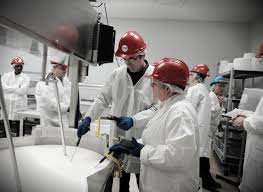
Introduction about M.Tech. Dairy Technology
Master of Technology (M.Tech.) in Dairy Technology is a specialized postgraduate program designed to equip students with advanced knowledge and skills in the field of dairy science and technology. This program focuses on the various aspects of dairy processing, quality assurance, and technological innovations in the dairy industry.
Dairy Technology encompasses a wide range of subjects, including milk production, processing, preservation, packaging, and distribution. The M.Tech. Dairy Technology program is structured to provide students with a comprehensive understanding of the entire dairy production chain, from farm to table. Students delve into topics such as dairy microbiology, dairy chemistry, engineering principles in dairy processing, and quality control measures.
The curriculum of M.Tech. Dairy Technology often includes both theoretical and practical components. Students are exposed to modern technologies used in dairy processing plants, and they gain hands-on experience in areas such as dairy plant operations, quality testing, and product development. The program also emphasizes research and innovation, encouraging students to explore new methods and technologies that can enhance the efficiency and sustainability of dairy production.
Upon completion of the M.Tech. Dairy Technology program, graduates are well-prepared to take on roles in research and development, quality assurance, production management, and technology consulting within the dairy industry. The program not only equips students with technical expertise but also fosters problem-solving skills, critical thinking, and a deep understanding of the challenges and opportunities in the rapidly evolving field of dairy technology.
How can I apply for admission to M.Tech. Dairy Technology Program
The process for applying to an M.Tech. Dairy Technology program may vary slightly depending on the university or institution offering the program. However, here are some general steps you can follow:
Research Programs and Universities: Start by researching universities or institutions that offer M.Tech. Dairy Technology programs. Look into their curriculum, faculty, infrastructure, and any specific admission requirements.
Check Eligibility Criteria: Review the eligibility criteria for the M.Tech. Dairy Technology program at your chosen institutions. Typically, you need a Bachelor's degree in a relevant field of study, such as Dairy Technology, Food Technology, or a related discipline. Ensure that you meet the minimum academic requirements.
Prepare Necessary Documents: Gather all the required documents for the application process. This may include:
Academic transcripts
Letters of recommendation
Statement of purpose (SOP)
Resume or curriculum vitae (CV)
Any standardized test scores (if required)
Proof of language proficiency (if applicable)
Appear for Entrance Exams (if required): Some universities may require you to take specific entrance exams for admission to M.Tech. programs. Common exams include the Graduate Aptitude Test in Engineering (GATE) or other university-specific entrance tests. Prepare for and take the required exams well in advance.
Online Application: Visit the official website of the university or institution offering the M.Tech. Dairy Technology program. Look for the online application portal and complete the application form. Provide accurate and complete information.
Submit Application Fee: Pay the application fee as specified by the institution. This fee is usually non-refundable and covers the cost of processing your application.
Letters of Recommendation: Arrange for letters of recommendation from professors, employers, or other relevant individuals who can speak to your academic and professional capabilities. Submit these letters as part of your application.
Statement of Purpose (SOP): Write a compelling Statement of Purpose that outlines your academic and career goals, as well as why you are interested in pursuing an M.Tech. in Dairy Technology.
Application Submission: After completing the application form and attaching all necessary documents, submit your application before the deadline.
Interview (if required): Some institutions may conduct interviews as part of the admission process. Prepare for interviews by reviewing your academic background, research interests, and reasons for choosing the M.Tech. Dairy Technology program.
Check Admission Status: Regularly check the status of your application on the university's portal. Once the admission decisions are made, you will be notified of your acceptance or rejection.
What is the eligibility for M.Tech. Dairy Technology
The eligibility criteria for M.Tech. Dairy Technology can vary between universities and institutions. However, here are common eligibility requirements that are often expected:
Educational Qualifications:
Candidates should have a Bachelor's degree in Dairy Technology, Food Technology, Agricultural Engineering, or a related field from a recognized university or institution.
Typically, a minimum aggregate score of 50% or an equivalent CGPA (Cumulative Grade Point Average) is required. Some institutions may have specific subject-wise requirements.
Entrance Exam:
Many universities require candidates to qualify for a relevant entrance exam for admission to M.Tech. programs. The Graduate Aptitude Test in Engineering (GATE) is a common entrance exam accepted by several institutions for M.Tech. admissions. However, some universities may conduct their own entrance tests.
Work Experience (if applicable):
Some institutions may prefer or require candidates to have relevant work experience in the field of Dairy Technology. This could be an added advantage during the selection process.
Nationality:
Generally, candidates should be Indian nationals. However, some institutions may also accept applications from foreign nationals or provide specific eligibility criteria for international students.
Age Limit:
There is usually no specific age limit for admission to M.Tech. Dairy Technology programs. However, candidates are advised to check the specific age criteria, if any, set by the respective institutions.
How long does it takes to complete a M.Tech. Dairy Technology program
The duration of an M.Tech. Dairy Technology program typically spans two academic years. Each academic year is divided into two semesters, resulting in a total of four semesters for the entire program. Here is a general breakdown of the duration:
First Year:
The first year of the M.Tech. Dairy Technology program usually consists of coursework covering fundamental and advanced topics in dairy science, technology, and related disciplines. Students may take a combination of core and elective courses during this period.
Second Year:
The second year is often dedicated to specialized coursework, research projects, and a mandatory industrial or research internship. Students may have the opportunity to focus on specific areas of interest within dairy technology, such as dairy processing, quality control, microbiology, or engineering aspects.
Dissertation/Thesis Work:
Towards the end of the program, students typically engage in a dissertation or thesis project, which is a substantial piece of original research or an in-depth study in a specific area of dairy technology. This project is a significant component of the M.Tech. program and is usually conducted under the guidance of a faculty advisor.
The overall duration of the program may vary slightly among institutions, and some universities may offer variations of the M.Tech. Dairy Technology program with different specializations or additional requirements. It's important for prospective students to refer to the specific program structure and curriculum provided by the university or institution they plan to attend.
What are potential career opportunities after M.Tech. Dairy Technology
After completing an M.Tech. Dairy Technology program, graduates can explore a variety of career opportunities within the dairy industry and related sectors. Here are some potential career paths:
Dairy Processing Manager:
Manage and oversee the operations of dairy processing plants, ensuring efficient production, quality control, and adherence to safety standards.
Quality Assurance Manager:
Monitor and maintain quality standards in dairy products, develop and implement quality control procedures, and ensure compliance with regulatory requirements.
Research and Development Scientist:
Engage in research activities to develop new dairy products, improve existing processes, and explore innovative technologies in the field of dairy science and technology.
Product Development Specialist:
Work on creating new dairy products, considering factors such as taste, nutritional value, and market demand. Collaborate with teams to bring new products to the market.
Food Safety Officer:
Ensure the safety and hygiene of dairy products by implementing and monitoring food safety standards. Conduct inspections and audits to verify compliance.
Dairy Consultant:
Provide expert advice to dairy farms and processing units on improving efficiency, implementing new technologies, and addressing challenges in production.
Supply Chain Manager:
Manage the logistics and distribution of dairy products, coordinating with suppliers, distributors, and retailers to ensure a smooth supply chain.
Entrepreneur in Dairy Business:
Start and manage your own dairy-related business, such as a dairy farm, processing unit, or retail venture, leveraging the knowledge gained during the M.Tech. program.
Academic and Research Positions:
Pursue teaching and research positions in academic institutions, contributing to the advancement of knowledge in the field of dairy science and technology.
Government Regulatory Positions:
Work with government agencies to enforce and develop regulations related to the dairy industry, ensuring compliance with safety and quality standards.
Technology and Equipment Sales:
Work in sales and marketing roles for companies that provide technology, equipment, and solutions to the dairy industry.
Syllabus of M.Tech. Dairy Technology
|
Semester 1 |
Subjects/Courses |
|
Dairy Chemistry and Biochemistry |
Principles of dairy chemistry, composition of milk, enzymes, biochemistry of milk components |
|
Dairy Microbiology |
Microorganisms in milk, microbiological quality of milk, fermented dairy products, food safety and hygiene |
|
Engineering Principles in Dairy Process |
Basics of engineering related to dairy processing, heat transfer, fluid flow, unit operations in dairy processing |
|
Dairy Plant Operations |
Practical aspects of dairy plant operations, equipment handling, safety measures, quality control measures |
|
Research Methodology |
Techniques and methods for conducting research, data analysis, experimental design |
|
Semester 2 |
Subjects/Courses |
|
Dairy Processing Technology |
Techniques and technologies in dairy processing, pasteurization, homogenization, separation processes |
|
Dairy Product Technology |
Manufacturing of various dairy products, including cheese, butter, ice cream, and fermented products |
|
Food Safety and Quality Management |
Regulatory requirements, quality assurance, HACCP principles, food safety standards, quality control methods |
|
Elective I (e.g., Advanced Dairy Chemistry) |
Specialized topics based on student's interest, such as advanced dairy chemistry, dairy engineering, or food packaging |
|
Semester 3 |
Subjects/Courses |
|
Industrial Training/Internship |
Hands-on experience in an industrial setting, applying knowledge gained in the program |
|
Elective II (e.g., Dairy Plant Design) |
Specialized topics based on student's interest, such as dairy plant design, advanced dairy microbiology, or food safety |
|
Seminar and Presentation Skills |
Enhancing presentation and communication skills, preparing students for research presentations and seminars |
|
Semester 4 |
Subjects/Courses |
|
Dissertation/Thesis Work |
In-depth research project or thesis in a specific area of dairy technology, under the guidance of a faculty advisor |
Internship opportunities after completing M.Tech. Dairy Technology
After completing an M.Tech. Dairy Technology program, graduates have various internship opportunities to gain practical experience and apply their knowledge in real-world settings. Here are some potential internship opportunities:
Dairy Processing Plants:
Internships in dairy processing plants allow students to gain hands-on experience in the day-to-day operations of processing milk and producing dairy products. This may include exposure to pasteurization, homogenization, and the manufacturing of products like cheese, butter, and yogurt.
Quality Control and Assurance:
Internships in quality control and assurance departments provide an opportunity to work on quality testing procedures, ensuring that dairy products meet regulatory standards and specifications. This may involve conducting microbiological, chemical, and sensory analyses.
Research and Development (R&D) Labs:
Interning in R&D labs, either within academic institutions or private companies, allows students to contribute to ongoing research projects, explore innovative technologies, and develop new dairy products or improve existing ones.
Food Safety and Hygiene:
Internships in food safety departments involve working on implementing and monitoring food safety standards in dairy processing. This may include conducting audits, inspections, and ensuring compliance with hygiene and safety regulations.
Dairy Farm Management:
Internships on dairy farms provide a unique opportunity to understand the practical aspects of milk production, herd management, and farm operations. This experience is valuable for those interested in the agricultural side of the dairy industry.
Supply Chain and Logistics:
Internships in supply chain management and logistics focus on the movement and distribution of dairy products from processing plants to retailers. This involves coordination with suppliers, distributors, and ensuring efficient logistics.
Consulting Firms:
Some students may choose to intern with consulting firms that specialize in providing expertise to the dairy industry. Consultants may work on projects related to process optimization, quality improvement, and technology implementation.
Government Regulatory Bodies:
Interning with government regulatory bodies involved in overseeing the dairy industry offers insights into the regulatory framework, compliance requirements, and the role of government agencies in ensuring the safety and quality of dairy products.
International Organizations:
Opportunities may exist for internships with international organizations involved in dairy development and trade. This can provide exposure to global trends, standards, and practices in the dairy industry.
Entrepreneurial Ventures:
Some graduates may choose to intern with or start their own entrepreneurial ventures related to dairy, gaining practical experience in managing a dairy business.
Scholorship and grants for M.Tech. Dairy Technology
Scholarships and grants for M.Tech. Dairy Technology can be offered by various sources, including government bodies, educational institutions, private organizations, and industry associations. The availability of specific scholarships may vary depending on the country, region, and the institution offering the program. Here are some general types of scholarships and grants that students pursuing M.Tech. Dairy Technology may explore:
Government Scholarships:
Many governments offer scholarships to support students pursuing higher education in fields like dairy technology. These scholarships are often based on academic merit, financial need, or specific criteria set by the government.
Institutional Scholarships:
Universities and educational institutions that offer M.Tech. Dairy Technology programs may have their own scholarship programs. These scholarships could be based on academic achievements, research potential, or other criteria.
Industry-sponsored Scholarships:
Dairy industry associations and companies may offer scholarships to students pursuing studies in dairy technology. These scholarships may come with the expectation of involvement in relevant research or internships.
Research Grants:
Some students may be eligible for research grants to support their thesis or dissertation work. These grants can be provided by government agencies, research foundations, or industry partners.
Merit-based Scholarships:
Scholarships based on academic merit are commonly available. These scholarships recognize outstanding academic performance and may cover tuition fees, living expenses, or both.
Need-based Scholarships:
Some scholarships are awarded based on financial need. Students facing economic challenges may be eligible for assistance to cover their educational expenses.
International Scholarships:
Students pursuing M.Tech. Dairy Technology in a foreign country may explore international scholarships offered by governments, institutions, or organizations that support international students.
Professional Associations and Societies:
Membership in professional associations or societies related to dairy technology may provide access to scholarship opportunities. These organizations may offer financial support to students pursuing advanced studies in the field.
Corporate Sponsorships:
Dairy-related companies and corporations may have scholarship programs to support students in dairy technology. These scholarships might be tied to future employment or internships with the sponsoring organization.
Fellowships:
Fellowships are similar to scholarships but often involve additional responsibilities, such as research or teaching. Some academic departments or research institutions may offer fellowships to M.Tech. students.
Conclusion
In conclusion, pursuing an M.Tech. in Dairy Technology opens up a wealth of opportunities for individuals seeking to advance their knowledge and skills in the dynamic and vital field of dairy science and technology. The program typically spans two years and encompasses a well-rounded curriculum covering various aspects of dairy production, processing, and quality assurance.
FAQ M.Tech. Dairy Technology
What is M.Tech. Dairy Technology?
M.Tech. Dairy Technology is a postgraduate program designed to provide advanced knowledge and skills in the field of dairy science and technology. It covers various aspects of dairy production, processing, quality assurance, and research.
What are the eligibility criteria for M.Tech. Dairy Technology?
Eligibility typically includes a Bachelor's degree in Dairy Technology, Food Technology, Agricultural Engineering, or a related field. Some institutions may require a minimum percentage or CGPA. Entrance exams like GATE may also be a requirement.
How long does it take to complete M.Tech. Dairy Technology?
The program generally spans two academic years, divided into four semesters. The first year focuses on coursework, while the second year includes specialized coursework, an internship, and a dissertation or thesis project.
What career opportunities are available after completing M.Tech. Dairy Technology?
Graduates can pursue careers as dairy processing managers, quality assurance specialists, research and development scientists, product development specialists, consultants, and more. Opportunities exist in processing plants, research institutions, government bodies, and the private sector.
Are there internship opportunities during M.Tech. Dairy Technology?
Yes, most M.Tech. Dairy Technology programs include an internship or industrial training component. This allows students to gain practical experience in dairy processing plants, quality control labs, research institutions, or other relevant settings.
Are there scholarships available for M.Tech. Dairy Technology?
Yes, scholarships for M.Tech. Dairy Technology may be offered by governments, educational institutions, industry associations, and companies. These scholarships can be merit-based, need-based, or research-focused.
What is the scope of research in M.Tech. Dairy Technology?
M.Tech. graduates can engage in research related to dairy product development, process optimization, quality control, microbiology, and other specialized areas. Research opportunities exist in both academic and industrial settings.
Can I pursue M.Tech. Dairy Technology abroad?
Yes, many universities abroad offer M.Tech. or equivalent programs in Dairy Technology. International students may explore scholarships, fellowships, and admission requirements specific to the institutions they are interested in.
What skills are developed during M.Tech. Dairy Technology?
The program enhances skills in dairy processing, quality control, research methodology, project management, and communication. Graduates develop expertise in applying scientific principles to improve dairy production and processing.
Is work experience required for admission to M.Tech. Dairy Technology?
While work experience is not always mandatory, some institutions may prefer or require applicants to have relevant work experience in the dairy industry. This can vary, so it's essential to check the specific requirements of the chosen program.
How Shiksha Hub helps you in
-
 Student Counsellors
 -
 Career Counseling
 -
 Research
 -
 24/7 Support
 -
 Scholarships
 -
 Community