Posted by Admin on 11-09-2023 in Shiksha hub
PG In Sanskrit Language Introduction, Admission, Registration, Eligibility, Duration, Fees, Syllabus 2024
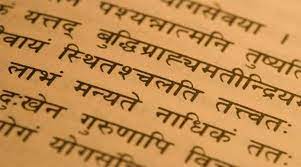
Introduction about PG In Sanskrit Language
Sanskrit, often referred to as the 'language of the gods,' is a classical language with a rich heritage. It is a language that has not only stood the test of time but has also greatly influenced numerous modern languages. Pursuing a Postgraduate (PG) degree in Sanskrit is a unique and intellectually stimulating choice. In this article, we will delve into the world of PG in Sanskrit, exploring its significance, history, curriculum, career prospects, and much more.
The Significance of Sanskrit Language
Sanskrit, considered one of the oldest languages in the world, holds immense significance in the realms of literature, philosophy, and spirituality. It is the language in which ancient Indian scriptures like the Vedas, Upanishads, and epics like the Mahabharata and Ramayana were written. Learning Sanskrit provides a deep insight into these profound texts and the wisdom they contain.
History of Sanskrit Education
Sanskrit education has a time-honored history dating back to ancient India. It was traditionally passed down from teacher to student, fostering a guru-shishya parampara (teacher-disciple tradition). This educational system aimed at preserving the purity of the language and its cultural heritage.
Choosing PG in Sanskrit Language
Pursuing a PG degree in Sanskrit is an excellent choice for those with a keen interest in language, literature, and Indian culture. It opens doors to various career opportunities and allows students to dive deep into the linguistic and philosophical aspects of Sanskrit.
Course Curriculum
A typical PG program in Sanskrit covers a wide range of subjects, including classical Sanskrit literature, philosophy, linguistics, and Vedic studies. Students also have the opportunity to specialize in areas such as comparative literature, epigraphy, and manuscriptology.
Career Opportunities
Many are often curious about the job prospects that a PG in Sanskrit can offer. Graduates in Sanskrit language find opportunities in teaching, research, translation, and even content writing. Their expertise in the language and its rich literary tradition is highly sought after in various fields.
Importance in Modern World
While Sanskrit is considered a classical language, its relevance in the modern world cannot be undermined. It has contributed significantly to the development of various languages, including English. The study of Sanskrit enhances linguistic skills and promotes a deeper understanding of etymology.
Cultural and Spiritual Enrichment
Pursuing PG in Sanskrit not only equips students with academic knowledge but also offers spiritual and cultural enrichment. It provides insight into the profound spiritual texts and practices deeply rooted in Sanskrit literature.
Challenges Faced
Studying Sanskrit can be challenging due to its complex grammar and script. However, with dedication and guidance from experienced professors, these challenges can be overcome.
Admission Process
The admission process for PG in Sanskrit typically includes an entrance examination followed by an interview. The criteria may vary from one institution to another, so it's essential to check the specific requirements of the institute you're interested in.
Top Institutes Offering PG in Sanskrit
Several esteemed institutions across India offer PG programs in Sanskrit. Some of the top institutions include Banaras Hindu University, Delhi University, and Jadavpur University.
Scholarships and Funding
Financial constraints should not hinder your pursuit of a PG in Sanskrit. Many universities offer scholarships and financial aid to deserving students. It's advisable to explore these options when applying for your course.
Alumni Success Stories
Listening to the experiences of successful alumni who pursued PG in Sanskrit can be truly inspiring. They have gone on to become renowned scholars, teachers, and authors, contributing significantly to the field.
How can I apply for admission to PG In Sanskrit Language
To apply for admission to a Postgraduate (PG) program in Sanskrit Language, you'll need to follow a series of steps. Here's a guide in English:
Research and Choose Your Institution:
Begin by researching universities or institutions that offer PG programs in Sanskrit. Look for institutions that align with your academic and career goals. Some prestigious institutions have been mentioned in the article.
Check Admission Requirements:
Visit the official website of the institution you're interested in to find detailed information about their admission requirements. Typically, these requirements include a bachelor's degree in a related field.
Entrance Examinations:
Many universities and colleges conduct entrance examinations for PG admissions in Sanskrit. Check the specific entrance exam details for the institution you wish to apply to.
Prepare for the Entrance Exam:
If an entrance exam is required, prepare well in advance. Obtain the syllabus and study materials, and consider joining coaching classes if needed.
Online Application:
Most institutions offer an online application process. Complete the online application form on the institution's official website during the specified application period. Be sure to provide accurate information and required documents.
Application Fee:
Pay the application fee as mentioned in the admission notification. Keep a copy of the fee receipt for future reference.
Submit Required Documents:
Along with the application form, you'll need to submit documents like your academic transcripts, certificates, identity proof, and passport-sized photographs. Ensure that you have all the necessary documents ready in advance.
Attend Interviews (if required):
Some institutions may conduct interviews as part of the admission process. Prepare for these interviews by studying Sanskrit literature, history, and your motivations for pursuing the course.
Check Admission Notifications:
Keep an eye on the institution's website and your email for admission notifications. If you are shortlisted, you will receive further instructions regarding the next steps.
Acceptance and Fee Payment:
Upon receiving an admission offer, follow the provided instructions for acceptance. This often includes paying the admission fee within a specified timeframe.
Registration and Orientation:
Once you've paid the admission fee, you'll be asked to complete the registration process. Attend orientation sessions to familiarize yourself with the program and the institution.
Seek Financial Aid (Optional):
If you require financial assistance, inquire about scholarships, grants, or student loan options. Many institutions offer financial aid to deserving students.
Begin Your PG Program:
Congratulations! You're now ready to start your PG program in Sanskrit. Attend classes regularly, engage with your professors and peers, and make the most of the academic resources available.
Remember that the specific admission process may vary from one institution to another, so always refer to the official website of the institution you are applying to for the most accurate and up-to-date information. Good luck with your application!
What is the eligibility for PG In Sanskrit Language
The eligibility criteria for pursuing a Postgraduate (PG) program in Sanskrit Language may vary from one institution to another. However, there are some common prerequisites that are typically expected for admission into such programs. Here are the general eligibility criteria in English:
Bachelor's Degree: To be eligible for a PG program in Sanskrit Language, you should have completed a Bachelor's degree in a related field. The related fields may include:
Bachelor of Arts (BA) in Sanskrit
BA in any language or literature
BA in Indian Culture or Philosophy
BA in Ancient History
Minimum Percentage: Many institutions require a minimum percentage or grade in your Bachelor's degree. This percentage may vary from one institution to another. Commonly, a minimum of 50% is expected, but some universities may have different requirements.
Entrance Examination: Several universities and colleges conduct entrance examinations for PG programs, including Sanskrit Language. You may need to appear for an entrance exam, and your admission may depend on your performance in this exam.
Interview (if required): In addition to the entrance exam, some institutions may also conduct interviews as part of their selection process. The interview may assess your knowledge of Sanskrit literature, language, and your motivation for pursuing the course.
Language Proficiency: Since the program is focused on Sanskrit Language, some institutions may require candidates to demonstrate a certain level of proficiency in Sanskrit. This can be assessed through language tests during the admission process.
Documents: You will need to provide essential documents, including:
Academic transcripts and certificates
Identity proof (like Aadhar card, passport, or driver's license)
Passport-sized photographs
Proof of reservation category (if applicable)
Application Form and Fee: You will have to fill out the application form provided by the institution and pay the associated application fee.
Age Limit (if applicable): Some institutions may have age limits for PG admissions. Check the specific age criteria set by the institution you are interested in.
Reservation Policy: If you belong to a reserved category (e.g., SC/ST/OBC), there might be specific reservation policies and relaxation of eligibility criteria. Check with the institution for details.
How long does it takes to complete a PG In Sanskrit Language
The duration to complete a Postgraduate (PG) program in Sanskrit Language can vary depending on the specific course and institution. Generally, the duration for a PG in Sanskrit can be one of the following:
Two Years (M.A. in Sanskrit): The most common duration for a Master of Arts (M.A.) program in Sanskrit is typically two years. During these two years, you will study a range of topics related to Sanskrit language, literature, philosophy, and culture. This program includes coursework, research, and possibly a dissertation or thesis.
One Year (M.A. in Sanskrit): Some institutions may offer an accelerated one-year M.A. program in Sanskrit. These programs are often more intensive and require students to cover the same curriculum as the two-year program within a shorter timeframe.
PG Diploma in Sanskrit (1 year): In addition to M.A. programs, some institutions may offer one-year Postgraduate Diploma programs in Sanskrit. These programs provide a condensed study of Sanskrit and may be suitable for those seeking a shorter commitment.
Research-Based Programs (M.Phil. and Ph.D.): For those interested in advanced research and academic careers, M.Phil. (Master of Philosophy) and Ph.D. (Doctor of Philosophy) programs in Sanskrit are also available. These programs can take several years to complete, depending on the research work involved.
The specific duration may also depend on factors such as the institution's academic calendar, the curriculum, and whether you are studying full-time or part-time. Additionally, programs in Sanskrit Language may have practical components, language proficiency requirements, and research components that can influence the duration of the course.
What are potential career opportunities after PG in Sanskrit Language
After completing a Postgraduate (PG) program in Sanskrit Language, you'll have a range of career opportunities to explore. While Sanskrit is often associated with traditional and academic fields, it offers diverse career paths. Here are some potential career opportunities in English:
Teaching: Many graduates of PG in Sanskrit Language choose to become educators. You can teach Sanskrit in schools, colleges, or universities. Additionally, you can provide private tutoring to students interested in learning the language.
Researcher: With advanced knowledge in Sanskrit, you can work as a researcher in academic institutions, libraries, or research organizations. Your research may focus on linguistics, ancient texts, epigraphy, or comparative literature.
Content Writer and Translator: Your expertise in Sanskrit can be valuable in the field of content writing and translation. You can translate ancient Sanskrit texts, create content related to Indian culture and spirituality, or work as a linguistic consultant for companies.
Archaeologist and Epigraphist: Sanskrit is often found in inscriptions and ancient texts. If you have a passion for history and archaeology, you can work as an epigraphist, deciphering and interpreting inscriptions.
Museum Curator: Museums often display artifacts with Sanskrit inscriptions and historical relevance. You can work as a curator in a museum, specializing in artifacts with Sanskrit connections.
Academic Writer and Author: Use your knowledge to write academic papers, books, and articles about Sanskrit literature, language, and culture. Your work can contribute to the preservation and dissemination of Sanskrit knowledge.
Library and Information Specialist: Work in libraries or information centers, managing Sanskrit manuscripts and texts. You can help preserve and digitize ancient texts.
Cultural Consultant: As a cultural consultant, you can help promote Indian culture and heritage. You may advise organizations, businesses, or governments on cultural matters related to Sanskrit.
Tourism and Travel Guide: If you are passionate about the historical and cultural aspects of Sanskrit, you can become a tourism or travel guide, offering specialized tours focused on Sanskrit heritage.
Online and Digital Platforms: You can work on online platforms, creating content related to Sanskrit, including blogs, podcasts, and videos. The internet provides an excellent platform to reach a global audience interested in Sanskrit.
Government Services: Some government departments may require Sanskrit experts for roles related to heritage preservation, translation, and cultural affairs.
International Organizations: International organizations, particularly those focused on Indian culture, may seek experts in Sanskrit for various roles, including language specialists, cultural ambassadors, or advisors.
Entrepreneurship: If you have a unique business idea related to Sanskrit, such as creating educational apps, online courses, or cultural events, entrepreneurship is also a viable option.
Syllabus of PG in Sanskrit Language
The syllabus for a Postgraduate (PG) program in Sanskrit Language may vary from one institution to another. Additionally, the specific courses and their order can differ depending on the university's curriculum. However, I can provide a general outline of the syllabus for a two-year M.A. program in Sanskrit Language, semester-wise:
Semester 1:
Sanskrit Grammar and Linguistics: This course covers the foundational aspects of Sanskrit grammar and linguistics, including phonetics, morphology, and syntax.
Classical Sanskrit Literature - I: Study of classical Sanskrit texts, including plays, poetry, and prose from renowned authors like Kalidasa, Bhasa, and others.
Ancient Indian Philosophy: An introduction to the philosophical ideas in ancient India, focusing on texts like the Upanishads and the Bhagavad Gita.
Optional Course: Depending on the institution, you may choose an optional course related to Sanskrit, such as Vedic studies, epigraphy, or comparative literature.
Semester 2:
Sanskrit Composition: Enhancing writing skills in Sanskrit, including essays, short stories, and poetry.
Classical Sanskrit Literature - II: Continuing the study of classical Sanskrit literature with a focus on different genres and authors.
Philosophical and Religious Texts: Exploration of key texts in Indian philosophy and religion, including the Vedas, Puranas, and scriptures.
Optional Course: Similar to the first semester, you may choose an optional course based on your interests.
Semester 3:
Modern Sanskrit Literature: Study of Sanskrit literature from the modern and contemporary periods.
Sanskrit Rhetoric and Poetics: An in-depth examination of Sanskrit rhetoric and poetics, covering classical treatises on the subject.
Vedic Literature: A comprehensive study of Vedic texts, including the Rigveda, Yajurveda, Samaveda, and Atharvaveda.
Optional Course: As before, you may choose an optional course related to Sanskrit studies.
Semester 4:
Dissertation/Thesis: This semester is often dedicated to the research and writing of a dissertation or thesis on a topic of your choice within the field of Sanskrit Language. This is a substantial project that allows you to demonstrate your research and analytical skills.
Viva Voce: Typically, at the end of your dissertation/thesis, you'll have a viva voce examination where you defend your research findings.
Internship opportunities after completing PG in Sanskrit Language
Internship opportunities for graduates with a Postgraduate (PG) degree in Sanskrit Language may not be as common as in some other fields. However, there are still avenues where you can gain practical experience and apply your knowledge. Here are some potential internship opportunities and career paths:
Academic Research: Collaborate with universities, research institutions, or scholars in Sanskrit studies. You can assist in research projects related to Sanskrit literature, linguistics, or philosophy.
Museum and Archival Work: Some museums and archives may offer internships related to Sanskrit inscriptions, artifacts, and historical documents. You can help catalog, digitize, and preserve these valuable resources.
Content Creation and Translation: Work as an intern for publishing houses, cultural organizations, or online platforms, assisting in content creation and translation projects related to Sanskrit literature and culture.
Language Teaching and Tutoring: If you're interested in education, consider interning as a language tutor or teaching assistant at language institutes or schools offering Sanskrit courses.
Cultural Organizations: Join cultural organizations that promote Indian culture and heritage. You can work on organizing cultural events, workshops, and exhibitions.
Digital Initiatives: Contribute to digital projects focused on Sanskrit, such as developing language learning apps, creating websites, or managing social media content for Sanskrit-related platforms.
Travel and Tourism: Some travel agencies or tour operators offer internships focusing on cultural and heritage tours. You can assist in designing and organizing tours related to Sanskrit heritage sites.
Library and Documentation Centers: Work as an intern in libraries, documentation centers, or educational institutions that house Sanskrit manuscripts and texts. You can assist in cataloging, preserving, and managing these resources.
Heritage Conservation: Intern with organizations involved in heritage conservation and preservation. This might include restoring ancient Sanskrit inscriptions or cultural monuments.
Language Revival Projects: In some regions, efforts are made to revive and promote the use of Sanskrit. You can participate in language revival projects and immersion programs.
Freelancing and Self-Employment: Consider freelancing or self-employment in fields like content writing, translation, or teaching Sanskrit. You can work on projects independently or through online platforms.
Scholorship and grants for PG in Sanskrit Language
Scholarships and grants for pursuing a Postgraduate (PG) program in Sanskrit Language can provide valuable financial assistance to students. While the availability of specific scholarships may vary depending on the institution and location, here are some general sources of funding that you can explore:
University Scholarships: Many universities offer merit-based scholarships for PG students. These scholarships often consider your academic performance and may be available to both domestic and international students. Check the official website of the university where you plan to enroll for details on their scholarship programs.
Government Scholarships: In many countries, government agencies provide scholarships for higher education. These scholarships may be available at the national, state, or regional level. Be sure to explore government scholarship opportunities in your country.
Endowments and Trusts: Various trusts, foundations, and endowments are dedicated to supporting students pursuing Sanskrit studies and related fields. These organizations often provide scholarships, grants, or financial aid to eligible candidates.
Cultural Organizations: Organizations dedicated to the promotion of Indian culture and Sanskrit heritage may offer scholarships to students pursuing studies in Sanskrit Language. Explore organizations like the Samskrita Bharati Foundation for potential funding opportunities.
International Scholarships: If you plan to study Sanskrit abroad, some international scholarships are available for foreign students. Research scholarships and grants offered by the government and academic institutions in your host country.
Fellowships: Some institutions and research organizations provide fellowships for PG students, particularly those interested in pursuing advanced research in Sanskrit studies. Fellowships may include financial support and research opportunities.
Minority Scholarships: In some countries, minority scholarships are available for students from specific communities. If you belong to a minority community, check if you qualify for any minority scholarship programs.
Community and Cultural Associations: Local community and cultural associations may offer scholarships or grants to students pursuing Sanskrit Language studies. These organizations may prioritize candidates who actively participate in cultural activities and events.
Online Scholarship Databases: Several online scholarship databases and platforms provide information about scholarships, grants, and financial aid opportunities for higher education. Websites like Scholarship.com and Fastweb can be useful resources.
Teaching Assistantships: Some universities offer teaching assistantship positions for PG students. These positions may involve teaching introductory Sanskrit courses to undergraduates or assisting professors in their research.
To find relevant scholarships and grants, it's crucial to conduct thorough research. Start by visiting the official websites of the institutions where you plan to study and checking with your university's financial aid office. Additionally, explore opportunities offered by government agencies, cultural organizations, and online scholarship databases. Keep in mind that scholarship deadlines and eligibility criteria may vary, so be sure to apply well in advance and fulfill all the required documentation and application procedures.
Conclusion
In conclusion, opting for a PG degree in Sanskrit is an intellectual journey that connects you with the ancient wisdom and culture of India. It offers a diverse range of career opportunities and enriches your understanding of language, literature, and spirituality. Despite the challenges, the rewards of studying Sanskrit are immeasurable.
FAQs about PG in Sanskrit Language
Is Sanskrit still relevant in today's world?
Absolutely, Sanskrit continues to be relevant, influencing various languages and offering cultural and linguistic insights.
What career paths can I pursue after completing a PG in Sanskrit?
Graduates can explore teaching, research, translation, content writing, and more.
Are there any scholarships available for PG in Sanskrit programs?
Many institutions offer scholarships and funding options to support students in their studies.
How challenging is it to learn Sanskrit at the postgraduate level?
Sanskrit can be challenging due to its complexity, but with dedication and guidance, it can be mastered.
Which universities are known for their PG in Sanskrit programs?
Some renowned universities offering PG programs in Sanskrit include Banaras Hindu University, Delhi University, and Jadavpur University.
How Shiksha Hub helps you in
-
 Student Counsellors
 -
 Career Counseling
 -
 Research
 -
 24/7 Support
 -
 Scholarships
 -
 Community