Posted by Admin on 21-02-2025 in Shiksha hub
Ph.D. From Dr. Punjabrao Deshmukh Krishi Vidyapeeth : Introduction, Fee Structure, Admission Process, Documents, Syllabus, Research Methodology, University Highlights, Scholarship, FAQs
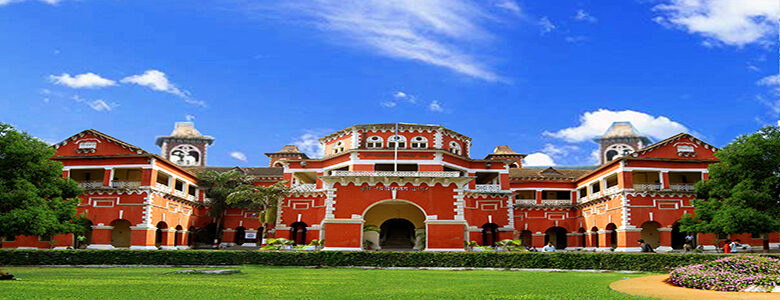
Introduction about Ph.D. From Dr. Punjabrao Deshmukh Krishi Vidyapeeth
Dr. Punjabrao Deshmukh Krishi Vidyapeeth (PDKV), situated in the agriculturally rich state of Maharashtra, stands as a beacon of academic and research excellence in the field of agriculture and allied sciences. Named after the renowned social reformer and former Union Agriculture Minister, Dr. Punjabrao Deshmukh, the university has been instrumental in advancing agricultural education, fostering sustainable farming practices, and contributing to rural development. Over the years, PDKV has diversified its academic offerings, encompassing undergraduate, postgraduate, and doctoral programs in various branches of agriculture, horticulture, forestry, agricultural engineering, and more. The Ph.D. program at Dr. Punjabrao Deshmukh Krishi Vidyapeeth is designed to cultivate an in-depth understanding of cutting-edge research methodologies, equip scholars with specialized knowledge in their chosen discipline, and promote innovation that addresses pressing agricultural challenges. With a keen focus on interdisciplinary collaboration, PDKV encourages its doctoral candidates to engage with peers, faculty, and industry experts to explore new frontiers in crop improvement, sustainable resource management, agri-business, and agricultural biotechnology. The university’s well-equipped laboratories, experimental farms, and comprehensive library resources create an environment conducive to high-quality research. A unique aspect of PDKV is its strong emphasis on field-oriented studies. Doctoral candidates often have the opportunity to conduct on-site experiments, collaborate with local farming communities, and contribute to real-world problem-solving. This practical approach not only enriches the research experience but also ensures that findings have direct applications in enhancing agricultural productivity, improving rural livelihoods, and promoting eco-friendly practices. Additionally, the university maintains partnerships with national and international institutions, enabling scholars to participate in joint research projects, attend seminars, and benefit from global exposure. Moreover, the dedicated faculty at Dr. Punjabrao Deshmukh Krishi Vidyapeeth serves as mentors who guide Ph.D. candidates through every stage of their research journey—from proposal development to thesis defense. Regular workshops, conferences, and symposiums further augment the doctoral experience, allowing scholars to stay updated with the latest trends in agricultural research. By integrating academic rigor with a commitment to societal impact, the Ph.D. program at PDKV empowers scholars to emerge as thought leaders who can drive meaningful change in India’s agricultural landscape and beyond.
Fee Structure for Ph.D. in Dr. Punjabrao Deshmukh Krishi Vidyapeeth
| Tuition Fee Per Year | Registration Fee | Total Fee |
|---|---|---|
| INR 60,000 | INR 5,000 | INR 65,000 |
Admission Process For Ph.D. in Dr. Punjabrao Deshmukh Krishi Vidyapeeth
The admission process for the Ph.D. program at Dr. Punjabrao Deshmukh Krishi Vidyapeeth is carefully structured to select candidates who exhibit strong academic potential, a keen interest in agricultural research, and a commitment to advancing sustainable farming practices. Below is an overview of the key steps involved in securing admission to the Ph.D. program:
- Check Eligibility: Applicants must possess a Master’s degree (or equivalent) in a relevant field of agriculture or allied sciences, typically with a minimum required percentage or CGPA.
- Entrance Examination: Depending on the department, candidates may be required to appear for a university-conducted Ph.D. entrance test that evaluates subject knowledge, research aptitude, and analytical skills.
- Interview/Viva Voce: Shortlisted candidates are invited for a personal interview, where the clarity of their research proposal and their motivation for doctoral studies are assessed.
- Merit List Publication: Based on the overall performance in the entrance exam and interview, the university releases a merit list of selected candidates.
- Enrollment & Fee Payment: Admitted candidates must complete the enrollment formalities, pay the requisite fees, and register for the Ph.D. program under an approved supervisor.
- Coursework Registration: Successful applicants begin their doctoral journey by registering for the mandatory Ph.D. coursework, focusing on research methodology, advanced topics, and specialized electives.
Document Required For Ph.D. in Dr. Punjabrao Deshmukh Krishi Vidyapeeth
Before applying for the Ph.D. program at PDKV, candidates should gather and organize the necessary documents to ensure a smooth admission process. Adequate documentation not only streamlines the verification of academic credentials but also reflects the candidate’s preparedness for advanced research. Below is a detailed list of the documents typically required:
- Application Form: A duly filled and signed Ph.D. application form, usually available on the university’s official website.
- Master’s Degree Certificate: Proof of having completed a relevant postgraduate program in agriculture or allied disciplines.
- Undergraduate Degree Certificate: Verification of foundational academic qualifications, if necessary.
- Mark Sheets: Official mark sheets from both undergraduate and postgraduate studies, reflecting the required minimum percentage or CGPA.
- Entrance Exam Scorecard: If the university or another recognized body conducts a Ph.D. entrance test, the official scorecard is essential.
- Research Proposal: A concise document outlining your proposed research topic, objectives, and methodology.
- Passport-Sized Photographs: Usually 2-3 recent colored photographs with a specified background.
- Photo ID Proof: Any government-approved ID such as Aadhaar card, Passport, or Voter ID.
- Migration/Transfer Certificate: Required for candidates transferring from other universities or boards.
- Caste Certificate (if applicable): Necessary for reservation benefits under SC/ST/OBC or other categories.
- Experience Certificate (if any): Useful for those who have prior research or industry experience in agriculture or related fields.
Dr. Punjabrao Deshmukh Krishi Vidyapeeth Ph.D. Syllabus
| Semester / Phase | Subjects / Topics |
|---|---|
| Coursework (Initial Phase) |
|
| Mid-Research Phase |
|
| Thesis Phase |
|
Dr. Punjabrao Deshmukh Krishi Vidyapeeth Research Methodology
- Identifying Research Gaps: Conducting an extensive literature review to pinpoint gaps in existing knowledge or agricultural practices.
- Study Design: Selecting the appropriate research design—experimental, observational, or mixed methods—based on the research objectives.
- Field Experiments & Data Collection: Employing both qualitative and quantitative methods, including surveys, lab work, and on-farm trials.
- Statistical Analysis: Utilizing software tools like SPSS, SAS, or R to interpret data and validate hypotheses.
- Ethical & Environmental Considerations: Ensuring minimal environmental impact, obtaining necessary permissions, and adhering to ethical guidelines.
- Documentation & Review: Maintaining detailed logs of procedures, observations, and outcomes, and undergoing periodic reviews by supervisors.
- Collaboration & Seminars: Engaging in interdisciplinary research, attending seminars, and presenting findings for feedback and peer review.
- Publication & Outreach: Publishing research results in peer-reviewed journals and participating in agricultural extension activities.
- Final Thesis Submission: Organizing all research findings into a coherent dissertation, followed by a formal defense.
Dr. Punjabrao Deshmukh Krishi Vidyapeeth Highlights
| Highlights | Details |
|---|---|
| Location | Maharashtra, India |
| Establishment | Named after Dr. Punjabrao Deshmukh, recognized by UGC & ICAR |
| Academic Programs | Undergraduate, Postgraduate, and Doctoral Courses in Agriculture & Allied Sciences |
| Faculty Expertise | Renowned academicians, researchers, and industry professionals in agriculture |
| Infrastructure | Modern labs, experimental farms, digital library, and e-learning resources |
| Collaborations | Partnerships with national and international institutions, government agencies, and agri-industries |
| Campus Facilities | Hostels, sports facilities, Wi-Fi enabled campus, student support services |
| Accreditations | Recognized by ICAR, NAAC accreditation for select programs |
| Research Support | Funding opportunities, workshops, conferences, and regular training sessions |
| Placement Assistance | Active placement cell, career counseling, and networking with agri-based industries |
How To Apply For Ph.D. in Dr. Punjabrao Deshmukh Krishi Vidyapeeth
- Visit Official Website: Start by checking the university’s official website for Ph.D. admission notifications, important dates, and the online application portal.
- Register & Create Profile: Sign up using a valid email address and mobile number. Keep your login credentials safe for subsequent steps.
- Complete Application Form: Provide personal, academic, and professional details accurately. Double-check for any discrepancies before final submission.
- Upload Documents: Scan and upload necessary certificates, mark sheets, ID proofs, and photographs as per the guidelines.
- Pay Application Fee: Use the university’s secure online payment gateway to pay the non-refundable application fee. Keep the transaction receipt.
- Entrance Exam (If Applicable): Appear for the Ph.D. entrance test conducted by PDKV or other recognized bodies if required. Some departments may consider national-level exam scores.
- Interview & Merit List: Shortlisted candidates are invited for an interview. The final merit list is published based on overall performance.
- Enrollment & Fee Payment: Once selected, pay the tuition and registration fees to confirm your admission. Submit original documents for verification.
- Commence Coursework: Enroll in the mandatory Ph.D. coursework, focusing on research methodology, advanced topics, and elective subjects.
- Research Topic Registration: In consultation with your supervisor, finalize and register your research topic with the university.
- Begin Research: Start your doctoral research under faculty guidance, adhering to periodic evaluations and reviews.
Courses After Ph.D. in Dr. Punjabrao Deshmukh Krishi Vidyapeeth
- Post-Doctoral Fellowships: Engage in advanced research projects funded by government bodies or international organizations.
- Professional Certifications: Acquire specialized skills in areas like agri-business management, precision farming, or advanced biotechnology tools.
- Faculty Development Programs: Enhance pedagogical and research guidance skills, particularly beneficial for those aiming to join academia.
- Management & Leadership Courses: Develop managerial acumen for administrative or leadership roles in universities, research institutes, or agri-based corporations.
- Consultancy & Advisory Roles: Offer expertise to governmental agencies, NGOs, or private firms focused on agriculture and rural development.
Dr. Punjabrao Deshmukh Krishi Vidyapeeth Scholarship
Dr. Punjabrao Deshmukh Krishi Vidyapeeth recognizes the importance of financial support in enabling talented students to pursue advanced research in agriculture and related fields. By offering various scholarship schemes, the university ensures that economic constraints do not deter deserving candidates from contributing to the agricultural sector’s progress. These scholarships are designed to promote academic excellence, foster innovative research, and encourage a broader diversity of perspectives within the doctoral community. Many of these financial aid programs are open to both domestic and international candidates, reflecting the institution’s commitment to global collaboration and inclusivity in agricultural research. In some cases, the scholarships are merit-based, rewarding students who have demonstrated outstanding academic achievements and a strong research orientation. Other programs focus on need-based criteria, supporting individuals who may face economic challenges. Moreover, Dr. Punjabrao Deshmukh Krishi Vidyapeeth often collaborates with government agencies, private sector organizations, and international foundations to expand the range of funding opportunities available to Ph.D. scholars. These collaborations can result in fully or partially funded fellowships that cover tuition fees, research expenses, and living costs, thereby reducing the financial burden on doctoral candidates. By aligning scholarship programs with the university’s strategic research areas—such as sustainable agriculture, climate-resilient farming, biotechnology, and agri-business—PDKV ensures that funded research projects contribute meaningfully to the sector’s advancement. Scholarship recipients are typically required to maintain a certain level of academic performance and meet regular research milestones. They may also be encouraged to publish their findings in peer-reviewed journals and participate in conferences, workshops, or community outreach programs that align with their research objectives. Through this multi-faceted approach, Dr. Punjabrao Deshmukh Krishi Vidyapeeth aims to create a vibrant research ecosystem where scholars can excel without financial hindrances, ultimately fostering innovations that benefit both the farming community and the broader society.
- Merit-Based Scholarships: Awarded to candidates with exceptional academic records and promising research proposals.
- Need-Based Aid: For students from economically weaker backgrounds, subject to eligibility criteria.
- Government-Funded Fellowships: Includes national-level grants like ICAR, UGC, or other specialized agricultural research schemes.
- Private/Corporate Sponsorships: Industry-aligned projects that offer stipends, research funding, or job placement opportunities.
- University Grants: Internal funding options supporting innovative or interdisciplinary research aligned with PDKV’s objectives.
Dr. Punjabrao Deshmukh Krishi Vidyapeeth FAQ's Regarding Ph.D.
- Q1: What is the typical duration of a Ph.D. program at PDKV?
Answer: The minimum duration is generally three years, including mandatory coursework. Depending on research progress and complexity, it may extend up to five or six years. - Q2: Can working professionals enroll in a part-time Ph.D. at PDKV?
Answer: Yes, part-time Ph.D. options may be available for candidates who can meet specific research and attendance requirements, subject to approval by the university. - Q3: Is there any relaxation in eligibility criteria for reserved categories?
Answer: Yes, as per government norms, certain relaxations in minimum qualifying marks may apply for SC/ST/OBC and other reserved categories. - Q4: Does PDKV accept national-level exam scores like ICAR NET for Ph.D. admissions?
Answer: Yes, some departments may consider ICAR NET or equivalent national-level exam scores for exemptions or added weightage, but it’s best to check the latest guidelines. - Q5: Are there hostel facilities for Ph.D. scholars?
Answer: Yes, the university typically provides on-campus accommodation for both male and female students, although availability may be limited. - Q6: What kind of research facilities are available at PDKV?
Answer: Scholars have access to advanced laboratories, experimental fields, a digital library, and frequent workshops or training sessions on new research methodologies. - Q7: Is publishing research findings in journals mandatory?
Answer: Many departments encourage or mandate at least one publication in a reputable journal before the final thesis submission, ensuring research quality and academic contribution. - Q8: Do international students need specific documents for Ph.D. admission?
Answer: Yes, international candidates must provide equivalent academic credentials, valid visas, and other regulatory documents as required by the university. - Q9: Can Ph.D. scholars collaborate with external research institutes or industries?
Answer: Absolutely. PDKV encourages interdisciplinary and cross-institutional collaborations to enhance the scope and impact of doctoral research. - Q10: What career opportunities are available post-Ph.D.?
Answer: Graduates often find opportunities in academia, government research agencies, private agri-firms, NGOs, or as consultants, leveraging their specialized expertise in agriculture.
How Shiksha Hub helps you in
-
 Student Counsellors
 -
 Career Counseling
 -
 Research
 -
 24/7 Support
 -
 Scholarships
 -
 Community