Posted by Admin on 24-02-2025 in Shiksha hub
Ph.D. From Gujarat Vidyapith : Introduction, Fee Structure, Admission Process, Documents, Syllabus, Research Methodology, University Highlights, Scholarship, FAQs
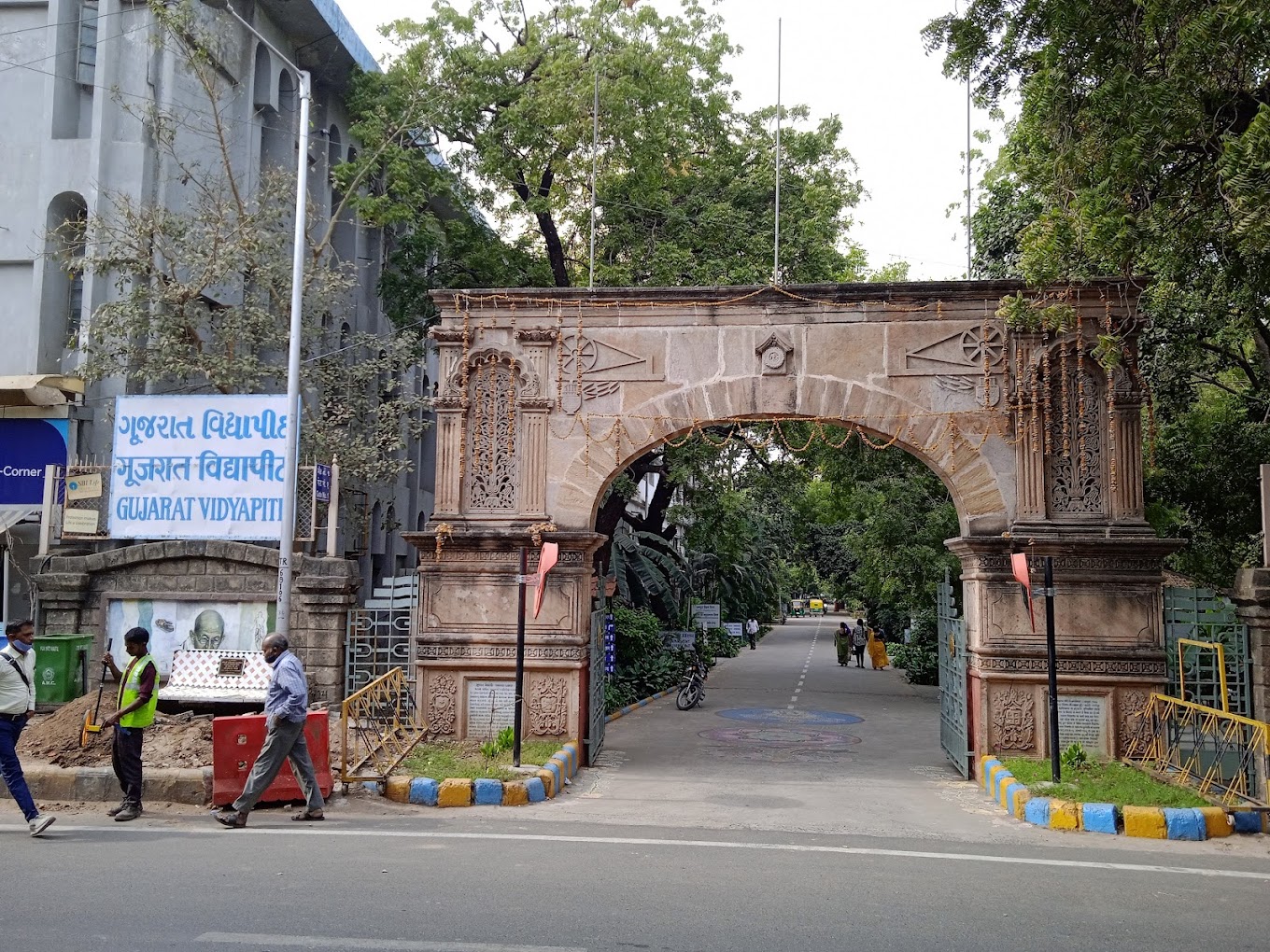
Introduction about Ph.D. From Gujarat Vidyapith
Gujarat Vidyapith, founded in 1920 by Mahatma Gandhi, stands as a unique institution dedicated to imparting education rooted in Indian cultural and ethical values. The university’s academic philosophy seamlessly integrates Gandhian principles with contemporary educational needs, fostering a holistic learning environment that emphasizes social responsibility and self-reliance. Over the decades, Gujarat Vidyapith has expanded its academic repertoire, offering programs across diverse disciplines including humanities, social sciences, rural studies, education, and more. Among its esteemed offerings, the Ph.D. program serves as a gateway for scholars who wish to delve deeper into research and contribute meaningfully to academic discourse and societal development.
A Ph.D. at Gujarat Vidyapith is not merely an advanced degree; it is a transformative journey that nurtures critical thinking, innovation, and ethical scholarship. The university places significant importance on interdisciplinary research, allowing doctoral candidates to explore intersections between traditional knowledge systems and modern scientific methodologies. Whether your research interests lie in Gandhian thought, rural development, social sciences, education, or any other domain, the program offers a supportive ecosystem where you can refine your research skills under the mentorship of experienced faculty.
State-of-the-art facilities, such as comprehensive libraries, digital resources, and specialized research centers, further augment the Ph.D. experience. Regular seminars, workshops, and conferences encourage intellectual exchange, while collaborations with NGOs, government agencies, and industry partners provide avenues for applied research. Gujarat Vidyapith’s commitment to social upliftment also ensures that many research projects have a tangible impact on community welfare, sustainability, and policy formulation.
Ultimately, pursuing a Ph.D. at Gujarat Vidyapith equips you with the academic rigor and moral grounding to excel in academia, research, public service, or leadership roles. By blending Gandhian ideals with modern educational standards, the university aims to produce scholars who are not only academically competent but also socially conscious. If you aspire to advance knowledge, influence policy, and contribute to societal transformation, a Ph.D. from Gujarat Vidyapith may well be your path to meaningful and impactful scholarship.
Fee Structure for Ph.D. in Gujarat Vidyapith
| Tuition Fee Per Year | Registration Fee | Total Fee (Approx.) |
|---|---|---|
| INR 50,000 - INR 1,00,000 | INR 5,000 | INR 2,00,000 - INR 3,00,000 (Entire Program) |
Admission Process For Ph.D. in Gujarat Vidyapith
Gujarat Vidyapith adopts a transparent and merit-based approach to admitting candidates into its Ph.D. programs. The aim is to select scholars who exhibit strong academic records, research potential, and an alignment with the university’s philosophical ethos. Below is a brief overview of the admission steps:
- Check Eligibility: Applicants should possess a Master’s degree in a relevant field from a recognized institution, often with a minimum required percentage or CGPA.
- Application Submission: Fill out the Ph.D. application form available on the official university website or at the admissions office. Ensure accuracy in personal and academic details.
- Entrance Examination: Depending on the department, candidates may need to appear for an entrance exam to evaluate subject knowledge, research aptitude, and analytical skills. Qualifiers of national-level exams like UGC-NET or CSIR-NET may receive exemptions.
- Interview/Research Proposal Discussion: Shortlisted candidates will be invited for an interview or to present their preliminary research proposal, assessing the feasibility and clarity of the proposed study.
- Final Selection: A merit list is prepared based on the entrance exam score, interview performance, and past academic achievements.
- Enrollment & Fee Payment: Once selected, candidates must pay the required fees and submit the necessary documents to confirm their admission.
Document Required For Ph.D. in Gujarat Vidyapith
Ensuring you have the right set of documents ready can streamline your admission process. Below is a typical list of documents required for Ph.D. admission at Gujarat Vidyapith:
- Attested copies of Bachelor’s and Master’s degree certificates and mark sheets
- Mark sheets for Class 10th and 12th (for verifying date of birth and eligibility)
- Migration Certificate (if applicable)
- Transfer Certificate (TC) from the last institution attended
- Entrance exam scorecard (if applicable, such as UGC-NET, CSIR-NET, or university entrance exam)
- Research Proposal outlining your study’s objectives, methodology, and potential contributions
- Photo ID proof (Aadhar Card, Passport, or Driving License)
- Passport-sized photographs
- Caste Certificate (if applying under a reserved category)
- Experience Certificate (if relevant for part-time Ph.D. or professional work experience)
Gujarat Vidyapith Ph.D. Syllabus
| Phase | Core Modules | Electives / Specialized Areas |
|---|---|---|
| Phase 1 |
|
|
| Phase 2 |
|
|
| Phase 3 |
|
|
| Phase 4 |
|
|
Gujarat Vidyapith Research Methodology
- Gandhian Ethos: Integrates ethical and socially responsible frameworks into research, reflecting the university’s founding principles.
- Quantitative & Qualitative Methods: Employs statistical analysis, field surveys, interviews, and focus groups for comprehensive studies.
- Interdisciplinary Collaboration: Encourages cross-departmental partnerships to tackle complex research issues from multiple perspectives.
- Software Proficiency: Training in SPSS, R, Python, or specialized software for robust data analysis and visualization.
- Publication & Conferences: Emphasizes publishing in reputed journals and presenting at academic forums to disseminate findings.
- Continuous Evaluation: Regular progress reports, peer reviews, and seminars to refine research objectives and methods.
- Community Engagement: Collaborations with NGOs, government bodies, and local communities for applied research projects.
- Structured Thesis Writing: Offers guidelines on referencing, formatting, and academic writing to meet global standards.
Gujarat Vidyapith Highlights
| Particulars | Details |
|---|---|
| Established | 1920 (Founded by Mahatma Gandhi) |
| Location | Ahmedabad, Gujarat, India |
| Faculties | Arts, Sciences, Social Sciences, Rural Studies, Education, Commerce, etc. |
| Accreditation | UGC Recognized, NAAC Accredited |
| Infrastructure | Modern labs, digital libraries, research centers, IT-enabled classrooms |
| Research Focus | Gandhian thought, rural development, social sciences, environmental science, etc. |
| Collaborations | MoUs with national & international institutions, NGOs, industry linkages |
| Scholarships | Merit-based, need-based, government fellowships, industry-sponsored grants |
| Student Life | Cultural events, sports, student clubs, and community outreach programs |
| Placement Assistance | Active placement cell, career counseling, industry tie-ups, job fairs |
| Alumni Network | Strong alumni presence in academia, research, public service, and private sectors |
How To Apply For Ph.D. in Gujarat Vidyapith
- Visit Official Website: Go to the Gujarat Vidyapith website and look for the “Ph.D. Admissions” or “Research” section for updates.
- Register an Account: Create a profile using your name, email, and phone number. You will receive login credentials to access the application form.
- Complete Application Form: Fill in personal, academic, and professional details accurately. Review the form before submitting.
- Upload Documents: Scan and attach all necessary documents, including academic certificates, mark sheets, ID proofs, and research proposal.
- Pay Application Fee: Submit the non-refundable fee through online payment methods (net banking, credit/debit card, or UPI) and keep the receipt.
- Entrance Exam (if applicable): Prepare for the Ph.D. entrance test or check for exemptions if you have qualified national-level exams like UGC-NET or CSIR-NET.
- Submit Research Proposal: Draft a detailed proposal outlining your study’s objectives, methodology, and potential contributions.
- Interview/Proposal Discussion: If shortlisted, attend an interview or proposal presentation where your research plan will be evaluated.
- Merit List & Offer Letter: Keep track of official announcements or your registered email for final selection results.
- Enrollment & Document Verification: Finalize your admission by paying the required fees and submitting original documents for verification.
Courses After Ph.D. in Gujarat Vidyapith
- Post-Doctoral Fellowships (PDF) in specialized research areas
- Advanced certification programs in data analytics, research management, or emerging technologies
- Executive education programs for leadership roles in academia or industry
- Short-term diploma courses in Intellectual Property Rights (IPR), technology transfer, or policy-making
- Faculty development programs focusing on academic administration and advanced pedagogical techniques
Gujarat Vidyapith Scholarship
Gujarat Vidyapith is firmly committed to ensuring that financial constraints do not hinder academically deserving students from pursuing advanced research and higher education. To support this goal, the university offers a comprehensive scholarship program designed specifically for Ph.D. candidates. These scholarships can include partial or full tuition fee waivers, monthly stipends, and research grants intended to cover essential expenses such as laboratory equipment, data collection, and conference travel. By reducing the financial burden, the institution enables scholars to devote their energies fully to research, fostering an environment where innovation and critical thinking thrive.
In addition to university-sponsored scholarships, doctoral candidates are strongly encouraged to explore external funding sources. These may include government fellowships like UGC-NET, CSIR-NET, or state-sponsored grants, as well as industry-sponsored research collaborations. Such external funding opportunities not only provide additional financial relief but also help scholars build professional networks and gain exposure to a broader range of research and career possibilities. The university’s dedicated financial aid office assists students in navigating the complexities of these application processes, ensuring that each candidate has the best chance of securing adequate funding.
Overall, the scholarship ecosystem at Gujarat Vidyapith aims to reward academic merit, support need-based requests, and promote equitable access to research opportunities. Scholars from diverse socio-economic backgrounds are encouraged to apply, reflecting the university’s broader commitment to inclusivity and social responsibility. By actively engaging with these scholarship options, Ph.D. candidates can significantly ease their financial burdens, allowing them to focus on producing high-impact research that aligns with the institution’s values and contributes to the advancement of society.
- Merit-Based Scholarships: Awarded to candidates demonstrating exceptional academic records and research potential.
- Need-Based Aid: Financial support for students from economically disadvantaged backgrounds meeting specific eligibility criteria.
- Government Fellowships: Integration with schemes like UGC-NET, CSIR-NET, or other national-level grants.
- Industry Sponsorships: Collaborative research projects that offer stipends or cover specialized research expenses.
- Performance-Based Incentives: Additional fee waivers or stipends tied to research milestones, publications, or conference presentations.
Gujarat Vidyapith FAQ's Regarding Ph.D.
- Q1: What is the minimum duration for completing a Ph.D. at Gujarat Vidyapith?
A1: Typically, the minimum duration is three years, though many candidates may require four to five years based on their research scope and complexity. - Q2: Are part-time Ph.D. programs available?
A2: Yes, the university offers part-time Ph.D. options for eligible candidates, subject to departmental guidelines and approval. - Q3: Can international students apply for the Ph.D. program?
A3: Absolutely. International applicants must fulfill academic equivalence criteria and secure the necessary visas for study in India. - Q4: Is an entrance exam mandatory for Ph.D. admissions?
A4: Most departments require an entrance exam, though candidates who have qualified national-level tests like UGC-NET or CSIR-NET may be exempt, depending on the department’s policy. - Q5: How important is the research proposal in the admission process?
A5: A well-structured research proposal is crucial as it demonstrates the clarity, feasibility, and potential impact of your proposed study, significantly influencing selection decisions. - Q6: Does Gujarat Vidyapith offer hostel facilities for Ph.D. scholars?
A6: Yes, on-campus accommodation is available, though spaces may be limited. Early application is advised. - Q7: Are publications mandatory before submitting the final thesis?
A7: Most departments encourage or require at least one publication in a peer-reviewed journal to validate the quality of the research. - Q8: What are the career prospects after completing a Ph.D. from Gujarat Vidyapith?
A8: Ph.D. graduates often pursue roles in academia, research institutions, public policy, NGOs, or entrepreneurial ventures, leveraging their specialized expertise. - Q9: Can Ph.D. candidates work as teaching or research assistants?
A9: Yes, eligible doctoral students may serve as teaching or research assistants, which also offer financial benefits and professional experience. - Q10: How does the university maintain the quality of doctoral research?
A10: The university ensures quality through periodic progress reviews, peer evaluations, mandatory publications, and a final viva voce examination, maintaining rigorous academic standards.
How Shiksha Hub helps you in
-
 Student Counsellors
 -
 Career Counseling
 -
 Research
 -
 24/7 Support
 -
 Scholarships
 -
 Community