Posted by Admin on 28-02-2025 in Shiksha hub
Ph.D. From Indian Law Institute : Introduction, Fee Structure, Admission Process, Documents, Syllabus, Research Methodology, University Highlights, Scholarship, FAQs
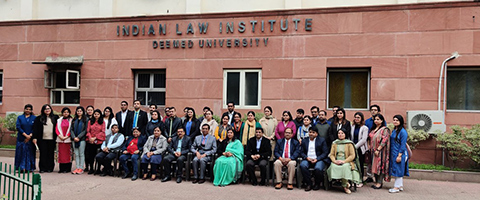
Introduction about Ph.D. From Indian Law Institute
The Indian Law Institute (ILI), located in the heart of New Delhi, stands as one of India’s most prestigious institutions dedicated to advanced legal research and education. Established in 1956, ILI has consistently shaped the discourse on national and international legal frameworks through its pioneering research and scholarly publications. Aspiring legal scholars and practitioners from across the country—and indeed the world—are drawn to ILI’s doctoral program, which promises a blend of rigorous academic inquiry, practical exposure, and interdisciplinary collaboration.
Pursuing a Ph.D. at ILI offers candidates the chance to delve into complex legal issues, ranging from constitutional law and human rights to emerging fields like cyber law, environmental law, and intellectual property. Under the mentorship of esteemed faculty members who are experts in various sub-disciplines, doctoral students refine their research skills and produce scholarly work that contributes meaningfully to the evolution of legal theory and practice. The institute’s state-of-the-art library, known for its extensive collection of legal texts and journals, provides an ideal environment for in-depth study and investigation.
One of the distinctive features of ILI’s Ph.D. program is its focus on real-world application. Candidates are encouraged to engage with current legal challenges, collaborate with policy-making bodies, and even participate in judicial reforms. This practical orientation ensures that doctoral research at ILI is not confined to academic circles but also influences legislative and societal change. Moreover, the institute frequently organizes workshops, seminars, and conferences, allowing Ph.D. scholars to present their findings, network with fellow researchers, and stay abreast of global legal trends.
Whether your ambition is to become a legal academic, a policy advisor, or a thought leader in the legal fraternity, a Ph.D. from the Indian Law Institute provides the intellectual foundation and professional network to propel you forward. The program’s emphasis on ethical research, critical thinking, and policy impact ensures that its graduates are well-equipped to navigate the complexities of modern legal systems and contribute to the broader quest for justice and social welfare.
Fee Structure for Ph.D. in Indian Law Institute
| Fee Components | Tuition Fee Per Year | Registration | Total Fee |
|---|---|---|---|
| Indian Students | INR 50,000 | INR 5,000 | Approx. INR 1,55,000 (for 3 years) |
| International Students | USD 1,200 | USD 200 | Approx. USD 3,800 (for 3 years) |
Admission Process For Ph.D. in Indian Law Institute
The admission process at ILI is designed to select candidates with a strong academic background, research aptitude, and a passion for contributing to legal scholarship. Below is a structured overview of the procedure:
- Eligibility: A Master’s degree in Law (LL.M.) or equivalent, typically with a minimum percentage or CGPA as specified by the institute.
- Application Form: Fill out the online or offline application form available on the official ILI website, providing personal details and academic records.
- Entrance Examination: Appear for the ILI Research Aptitude Test or submit valid scores from recognized national-level exams (like UGC NET in Law), if applicable.
- Shortlisting: Based on exam performance, academic credentials, and research interests, the institute shortlists candidates for the next stage.
- Interview: Shortlisted applicants are invited for a personal interview, during which they may discuss their research proposals or areas of interest.
- Final Selection: A merit list is released after evaluating the overall performance in the entrance exam, interview, and academic background.
- Offer of Admission: Successful candidates receive an offer letter and must complete the registration process, including fee payment, within the given deadline.
Document Required For Ph.D. in Indian Law Institute
Proper documentation is crucial for a seamless admission process. The following list outlines the typical documents required by the Indian Law Institute for Ph.D. admissions:
- Completed Application Form (online or offline)
- Academic Transcripts (Bachelor’s and Master’s degrees)
- Proof of Date of Birth (Birth Certificate or equivalent)
- Photo Identification (Passport, Aadhaar Card, or other valid ID)
- Entrance Exam Scorecard (ILI Research Aptitude Test, UGC NET, etc.)
- Research Proposal or Statement of Purpose (SOP)
- Curriculum Vitae (CV) or Resume
- Letters of Recommendation (preferably from academic mentors)
- Work Experience Certificates (if applicable)
- Passport-Sized Photographs
Indian Law Institute Ph.D. Syllabus
| Semester/Phase | Key Subjects/Modules |
|---|---|
| Pre-Ph.D. Course Work (Semester 1) |
|
| Pre-Ph.D. Course Work (Semester 2) |
|
| Research Phase (Year 2 & 3) |
|
| Thesis Submission & Viva Voce (Year 3 or 4) |
|
Indian Law Institute Research Methodology
- Doctrinal & Empirical Research: Emphasizes both theoretical legal analysis and empirical fieldwork to understand law’s practical impact.
- Comparative Studies: Encourages comparative research across different legal systems and jurisdictions.
- Policy-Oriented Approach: Aligns research objectives with current legislative reforms and policy debates.
- Interdisciplinary Framework: Incorporates insights from sociology, economics, political science, and international relations.
- Technology Integration: Utilizes online databases, e-libraries, and software for data analysis and legal analytics.
- Ethical Standards: Maintains strict adherence to research ethics, including confidentiality, informed consent, and avoidance of plagiarism.
Indian Law Institute Highlights
| Particulars | Details |
|---|---|
| Established | 1956 |
| Location | New Delhi, India |
| Programs Offered | LL.M., Postgraduate Diplomas, Ph.D. in Law |
| Affiliation & Recognition | Deemed University Status, Recognized by UGC |
| Specializations | Constitutional Law, Human Rights, Cyber Law, IPR, Environmental Law |
| Infrastructure | Advanced Library, E-Resources, Moot Court Facilities, Seminar Halls |
| Faculty Expertise | Renowned Academicians, Legal Practitioners, Retired Judges |
| Collaborations | MoUs with National & International Institutions, Government Bodies |
| Research Focus | Legislative Reforms, Policy Impact, Comparative Legal Studies |
| Scholarships | Merit-based, Need-based, Research Fellowships |
| Student Support | Workshops, Seminars, Career Counseling, Internship Guidance |
How To Apply For Ph.D. in Indian Law Institute
- Step 1 – Eligibility Verification: Confirm you have an LL.M. or equivalent degree with the required percentage or CGPA.
- Step 2 – Collect Documents: Gather academic transcripts, ID proof, research proposal, and letters of recommendation.
- Step 3 – Fill Application Form: Access the ILI website to complete the online or offline application, attaching the necessary documents.
- Step 4 – Pay Application Fee: Submit the application fee via net banking, credit/debit card, or other accepted modes.
- Step 5 – Entrance Examination: Appear for the ILI Research Aptitude Test or submit valid national-level exam scores (UGC NET in Law, etc.).
- Step 6 – Shortlisting: The institute evaluates applications based on exam scores, academic history, and research interests.
- Step 7 – Interview: Shortlisted candidates attend a personal interview or proposal presentation session.
- Step 8 – Final Merit List: ILI releases a list of selected candidates based on overall performance.
- Step 9 – Admission & Fee Payment: Accept the offer letter, pay the registration fee, and complete the enrollment process.
- Step 10 – Commence Course Work: Begin your Pre-Ph.D. coursework and attend orientation sessions as per the institute’s schedule.
Courses After Ph.D. in Indian Law Institute
- Post-Doctoral Research Fellowships in Law
- Advanced Certificate Courses in Specialized Legal Domains (e.g., Arbitration, Corporate Governance)
- Executive Management Programs for Legal Professionals
- Faculty Development Programs & Teaching Workshops in Legal Education
- Professional Diplomas in Policy Analysis, International Law, and more
Indian Law Institute Scholarship
The Indian Law Institute is committed to supporting outstanding scholars who aspire to pursue advanced legal research. Recognizing that financial constraints can sometimes hinder academic progression, the institute provides various scholarship options and financial assistance programs for deserving Ph.D. candidates. These scholarships aim to encourage legal research that contributes to the broader objectives of social justice, policy reform, and the development of jurisprudence in India.
Several types of scholarships are available to eligible students. Merit-based scholarships reward those who have shown exceptional academic performance in their prior degrees or entrance exams. Need-based scholarships offer assistance to candidates who demonstrate financial hardships, ensuring that talented individuals are not excluded from the Ph.D. program due to monetary constraints. Additionally, ILI often collaborates with government bodies, research organizations, and philanthropic foundations to provide project-specific grants. These grants allow scholars to work on focused research topics that align with national and international legal priorities.
Beyond the institute’s own scholarship framework, Ph.D. candidates are encouraged to apply for external fellowships such as UGC NET JRF, ICSSR fellowships, or other research grants from reputed institutions. Faculty mentors and the institute’s administrative team guide students through the application process, helping them craft compelling research proposals and navigate the necessary paperwork. By offering a blend of internal and external funding avenues, ILI aims to foster an inclusive academic environment where legal research can flourish without financial barriers. This holistic approach to scholarships not only enhances the quality of doctoral studies but also contributes to the evolution of legal systems, both in India and abroad.
- Merit-Based Scholarships: Awarded to candidates with exceptional academic records.
- Need-Based Scholarships: Financial support for students facing economic challenges.
- Project-Specific Grants: Offered in collaboration with government or private entities for targeted legal research.
- External Fellowships: Encouraged for broader financial support and networking opportunities.
Indian Law Institute FAQ's Regarding Ph.D.
- Q1: What is the duration of the Ph.D. program at ILI?
Answer: Generally, the Ph.D. program ranges from three to five years, depending on the research scope and timely submission of the thesis. - Q2: Can I apply if I have an LL.M. from a foreign university?
Answer: Yes, provided your degree is recognized as equivalent by the Association of Indian Universities (AIU) or other relevant bodies. - Q3: Does ILI offer part-time Ph.D. programs?
Answer: The institute typically focuses on full-time research programs, but certain flexibility may be offered in specific cases. Check with the admissions office for details. - Q4: Are international students eligible for scholarships?
Answer: Yes, international candidates can apply for certain scholarships, although eligibility criteria and documentation requirements may vary. - Q5: What kind of research support does ILI provide?
Answer: The institute offers access to extensive legal databases, an advanced library, e-resources, and mentorship from faculty experts. - Q6: Is publishing research papers mandatory during the Ph.D.?
Answer: While not always strictly mandatory, publishing in peer-reviewed journals is strongly encouraged to enhance your academic profile and thesis credibility. - Q7: Can I switch my research topic after admission?
Answer: Major changes require approval from your research supervisor and the doctoral committee, and may affect your overall timeline. - Q8: What are the career opportunities after completing a Ph.D. in Law from ILI?
Answer: Graduates often move into academia, policy advisory roles, legal consultancy, judiciary, or high-level positions in law firms and NGOs. - Q9: How frequently are progress reviews conducted?
Answer: Typically, progress seminars or reviews occur every six months, ensuring you receive continuous feedback on your research. - Q10: Does the institute help with internships or collaborations during the Ph.D.?
Answer: Yes, ILI maintains partnerships with law firms, government bodies, and NGOs, facilitating collaborative research and internship opportunities.
How Shiksha Hub helps you in
-
 Student Counsellors
 -
 Career Counseling
 -
 Research
 -
 24/7 Support
 -
 Scholarships
 -
 Community