Posted by Admin on 28-02-2025 in Shiksha hub
Ph.D. From Indira Gandhi Krishi Vishwavidyalaya : Introduction, Fee Structure, Admission Process, Documents, Syllabus, Research Methodology, University Highlights, Scholarship, FAQs
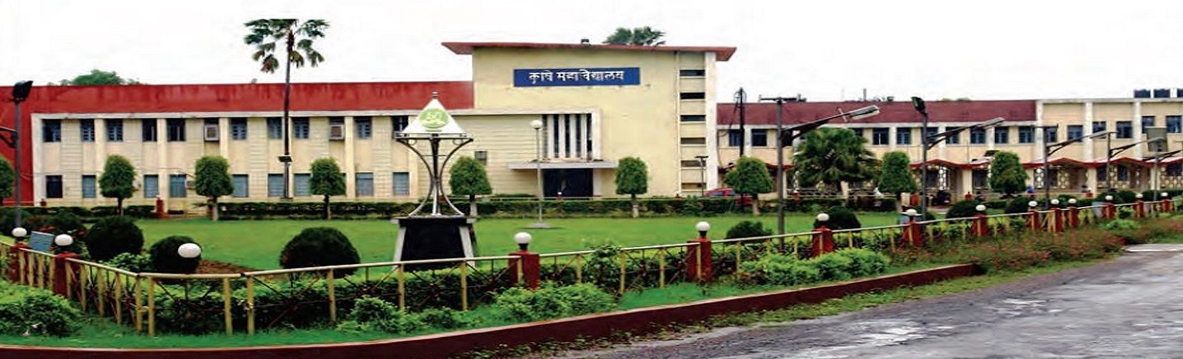
Introduction about Ph.D. From Indira Gandhi Krishi Vishwavidyalaya
Indira Gandhi Krishi Vishwavidyalaya (IGKV), located in Raipur, Chhattisgarh, is a leading institution dedicated to agricultural education and research. The university’s commitment to enhancing agricultural practices, improving crop varieties, and promoting sustainable farming methods makes it a premier destination for aspiring doctoral candidates. Pursuing a Ph.D. from IGKV offers students a robust platform to delve deeper into cutting-edge research in agricultural sciences, plant breeding, soil science, agronomy, agricultural economics, and allied disciplines. Established to advance agriculture in the region, IGKV has consistently evolved its curriculum and research facilities to meet global standards. A Ph.D. program at IGKV is designed to develop subject-matter experts who can contribute significantly to India’s agrarian sector. Candidates are exposed to state-of-the-art laboratories, on-field experiments, and research methodologies that emphasize both theoretical knowledge and practical application. The university’s faculty comprises experienced academicians and researchers who have made notable contributions to the agricultural domain, ensuring that doctoral students receive high-quality mentorship. This supportive environment encourages innovation and independent thought, preparing students to tackle real-world agricultural challenges, from climate-resilient farming techniques to sustainable resource management. IGKV’s well-structured doctoral curriculum goes beyond conventional classroom instruction. It includes seminars, workshops, and interactive sessions with industry experts, policy-makers, and fellow researchers. These engagements not only broaden the academic perspective of Ph.D. scholars but also pave the way for interdisciplinary collaboration. Whether one aims to focus on crop improvement, agricultural biotechnology, soil and water management, or agribusiness, the university’s comprehensive approach ensures a well-rounded learning experience. Additionally, IGKV maintains strong ties with government bodies, international research organizations, and private sector entities. These partnerships enable students to participate in collaborative research projects and benefit from various funding opportunities and scholarships. The university also encourages publishing in peer-reviewed journals, presenting at national and international conferences, and taking part in extension activities that directly impact farming communities. This holistic ecosystem ensures that Ph.D. graduates from IGKV are well-equipped to excel in academic, research, and industry roles. For those looking to make a tangible difference in the agricultural landscape of India and beyond, a Ph.D. from Indira Gandhi Krishi Vishwavidyalaya offers an excellent foundation to become a thought leader in the field.
Fee Structure for Ph.D. in Indira Gandhi Krishi Vishwavidyalaya
| Tuition Fee Per Year | Registration | Total Fee |
|---|---|---|
| INR 80,000 | INR 5,000 | INR 85,000 |
Admission Process For Ph.D. in Indira Gandhi Krishi Vishwavidyalaya
The admission process for the Ph.D. program at Indira Gandhi Krishi Vishwavidyalaya is designed to identify and nurture individuals who exhibit a strong inclination toward advanced agricultural research. IGKV follows a systematic procedure that ensures fairness and transparency in selecting the most suitable candidates. Below is an overview of the steps involved:
- Application Form: Candidates must fill out the official Ph.D. application form available on the IGKV website or obtain it from the university’s admission office.
- Entrance Examination: Eligible applicants are required to appear for a written test assessing their subject knowledge, analytical skills, and research aptitude.
- Interview and/or Group Discussion: Shortlisted candidates are called for a personal interview, during which the applicant’s research interests and academic background are evaluated.
- Final Merit List: A consolidated merit list is prepared based on performance in the entrance test and interview. Selected candidates are offered admission to the Ph.D. program.
- Enrollment and Fee Payment: Successful candidates must complete the enrollment formalities by submitting required documents and paying the prescribed fees within the stipulated deadline.
Document Required For Ph.D. in Indira Gandhi Krishi Vishwavidyalaya
Before you initiate the admission process, it’s crucial to gather all necessary documents to avoid any last-minute hassles. Proper documentation helps in verifying your eligibility and academic credentials. While the exact requirements may vary slightly based on the specialization or specific guidelines, the following list provides a general overview of the documents usually required:
- Filled and signed Ph.D. application form
- Passport-sized photographs
- Photo ID proof (Aadhaar card, Passport, or Voter ID)
- Birth certificate or valid proof of date of birth
- Mark sheets and degree certificates of Bachelor’s and Master’s programs
- Transfer Certificate (TC) or Migration Certificate (if applicable)
- Category certificate (SC/ST/OBC/EWS), if applicable
- Entrance examination scorecard (if required)
- Work experience certificates (if applicable)
- Research proposal or statement of purpose
Indira Gandhi Krishi Vishwavidyalaya Ph.D. Syllabus
| Semester/Stage | Core Subjects | Elective Subjects |
|---|---|---|
| Semester 1 |
|
|
| Semester 2 |
|
|
| Advanced Research Stage |
|
|
Indira Gandhi Krishi Vishwavidyalaya Research Methodology
- Defining Research Objectives: Identify key research questions and set clear, measurable goals aligned with the latest trends in agricultural science.
- Literature Review: Conduct an in-depth review of relevant scholarly articles, journals, and previous research to form a theoretical framework.
- Experimental Design: Utilize appropriate statistical methods, sample selection techniques, and control variables to ensure reliable data collection.
- Field and Laboratory Work: Integrate practical field trials with controlled laboratory experiments for comprehensive data gathering.
- Data Analysis: Employ advanced statistical software and methodologies for analyzing quantitative and qualitative data.
- Interpretation and Reporting: Draw conclusions from data, validate findings, and compile results into a thesis or publishable research paper.
Indira Gandhi Krishi Vishwavidyalaya Highlights
| Particular | Details |
|---|---|
| University Name | Indira Gandhi Krishi Vishwavidyalaya (IGKV) |
| Location | Raipur, Chhattisgarh |
| Established | 1987 |
| Recognitions | ICAR, UGC |
| Popular Courses | B.Sc. Agriculture, M.Sc. Agriculture, Ph.D. in Agriculture and Allied Fields |
| Mode of Education | Full-time, Residential |
| Admission Criteria | Entrance Test + Interview |
| Official Website | http://igau.edu.in/ |
| Facilities | Library, Laboratories, Hostel, Sports Complex, Research Farms |
| Collaborations | National & International Agricultural Research Institutes |
How To Apply For Ph.D. in Indira Gandhi Krishi Vishwavidyalaya
- Check Eligibility: Verify your eligibility criteria (Master’s degree in Agriculture or related discipline, minimum required marks, etc.) on the IGKV website or admission brochure.
- Obtain Application Form: Download the Ph.D. application form from the official website or collect it from the admission office.
- Fill Application Details: Provide accurate personal, educational, and contact details. Attach recent passport-sized photographs where required.
- Attach Supporting Documents: Include mark sheets, degree certificates, ID proofs, and category certificates (if applicable) in the prescribed format.
- Submit Application Fee: Pay the non-refundable fee online or through a demand draft (if specified by the university). Keep the receipt for future reference.
- Entrance Test Preparation: Prepare for the university’s entrance exam by revising core agricultural subjects, research methodologies, and quantitative techniques.
- Entrance Exam: Appear for the exam on the scheduled date. Ensure you carry the admit card and a valid ID proof.
- Interview/Group Discussion: If shortlisted, attend the interview or GD session. Present your research interests and previous academic achievements effectively.
- Final Selection: Check the merit list or individual communication from the university to know your selection status. Complete the enrollment formalities as required.
- Commence Coursework: After successful admission, begin the Ph.D. coursework, attend orientation programs, and plan your research timeline with your guide.
Courses After Ph.D. in Indira Gandhi Krishi Vishwavidyalaya
- Post-Doctoral Fellowships in Agricultural Sciences
- Advanced Certifications in Biotechnology and Plant Genetics
- Specialized Diplomas in Agri-Business Management
- Short-Term Courses in Precision Agriculture
- Leadership and Academic Administration Programs
Indira Gandhi Krishi Vishwavidyalaya Scholarship
Pursuing a Ph.D. at Indira Gandhi Krishi Vishwavidyalaya can be financially demanding for many students, which is why the university, in conjunction with various government bodies and private organizations, offers a range of scholarship opportunities. These scholarships are primarily merit-based or need-based, aiming to support deserving students who exhibit academic excellence and a keen interest in agricultural research. By alleviating financial constraints, scholarships enable Ph.D. scholars to focus on their research without undue stress about covering tuition fees and related expenses. Some scholarships also include stipends that can help cover daily living costs, travel, and research materials. This financial assistance is especially valuable for candidates who need to conduct extensive fieldwork, laboratory experiments, or data collection, as it provides them the flexibility to explore various facets of their research area thoroughly.
Additionally, IGKV encourages doctoral students to apply for external fellowships offered by organizations such as the Indian Council of Agricultural Research (ICAR), the Department of Science and Technology (DST), and other national and international funding bodies. These fellowships often provide substantial financial support, along with opportunities to collaborate with leading research institutes. Apart from government-funded schemes, private companies engaged in agricultural technologies, seed production, or agribusiness may also sponsor research projects that align with their objectives, offering scholarships or grants to Ph.D. students working on industry-relevant topics. Receiving a scholarship or fellowship not only reduces the financial burden but also enhances a student’s academic profile, making them more competitive for postdoctoral positions, faculty roles, or industry-based R&D opportunities. As a result, many scholars at IGKV successfully secure funding through a combination of university grants and external awards, thereby broadening their research scope and impact.
- IGKV-Funded Scholarships: Covers partial tuition or provides monthly stipends based on academic performance.
- Government Fellowships: Offered by ICAR, DST, or DBT for exceptional research proposals in agricultural domains.
- Corporate Sponsorships: Seed companies and agribusiness firms may sponsor specific research projects or offer grants.
- Conference and Travel Grants: Supports students in presenting their research findings at national or international seminars.
- Performance-Based Renewals: Scholarships are often renewed annually based on satisfactory academic progress and research milestones.
Indira Gandhi Krishi Vishwavidyalaya FAQ's Regarding Ph.D.
- Q1: What is the minimum eligibility for the Ph.D. program at IGKV?
Ans: Typically, a Master’s degree in Agriculture or related disciplines with a minimum required percentage (usually around 60%) is needed, though specific criteria may vary by department. - Q2: Is the Ph.D. program at IGKV full-time or can it be pursued part-time?
Ans: Generally, IGKV offers a full-time residential Ph.D. program. Part-time options, if available, are subject to specific departmental guidelines. - Q3: Does IGKV conduct its own entrance test for Ph.D. admissions?
Ans: Yes, IGKV typically conducts an entrance examination, followed by an interview or group discussion for shortlisted candidates. - Q4: Are international students eligible to apply for the Ph.D. program?
Ans: Yes, international applicants can apply, provided they fulfill the eligibility criteria and have the necessary student visa and documentation. - Q5: What kind of research facilities are available at IGKV?
Ans: The university boasts well-equipped laboratories, research farms, and collaborative projects with various institutes, providing ample opportunities for practical and field-based research. - Q6: Can I apply for a scholarship after securing admission?
Ans: Yes, many scholarships and fellowships allow you to apply post-admission. Check the university’s official notifications and external funding agencies for deadlines and requirements. - Q7: How long does it take to complete a Ph.D. at IGKV?
Ans: The duration typically ranges from three to five years, depending on the complexity of research and the timely completion of thesis work. - Q8: Is there any age limit for Ph.D. applicants?
Ans: While many programs do not enforce a strict age limit, it’s advisable to check the latest admission guidelines or contact the admission office for updated information. - Q9: What are the career prospects after completing a Ph.D. from IGKV?
Ans: Graduates often find opportunities in academia, research institutions, government departments, agribusiness companies, and international organizations focusing on agriculture and rural development. - Q10: Can I change my research topic during the program?
Ans: Minor modifications are generally permitted with the approval of your supervisor and departmental committee, but major shifts may require a fresh proposal and additional approvals.
How Shiksha Hub helps you in
-
 Student Counsellors
 -
 Career Counseling
 -
 Research
 -
 24/7 Support
 -
 Scholarships
 -
 Community