Posted by Admin on 14-07-2023 in Shiksha hub
Seed Production Technician, Introduction, Admission, Registration, Eligibility, Duration, Fees, Syllabus 2024
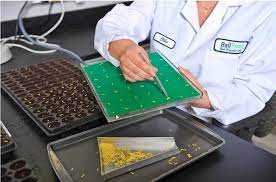
Introduction about Seed Production Technician
Seed production is a critical aspect of modern agriculture that often goes unnoticed. Behind every successful crop, there is a Seed Production Technician (SPT) working diligently to ensure the availability of high-quality seeds. In this article, we will explore the world of Seed Production Technicians, their roles, and the significance of their work in agriculture.
Role of Seed Production Technicians
Seed Production Technicians play a pivotal role in the agricultural industry. They are responsible for ensuring the production of high-quality seeds, which are the foundation of any successful crop. Their responsibilities include:
Selecting Parental Plants
The first step in seed production involves the careful selection of parental plants. SPTs choose plants with desirable traits, such as disease resistance, high yield, and other characteristics that are crucial for crop improvement.
Isolation and Pollination
To maintain genetic purity, SPTs ensure that the chosen plants are isolated from other varieties to prevent cross-pollination. They then facilitate pollination, either through natural means or by manual methods, to control the breeding process.
Seed Harvesting and Processing
Once the seeds are mature, they are harvested and carefully processed to remove impurities. This meticulous process ensures that only the highest-quality seeds are made available to farmers.
Quality Control in Seed Production
SPTs rigorously inspect the seeds for quality, purity, and germination rates. They conduct various tests to ensure that the seeds meet the required standards.
Importance of Seed Production
High-quality seeds are essential for crop productivity. They are the foundation of agriculture, and the work of Seed Production Technicians directly impacts the food supply chain. Reliable seeds are necessary to achieve sustainable and profitable agriculture.
Qualifications and Skills Required
To become a successful Seed Production Technician, one should possess a blend of educational qualifications and skills. A degree in agriculture or a related field is usually a requirement. Additionally, the following skills are vital:
Knowledge of plant breeding techniques
Attention to detail
Strong problem-solving abilities
Understanding of pest and disease management
Patience and dedication
Steps in Seed Production
Seed production involves several key steps:
Plant Breeding Techniques
SPTs employ various plant breeding techniques, such as hybridization and selection, to improve crop traits.
Seed Storage
Proper seed storage is crucial to maintain seed quality. SPTs ensure that seeds are stored under ideal conditions to preserve their viability.
Pest and Disease Management
SPTs must be adept at managing pests and diseases that can affect seed production.
Modern Advances in Seed Production
With advancements in technology and biotechnology, Seed Production Technicians now have access to modern tools that enhance their efficiency and the quality of seeds produced. These advances have revolutionized the field of agriculture.
Career Opportunities for Seed Production Technicians
The demand for skilled Seed Production Technicians is on the rise. Graduates in this field can find rewarding careers in seed companies, research institutions, and government agencies. They can work in various capacities, including as seed analysts, quality control officers, and research associates.
How can I apply for admission to Seed Production Technician Program
To apply for admission to a Seed Production Technician program, you will typically need to follow a set of steps and meet certain requirements. Here's a guide on how to apply for such a program:
Research Programs: Start by researching Seed Production Technician programs offered by various educational institutions. Look for programs that align with your educational and career goals. You can search online or contact universities and colleges for program information.
Meet Admission Requirements: Each program may have specific admission requirements. Typically, you will need a high school diploma or an equivalent qualification. Some programs may also require prerequisite courses in agriculture or related subjects. Make sure you meet these requirements.
Prepare Application Materials: Gather the necessary application materials, which may include:
Completed application form: Fill out the program's application form completely and accurately.
Transcripts: Submit your high school transcripts and any relevant college transcripts.
Letters of Recommendation: Some programs may require letters of recommendation from teachers or professionals who can attest to your qualifications and commitment to the field.
Personal Statement: Write a personal statement or essay explaining your interest in the Seed Production Technician program and your career goals.
Take Entrance Exams (if required): Some programs may require you to take standardized entrance exams, such as the SAT or ACT. Be sure to check the specific requirements of the programs you are interested in.
Pay Application Fees: Many programs have an application fee that you'll need to pay when submitting your application. Ensure you complete this step as required.
Submit Your Application: Submit your application by the specified deadline. Be mindful of the program's application deadlines and ensure all required materials are included.
Interview (if required): Some programs may require an interview as part of the admission process. If an interview is requested, prepare by researching the program and practicing common interview questions.
Wait for Admission Decision: After submitting your application, you'll need to wait for the admission decision. This process may take some time, so be patient.
Financial Aid and Scholarships: While waiting for the admission decision, explore options for financial aid, scholarships, or grants to help fund your education. Many institutions offer financial assistance to eligible students.
Acceptance and Enrollment: If you are accepted into the Seed Production Technician program, follow the instructions provided by the institution to complete your enrollment, pay any required fees, and register for classes.
What is the eligibility for Seed Production Technician
The eligibility criteria for a Seed Production Technician program may vary depending on the educational institution offering the program. However, I can provide a general overview of the typical eligibility requirements you might encounter when applying for such a program:
Educational Qualifications:
High School Diploma or Equivalent: Most Seed Production Technician programs require applicants to have a high school diploma or an equivalent qualification, such as a General Educational Development (GED) certificate.
Prerequisite Courses (if applicable):
Some programs may require applicants to have completed specific prerequisite courses related to agriculture or biology. These courses are meant to provide a foundational knowledge of the subject matter.
Minimum Grade Point Average (GPA):
Many institutions have a minimum GPA requirement for admission. The exact GPA requirement can vary, but a strong academic record is typically preferred.
Letters of Recommendation:
Some programs may ask for letters of recommendation from teachers or professionals who can vouch for your qualifications and commitment to the field.
Personal Statement or Essay:
A personal statement or essay that outlines your interest in the Seed Production Technician program, your career goals, and your reasons for wanting to pursue this field.
Entrance Exams (if required):
Certain institutions or programs may require applicants to take standardized entrance exams, such as the SAT or ACT. Be sure to check whether these exams are necessary for your application.
Interview (if required):
Some programs may request an interview as part of the admission process. If this is the case, prepare for the interview by researching the program and practicing common interview questions.
Language Proficiency (for Non-Native English Speakers):
If you are not a native English speaker, you may need to provide proof of English language proficiency, typically through standardized tests like the TOEFL or IELTS.
Other Requirements:
Each program may have specific additional requirements. It's essential to review the admission criteria provided by the institution you are interested in.
Deadlines:
Ensure that you submit your application by the specified deadline. Missing the application deadline can affect your eligibility for admission.
How long does it takes to complete a Seed Production Technician program
The duration of a Seed Production Technician program can vary depending on the educational institution and the specific program's structure. Typically, such programs are designed to provide students with the necessary knowledge and skills to work as Seed Production Technicians. Here are some common timelines for completing a Seed Production Technician program:
Certificate Programs:
Some Seed Production Technician programs offer certificates that can be completed in as little as a few months to a year. These programs are often more focused on specific aspects of seed production and may be suitable for individuals who want to quickly gain relevant skills.
Diploma Programs:
Diploma programs in Seed Production Technology may take approximately 1 to 2 years to complete. These programs provide a more comprehensive education in seed production, including theoretical knowledge and practical skills.
Associate's Degree Programs:
Associate's degree programs typically last for about 2 years. They offer a broader education, including general education courses in addition to seed production-specific coursework. These programs can be a good choice for those who want a well-rounded education.
Bachelor's Degree Programs:
Bachelor's degree programs in Seed Production or related fields can take around 3 to 4 years to complete. These programs provide an in-depth education, including advanced coursework, research opportunities, and internships. A bachelor's degree can open up more career opportunities in the field.
Master's Degree Programs:
Some institutions offer master's degree programs in fields related to seed production, which typically take 1 to 2 years to complete after obtaining a bachelor's degree. These programs are suitable for individuals who wish to specialize further or pursue research.
What are potential career opportunities after Seed Production Technician
A Seed Production Technician plays a crucial role in ensuring the availability of high-quality seeds for agriculture. After completing a Seed Production Technician program, individuals can explore various career opportunities in the field of seed production and related areas. Here are some potential career opportunities:
Seed Production Technician: As the most direct career path, graduates can work as Seed Production Technicians in seed companies, agricultural research institutions, or government agencies. Their responsibilities include selecting parental plants, managing pollination, harvesting and processing seeds, and conducting quality control.
Seed Analyst: Seed analysts are responsible for testing and evaluating the quality, purity, and germination rates of seeds. They ensure that seeds meet industry standards and regulatory requirements.
Seed Quality Control Officer: These professionals oversee quality control processes in seed production, ensuring that the seeds are of high quality and meet specific standards. They may also implement quality assurance measures.
Plant Breeder: Individuals with a strong understanding of plant breeding techniques can work as plant breeders, developing new varieties of crops with improved traits, such as disease resistance, yield, and nutritional content.
Agricultural Extension Officer: Seed Production Technicians can also become agricultural extension officers who work with farmers to promote the use of high-quality seeds and modern agricultural practices. They provide guidance and support to improve crop production.
Crop Consultant: Crop consultants offer expert advice to farmers and agricultural businesses. They may specialize in seed selection, crop management, and pest and disease control, helping clients maximize their yields.
Research Associate: Those interested in research can work as research associates in agricultural research organizations or universities. They may be involved in seed-related research projects, helping to advance the field.
Crop Inspector: Crop inspectors ensure that crops and seeds comply with regulatory standards and certifications. They play a vital role in maintaining the quality and purity of seeds and crops.
Seed Sales Representative: Seed sales representatives work for seed companies, marketing and selling seeds to farmers and agricultural businesses. They provide information on seed varieties and help clients make informed choices.
Biotechnology Specialist: With advancements in biotechnology, some Seed Production Technicians may choose to specialize in biotechnology and genetic engineering. They can be involved in developing genetically modified (GM) crops.
Regulatory Affairs Specialist: These professionals work to ensure that seed production and distribution comply with government regulations and international standards.
Agricultural Educator: Seed Production Technicians with a passion for education can become agricultural educators, teaching agriculture and seed production techniques at educational institutions.
Entrepreneurship: Some individuals may choose to start their own seed production or agriculture-related businesses, providing seeds, consulting services, or specialized agricultural products.
Syllabus of Seed Production Technician
Semester 1: Introduction to Seed Production
|
Course Name |
Credit Hours |
Topics Covered |
|
Principles of Seed Science |
3 |
Seed biology, physiology, and dormancy |
|
Plant Genetics |
3 |
Genetic principles and their application in seed production |
|
Crop Identification and Classification |
3 |
Identifying different crops and their characteristics |
|
Introduction to Agriculture |
3 |
Overview of agriculture and its significance |
|
Agricultural Mathematics |
2 |
Basic mathematical concepts used in seed production |
|
Lab - Seed Quality Testing |
2 |
Hands-on testing of seed quality parameters |
Semester 2: Seed Production Techniques
|
Course Name |
Credit Hours |
Topics Covered |
|
Plant Breeding Techniques |
3 |
Hybridization, selection, and genetic improvement |
|
Soil Science and Fertility |
3 |
Soil properties and their impact on seed production |
|
Seed Harvesting and Processing |
3 |
Methods of seed harvesting, cleaning, and processing |
|
Seed Storage and Germination |
3 |
Seed storage techniques and germination requirements |
|
Pest and Disease Management |
3 |
Identification and control of pests and diseases |
Semester 3: Advanced Seed Production
|
Course Name |
Credit Hours |
Topics Covered |
|
Seed Quality Control |
3 |
Quality assessment, standards, and regulation |
|
Biotechnology in Seed Production |
3 |
Genetic engineering and biotechnology applications |
|
Organic Seed Production |
3 |
Principles of organic seed production |
|
Research Methods in Seed Production |
3 |
Research design and methodologies |
|
Internship/Practical Experience |
4 |
Hands-on experience in a seed production setting |
Semester 4: Specialization and Electives
|
Course Name |
Credit Hours |
Topics Covered |
|
Specialization Course 1 |
3 |
Specialized seed production topics |
|
Specialization Course 2 |
3 |
More specialized topics within the field |
|
Elective Course 1 |
3 |
Elective based on student interests |
|
Elective Course 2 |
3 |
Another elective to broaden knowledge |
|
Capstone Project or Thesis (Optional) |
4 |
Research or project in seed production |
Internship opportunities after completing Seed Production Technician
Completing a Seed Production Technician program opens up various internship opportunities in the field of seed production and related areas. Internships provide valuable hands-on experience, allowing you to apply the knowledge and skills gained during your studies. Here are some internship opportunities you can explore after completing a Seed Production Technician program:
Seed Companies: Many seed companies offer internship programs in various departments, such as seed production, research and development, quality control, and sales. As an intern, you can work on tasks related to seed processing, quality testing, field trials, and customer interaction.
Agricultural Research Institutions: Research institutions often provide internships for students interested in seed production and plant breeding. You may assist with research projects, data collection, and laboratory work focused on seed-related studies.
Government Agencies: Government departments responsible for agriculture and plant health may offer internships related to seed regulation, quality control, and compliance with seed laws. These internships provide insights into the regulatory aspects of the seed industry.
Seed Testing Laboratories: Seed testing labs frequently hire interns to assist in conducting various seed quality tests, including germination tests, purity tests, and moisture content analysis. This hands-on experience is valuable for aspiring Seed Production Technicians.
Seed Certification Agencies: These agencies ensure that seeds meet specific quality and purity standards. Interning with a seed certification agency allows you to learn about seed certification processes and contribute to the assessment of seed lots.
Agricultural Extension Services: Extension services may offer internships focused on working with farmers and growers. You can assist in providing information about best practices in seed selection, crop management, and pest and disease control.
Biotechnology Companies: For those interested in the biotechnology aspect of seed production, biotech companies may provide internships related to genetic engineering, molecular biology, and biotechnology applications in seed improvement.
Environmental Conservation Organizations: Some organizations focus on conserving native and heirloom seed varieties. Interning with such organizations can provide insights into the preservation and conservation of unique seeds.
Non-Governmental Organizations (NGOs): NGOs working in agriculture and food security may offer internships to support community-based seed programs, seed banks, and sustainable agriculture initiatives.
Farm and Agribusiness Operations: Farms and agribusinesses often welcome interns to participate in various aspects of crop production, including seed planting, harvesting, and processing.
Seed Banks: Seed banks store and conserve genetic diversity in plant species. Interning at a seed bank can involve tasks related to seed collection, preservation, and documentation.
Food Processing Companies: Companies that process agricultural products may have internships in quality control, where you can gain experience in assessing the quality of seeds used in food production.
Scholorship and grants for Seed Production Technician
Scholarships and grants can provide financial assistance to students pursuing a Seed Production Technician program or related agricultural studies. These financial awards can help cover tuition, fees, books, and other educational expenses. Here are some scholarships and grants that students in the field of Seed Production Technician may be eligible to apply for:
American Seed Trade Association (ASTA) Scholarships:
ASTA offers several scholarships for students pursuing degrees in seed-related fields, including the Future Seed Executives Scholarship and the Better Seed, Better Life Scholarship.
National FFA Organization Scholarships:
The National FFA Organization provides a range of scholarships for students pursuing careers in agriculture, including seed production.
National Future Farmers of America (FFA) Collegiate Scholarships:
FFA offers scholarships to FFA members who plan to pursue agriculture-related degrees, including seed production.
Crop Science Society of America (CSSA) Scholarships:
CSSA offers scholarships to students studying crop science, which may include aspects of seed production.
Seed Science Foundation Scholarships:
This foundation offers scholarships for students pursuing degrees or careers in seed science and related fields.
State Agriculture Scholarships:
Many state departments of agriculture offer scholarships to students studying agricultural-related disciplines, including seed production. Check with your state's department of agriculture for available opportunities.
Seed Company Scholarships:
Some seed companies offer scholarships to students pursuing careers in the seed industry. These scholarships may be specific to certain companies or available through industry associations.
Local Agriculture Organizations:
Local agricultural organizations and chapters may offer scholarships to students in their community who are pursuing agricultural education.
Agricultural Research Grants:
Some research institutions and organizations offer grants to support research projects related to seed production and plant breeding. These grants may be open to graduate students and researchers.
Federal and State Grants:
Students can also explore federal financial aid programs like the Pell Grant and state-based grants for which they may be eligible based on their financial need and academic achievements.
Institutional Scholarships:
Many colleges and universities offer scholarships and grants to their students. These may be based on academic achievement, leadership, or financial need. Be sure to check with your institution's financial aid office for available opportunities.
Conclusion
In conclusion, Seed Production Technicians play a vital role in ensuring the availability of high-quality seeds, which are essential for agriculture. Their work is critical in sustaining the world's food supply. With the right qualifications and skills, individuals can embark on a fulfilling career in this field.
FAQ Seed Production Technician
What does a Seed Production Technician do?
A Seed Production Technician is responsible for ensuring the production of high-quality seeds for agriculture. They play a crucial role in selecting parental plants, managing pollination, harvesting and processing seeds, and conducting quality control.
What are the educational requirements to become a Seed Production Technician?
Typically, a high school diploma or equivalent is the minimum requirement. Many professionals in this field pursue further education in agriculture or related disciplines to gain specialized knowledge and skills.
What skills are essential for a successful career as a Seed Production Technician?
Important skills include knowledge of plant breeding techniques, attention to detail, problem-solving abilities, understanding of pest and disease management, and strong organizational skills.
What is the significance of seed production in agriculture?
Seed production is essential as it provides the foundation for successful crop cultivation. High-quality seeds are necessary for achieving high yields, improved crop traits, and food security.
Are there any internships available for aspiring Seed Production Technicians?
Yes, many agricultural organizations and seed companies offer internships that provide hands-on experience in seed production, quality control, research, and related fields.
What career opportunities are available after completing a Seed Production Technician program?
Graduates can work as Seed Production Technicians, seed analysts, quality control officers, plant breeders, agricultural extension officers, and in various roles in the seed industry, research, and agriculture.
How long does it take to complete a Seed Production Technician program?
The duration of the program can vary, with certificate programs taking a few months to a year, and bachelor's degree programs typically taking 3 to 4 years.
Can Seed Production Technicians specialize in specific crop varieties or seeds?
Yes, some professionals choose to specialize in specific crops or types of seeds, such as vegetable seeds, grain seeds, or tree seeds, depending on their interests and career goals.
Are there any professional associations or organizations for Seed Production Technicians?
Yes, associations like the American Seed Trade Association (ASTA) and the Crop Science Society of America (CSSA) provide resources, networking, and support for professionals in the seed industry.
How can I stay updated on the latest developments in seed production and agriculture?
You can stay informed through industry publications, attending agricultural conferences, joining professional associations, and following research and news in the field.
How Shiksha Hub helps you in
-
 Student Counsellors
 -
 Career Counseling
 -
 Research
 -
 24/7 Support
 -
 Scholarships
 -
 Community